
Oven Baked Fish with Herbs and Lemon (Flaky, No Fishy Smell, Under 20 Minutes)
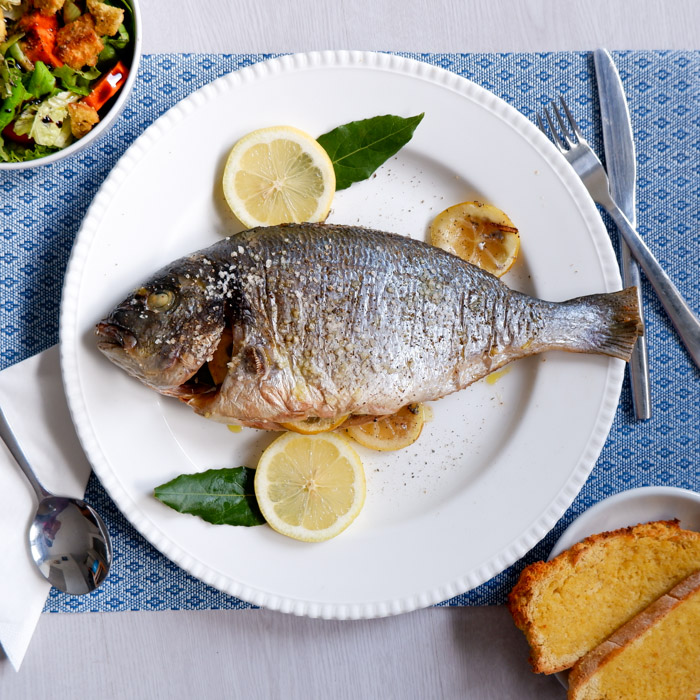
Fish.
Yep, I said the ‘F’ word.
How many of you love fish but avoid cooking it at home because you HATE the lingering odor of fish? And for an even better question, how many of you avoid cooking whole fish, simply because you don’t know what to do with it?
It’s time to let it all go cause I’ve got the perfect easy solution for you. And it’s freaking delicious without smelling up your home.
When you cook fish in the oven, the oven pumps most of the smell out the exhaust. No more dealing with your home smelling fishy for days on end after cooking it. Plus, there’s no giant clean up mess either.
Simply grab a handful of fresh herbs, lemon slices, and a bit of salt and pepper to stuff in the cavities and pop it in the oven on a baking sheet. Cover that baking sheet with baking paper for easy clean up. And have the prep work of cleaning and scaling done at the fish market.
Yep, it’s that simple to make Oven Baked Fish with Herbs and Lemon that will have your family or guests applauding you.
Looking for a recipe to pan sear fish, try my Smoky Mediterranean Seared Fish with Butter Bean and Spinach.

What Temperature to Bake Fish (and How Long)
Okay, normally I start with telling you have to pick out your fish first, but I know a lot of you already have and now you’re wanting to know what temps to bake your fish at whether you’re using whole fish or fillets. So, let’s start there:
Bake fish at 425 F (220 C) for whole fish, 400 F (200 C) for fillets, and pull it when the thickest part hits 145 F (63 C).
I try to buy fillets that are the same thickness all the way through to ensure even cooking. If you can’t aim for the thickest part to hit the temperature. If you don’t have a thermometer, the rule of thumb is roughly 10 minutes per inch of thickness. Thin fillets bake quickly. A plump whole sea bream with bones in, takes longer.
Here’s how it breaks down for the fish I actually cook:
| Fish | Oven Temp | Approximate Time |
|---|---|---|
| Whole sea bream or sea bass (12–16 oz) | 425°F / 220°C | 12–15 min |
| Whole fish (1.25–2 lb) | 425°F / 220°C | 20–30 min |
| Sea bass or sea bream fillets | 400°F / 200°C | 8–12 min |
| Salmon fillets | 400°F / 200°C | 10–12 min |
| Thick fillets (halibut, grouper) | 400°F / 200°C | 12–15 min |
These are starting points. It all depends on your fish, your oven, and the thickness. Also remember that fish keeps cooking after you take it out of the oven, so I like to pull it when it’s a couple of degrees down. By the time you serve it, it will be done perfectly without overcooking it. The fish should flake cleaning when you slip a knife or fork near the bone. Check out the USDA Food Safety guide for selecting and cooking fish for all the deep details.
Now let’s talk about picking out your fish.
How to Pick Out Fresh Fish
No matter whether you’re eating your oven baked fish whole or in fillets, it needs to be fresh. So, how do you tell the fish is fresh?
With whole fish, you start by looking at the eyes. Are they clear and glassy, like the fish is staring into your soul? If so, you can start picking out the fish you want to take home. If the eyes look cloudy, avoid.
Besides the eyes, look at the skin. Is the skin still glossy and shiny? If it’s dull, skip it. Does the fish smell fishy or salty like the ocean? If it smells fishy, move on. If you can touch the fish, gently press on the flesh. Does the flesh spring right back out or does the dent stay? If the dent stays, avoid the fish.
When picking out filets, it’s a bit harder because you don’t have the eyes to check out. But you can notice the smell. If it’s smelling fishy, don’t buy it. Does the flesh look firm, or does it appear to be going mushy? If you can touch the fish, the same test as above with checking whether the flesh springs back to the touch, works well. Also, again look at the skin – if there is any. Is it shiny and healthy looking or dull?
Don’t Forget to Think Seasonal
And as you guys know I’m a seasonal chef, I only use the fish that are in season. It’s one of the best ways to help ensure that you’re getting fresh fish (you still need to do all the checking). Seasonal fish are quicker to the market and turn over faster because they are less expensive. Plus, they taste better. You’ll need to consult your local markets to find out what is seasonal for you.
Use these same tips for picking out fresh shrimp and lobster.

What Size Fish is a Serving
I’ve found when using whole fish, a 400-to-600-gram fish (12 to 16 ounce) per person works well. If the fish are larger, splitting a 600-to-1000-gram (1.25 to 2 pounds) between two people is perfect. These are bone in and head and tail on – a complete whole fish.
Yes, yes, I know. You have fisheyes staring at you. But seriously using whole fish enhances the flavor. Plus, the fish cheeks are delicious. If you can’t get past it, have the head cut off at the market, then use to make a nice fish stock for soup.
Personally, I prefer the single serve oven baked fish for dinner parties because it looks nice for everyone to have their own fish. But you can also get large fish and divide up the servings. Usually if I’m going large, I switch to fillets, even though the presentation isn’t as pretty.
What Type of Fish is Good for Oven Baking
It’s totally up to you and what is fresh in the market. Here in Portugal, I’m often baking up small Dourada (featured in the photos) and Robalo (Black Sea Bass). Salmon, hake, grouper, snapper, most any white fish work well.
Trout also works well in this oven baked fish recipe. I’m personally not a trout fan but plenty of people are. The flavor of trout is beautiful, but I’m not a fan of picking bones out of every bite of fish while eating. As a result, I tend to avoid fish with bones throughout the fish rather than centrally attached to the backbone area.
Not so great is tuna or the fish that’s cut into steaks. Or more oily type fish, such as sardines, mackerel, and blue fish. Those you want to sear in the pan or on the grill rather than baking them. Even salmon fillets, I prefer to sear rather than bake. But the whole salmon does work well with this recipe.
Just remember with all fish, adjust the baking time based on your fish size. Smaller fish need less, larger fish more, so the time suggested in the recipe is just an approximate. Also, fish continues to cook after removal from the heat, so remove a hint early as not to overcook.
And sometimes it’s okay to pull out the fish sticks, espeically when we’re talking about Fish Stick Tacos for busy evenings when you want fish but didn’t have time to get to the fish market.
How to Bake Fish Fillets (For the No-Bones Crowd)
I admit when we moved to Portugal, we got a bit of a giggle at our friends who visited us and would take one look at whole fish and order a burger. Peeps in the States rarely see a whole fish, much less served up cooked on a plate. We watch tourists show up at restaurants and immediately ask for fillets, when the whole fish is fresher. Some restaurants here are charging a fortune to fillet the fish tableside. But I do get it.
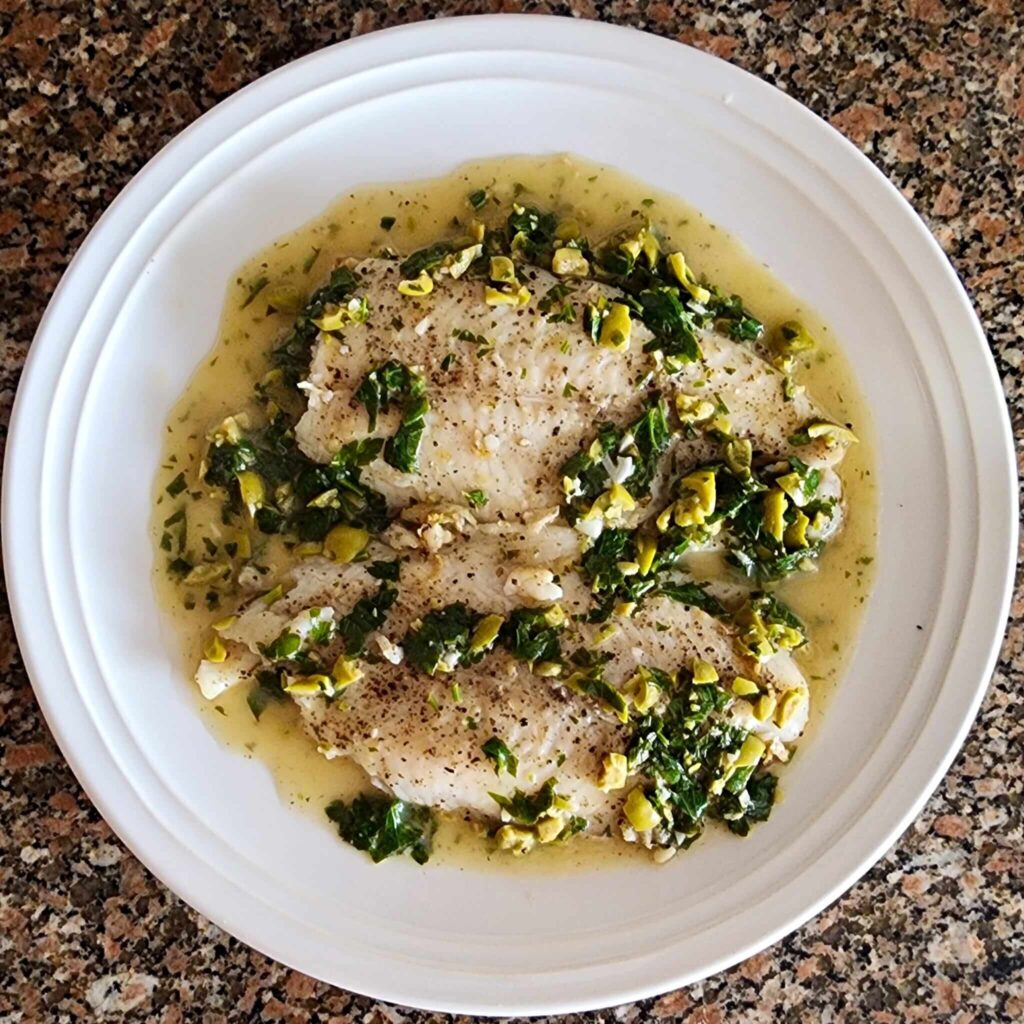
So here’s your no-eyeballs, no-bones version. It’s the weeknight move, and there’s zero shame in it. I keep a bag of frozen white fish fillets in the freezer for when we’re too busy to deal with a whole fish. So, here’s the details for cooking them up.
Grab sea bass or sea bream fillets. Fresh if possible with the skin still on. You do want them scaled. If you’re using frozen, allow them to unthaw on a plate in the fridge – not the counter.
Line a cooking sheet with parchment paper. Then lay a few fresh herb springs and lemon slices on the sheet. Then pat your fillets dry and lay them on top of the herbs and lemon slices. Drizzle with good olive oil and season both sides with salt and pepper. Now you’re going to get that lovely lemon and herb flavors.
Check out the section above for what temp and how long to cook your fillets.

How to Serve Your Oven Baked Fish
Once you pull the fish from the oven, let it rest for two minutes before serving. This matters. The fish is still finishing its cook, and rushing straight to the plate means losing those juices the moment you cut in.
For a simple weeknight dinner, I’ll slide the fish straight onto a plate with a wedge of lemon and whatever salad is in the fridge. The Dourada we get here in Portugal is so delicious on its own that it needs almost nothing else.
When we’re having people over, I’ll plate each fish individually. It looks beautiful and honestly makes people feel like they’re eating at a proper restaurant. If anyone’s nervous about bones, I’ll take a minute to lift the backbone cleanly at the table. It comes out in one piece once the fish is cooked through. Run your knife along the top spine, lift the whole backbone section off, and the bottom fillet is waiting underneath.
Sides That Work Well
A simple green salad is the classic pairing… something light and acidic to cut through the richness of the fish. Roasted vegetables alongside work beautifully too: asparagus, cherry tomatoes, fennel. In summer here in Portugal, we’ll often do sliced cucumber and tomato with a drizzle of good olive oil. Nothing more needed.
If you want something more substantial, the fish pairs well with roasted potatoes or a simple rice pilaf. Or serve up with a side of Steamed Mussels cooked in white wine. The cooking juices from the pan are essentially a built-in sauce, spoon them over everything.
The Leftover Question
Honestly? Leftover whole fish is one of my favorite things. Pull the remaining flesh off the bones, flake it into a bowl, and you’ve got the base for fish cakes, a simple fish salad with a little mayonnaise and herbs, or stirred through pasta with olive oil and capers. The Portuguese have been doing this forever — nothing goes to waste.
If love eating fish during a busy workweek, check out my tuna fish cakes with sardines are another high protein weeknight staple that actually keeps.

Bring on the Oven Baked Fish
This oven baked fish recipe is one of the easiest ones I make in both cooking and clean up. Smaller fish take less than 15 minutes to bake up and have on the table. Pair with a side salad and you have an easy lunch that is not only tasty but healthy. Or do it all up with the special sides for dinner. One thing is for sure, you’ll find cooking whole fish so freaking easy and delivering beautifully tasty dishes to the table that everyone will love.
If you’re looking for other lovely seafood dishes that don’t make the house smell fishy, check out my recipe for Mussels in White Wine with Saffron. What’s your favorite way to cook fish? Let me know in the comments. And if you have questions, leave those there as well.
RECOMMENDED INGREDIENTS & TOOLS
Here are the ingredients and tools that make this oven baked fish recipe consistently easy and delicious:
Ingredients
- Good Quality Olive Oil — Olive oil is doing real work here — inside the cavity, over the top, and in the pan juices. Use one you’d actually want to taste. A Portuguese or Spanish extra virgin olive oil is ideal; the flavor comes through in the finished dish.
- Flaky Sea Salt — Regular table salt is fine, but flaky sea salt on the outside of the fish before it goes in the oven gives you a better seasoned crust. Maldon is widely available.
Tools
- Rimmed Baking Sheet — You want a good heavy rimmed sheet pan — the rim catches any juices and the weight means it won’t warp in a hot oven. Nordic Ware’s half-sheet pan is the one I’d recommend to anyone who doesn’t already have one.
- Parchment Paper Pre-Cut Sheets — Line your baking sheet before the fish goes on. It catches all the drips, makes cleanup almost nonexistent, and keeps your pan looking new. Buy the pre-cut sheets if you can — so much easier than wrestling with a roll.
- Instant-Read Thermometer — Fish is done at an internal temperature of 145°F (63°C). A good instant-read thermometer takes the guesswork out of it completely, especially with larger fish where timing can vary. The Thermapen is what professional kitchens use and it’s worth the investment.
We are a participant in the Amazon Services LLC Associates Program, an affiliate advertising program designed to provide a means for us to earn fees by linking to Amazon.com and affiliated sites. These links and other affiliate links like them do not cost you any extra when shopping but they do help us fund the creation of this site and publications.
Frequently Asked Questions About Oven Baked Fish
- How do I know when my oven baked fish is done? The easiest way is to use an instant-read thermometer, fish is done at 145°F (63°C) in the thickest part. I slip the tip of a knife or fork in the thickest part of the fish and see it pulls away from the bone easily. If it resists, cook for another minute or 2.
- Do I need to score the fish before baking? If you’re cooking a whole fish or fish fillet with the skin on, do score the skin. It allows the fish to cook without drawing up by letting the steam escape during cooking. Scoring is simply – making two or three shallow diagonal cuts through the skin on each side. Just don’t cut too deep into the flesh; you’re only going through the skin.
- Can I use fish fillets instead of whole fish? You can. If you go with fillets, reduce the oven temperature to 400°F (200°C) and check for doneness, depending on thickness. Thin fillets can cook in 5 to 6 minutes, thicker tends to be around 10 to 15 depending on the fish.
- Why doesn’t baking fish in the oven smell up the house? Because the oven’s exhaust vents most of the smell outside the home. I also open windows to make sure. All of this is why I perfer to bake fish rather than pan fry, which helps keep the house from smelling fishy.
- Can I prepare the fish ahead of time? Cleaning and prepping, yes. But don’t cook your fish until you’re ready to serve. I prep and stuff the fish an hour before baking and hold it in the fridge until about 15 minutes before baking. Don’t season with salt until you’re ready to put it in the oven.
- Can I bake any fish with this method? A lot of fish, yes. But not all. White fish, salmon, and tuna can be baked (although I do like tuna seared better than baked because it dries them out, but you can do it). Sea bream, sea bass, cod, hake, haddock, grouper, snapper, and tilapia all bake beautifully. Oilier fish like mackerel, sardines, and bluefish do better seared or grilled, and tuna or swordfish steaks should be seared.
- What’s the difference between sea bass and sea bream? Both are mild, sweet white fish and can be used interchangeably in most recipes. Sea bream (what we call dourada here in Portugal, or dorade elsewhere) is what I usually cook. It’s just a bit Sea bass or robalo in Portugues is what most Americans recognize and eat.

Oven Baked Fish: Temperature, Time & Easy Recipe

Ingredients
- 2 400-600 gram (12 to 16 oz) whole fish cleaned and scaled
- olive oil drizzle in cravity and on top
- Large handful fresh herbs of your choice rosemary, bay leaf, thyme, cilantro, lemongrass, or your favorite or a mixture
- 1 large lemon thinly sliced
- salt and pepper
For fillets:
- 2 fillets Sea bass or sea bream fillets (about 6 oz each) in place of whole fish
Instructions
- Wash fish and pat dry with paper towels or place, uncovered, in the fridge for a couple of hours ahead to dry.
- Preheat oven to 425°F (220°C).
- Lightly oil or cover a baking tray with baking paper.
- Score the fish skin on each side of the fish in two to three places. To do, cut a shallow line across the fish with a sharp knife, just getting through the skin, not too deep into the flesh. This allows the steam to escape and the fish to stay firm.
- Lightly sprinkle the inside cavity of the fish with salt and pepper, followed by a drizzle of olive oil. Then layer in lemon slices and half the fresh herbs and season both sides of the fish liberally with salt and pepper.
- Lay fish onto the baking sheet and repeat with other fish. If you have extra lemon slices, I like to lay the fish on them for even more flavor.
- Finish with a drizzle of olive oil over the top and pop into the oven.
- Cooking time depends on the size of your fish, but for fish these size, 12 to 15 minutes is usually good timing. To check, gently slip a fork or knife into the fish to see if it is flaking away from the bone. Remember fish will continue to cook after removing from the oven, so remove just before done, as not to overcook.
To Bake Fillets Instead
- Preheat oven to 400°F (200°C) — slightly lower than for whole fish, since fillets are thinner and cook faster.
- Pat sea bass or sea bream fillets dry. Skin-on fillets hold together best.
- Lay fillets on a parchment-lined baking sheet. Drizzle with olive oil and season both sides with salt and pepper. Tuck a few herbs and lemon slices around them if you like.
- Bake 10 to 15 minutes depending on thickness — thin fillets need less, thick ones like halibut or grouper closer to 15 to 20.
- Fish is done at an internal temperature of 145°F (63°C), or when the flesh flakes cleanly with a fork. Remember it keeps cooking after it leaves the oven, so pull it just before it looks perfect.
Notes
- Calories: 340
- Total Fat: 18 g
- Saturated Fat: 3 g
- Carbohydrates: 1 g
- Fiber: 0 g
- Sugar: 0 g
- Protein: 43 g
- Sodium: 650 mg