
Portuguese Fava Bean Stew with Spicy Chorizo (Favas com Enchidos)

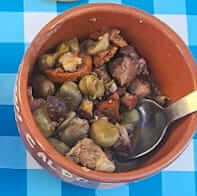
Our first taste of Favas com Enchidos the inspiration for this recipe Portuguese Fava Bean Stew with Chorizo was at a traditional restaurant in Porto called Talhasca Villa Parda. Tucked into the Lapa neighborhood, the hubby and I visit every time we’re in the city. They have an extensive menu of small plates (petiscos). Can’t miss dishes are the tomato salad, the best bifana sandwich I’ve had in Portugal, and of course, the Favas com Enchidos. Served with a hunk of crusty bread for sopping up the sauce, it’s so gooooddddd. It’s also where we experienced sopa de feijão verde (green bean soup) for the first time.
Btw, if you’re in the neighborhood, walk a couple of blocks over to Rua da Alegria and look for the mural Porto Colors by Francisco Fonseca. He’s one of my favorite street artists, painting up abandoned buildings all over Europe. Have a bit to eat, drink some wine, and then wander over to see the mural while you’re at the top of the hill.
Pro tip: Always get a car or the metro to the top of the hills in Portugal and then meander to the bottom. It’s makes sightseeing in the cities so much more enjoyable.


What Favas com Enchidos Actually Is and Why Every Family Makes It Differently
Favas com Enchidos translates roughly to fava beans with cured meats (enchidos means a mix of sausages and cured pork cuts). The classic version made at Talhasca Villa Parda uses a whole mixture of them… chouriço, morcela (blood sausage), bacon, entracosta (pork ribs). Everything is simmered together in a sauce built on white wine, massa de pimentão, tomato paste, bay leaves, paprika, and garlic. My Southern Style Portuguese Bifana recipes uses similar spices and flavors.
It’s a hearty dish, a long-simmered Portuguese comfort dishes that varies wildly from kitchen to kitchen. You’ll see versions with and without wine. With and without tomato. Spicy or mild. Every household has their version, and the restaurant versions each have their signature too. What they all share is that rich, deeply savory sauce, fava beans, and meat. No vegan or vegetarian substitute on this one.
My version Portuguese fava bean stew with chorizo ended up with chorizo only because it’s what I had on hand when I started experimenting with the recipe. Since it was my first time making it, I didn’t run out to buy a bunch of ingredients in case I had to toss it in the trash. But we loved it so much, I kept the original recipe. A good spicy Portuguese, Spanish, or French chorizo just works. Just don’t forget a good crusty bread. That is like the cherry on top.

Massa de Pimentão is a Portuguese Cook’s Secret Weapon
If you haven’t cooked with massa de pimentão, this recipe is a good excuse to start. It’s a red pepper paste made from slow-roasted peppers, garlic, olive oil, and salt. Somewhere between roasted red pepper and a concentrated flavor bomb. With a depth that no dried spice can replicate. Just don’t add all the salt until the end of cooking to make sure you don’t over-season.
In Portugal, it’s a pantry staple the way tomato paste is in an Italian kitchen. You’ll find it stirred into stews, rubbed onto grilled meats, spooned into soups. It’s what gives this fava bean stew that slightly smoky, deeply savory backbone underneath the wine and paprika.
In the States, you can find it at international grocery stores, sometimes in the international aisle of larger supermarkets, or on Amazon. It’s worth the hunt. In a pinch, you can blend a roasted red pepper with a splash of olive oil and a pinch of salt. Not identical, but it gets you in the right direction. Or make your own using an online recipe. It’s worth the effort.

Bay Leaves — Fresh vs. Dried and Why It Matters Here
Since moving to Portugal, I’ve grown to love using fresh bay leaves (laurel) over dried. It’s so much more floral and fragrant making the dried seem flavorless once you had the fresh. You get this wonderful aromatic scent from the pot that dried leaves just don’t produce. I even remove the center stem and chop the whole leaf into the stew for even more flavor.
I pick them fresh from the trees in our local Mata in Lisbon about once a month, give them a good clean, and keep them in the fridge. Bay grows wild all over Portugal and southern Europe, and and in the southern US.
Kinda ironic, but I was told growing up, that leaving the bay leaf in while cooking was somehow poisonous. It never made much sense to me since it’s cooking in the food the whole time. Here in Portugal and across southern Europe, dried bay leaf is routinely chopped and included in spice mixes, and we make bay leaf simple syrup for mocktails at home. Stir into tonic or sparkling water with citrus over ice. It’s fantastic.
Use fresh if you can find them. Use dried if you can’t. Either way, this stew will be good.


How to Build This Portuguese Fava Bean Stew
The technique here is all about layering flavors before the liquid ever goes in. Of course you could just dump everything in the pot at once. After all, it’s a stew. But layering in the ingredients is what makes the difference between a one-note dish and one you remember. One you want to eat again like this Portuguese Fava Bean Stew with Chorizo.
Like rendering the chorizo. The Portuguese toss it in whole and allow it to cook in the liquids, then slice it up. But when you slice it up and cook it low and slow at the beginning, crisping it up… You end up with browned meat and use the oils to cook the onions and spices. Letting the paprika, oregano, and onion release their fragrance before anything else goes in. That step alone tells you the dish is going to be good. Spices are always better when you heat them first, allowing their oils to heat and release their flavors into the dish. I do the same when I make Sopa Caldo Verde.
And most people put the garlic in at the same time as the onion, but that burns it. Garlic only takes a minute or so to be cooked fully. Then finish building out your base with the massa de pimentão and tomato paste. Let all of that cook together for a couple of minutes.
Then it’s time to add your liquids. The ones you add first are the ones you want to reduce. Like in this recipe it’s the wine next. Once it’s reduced by half, add the favas, water, and the chorizo back in. Letting it all simmer together low and slow until the favas are cooked through.
I use frozen favas for this recipe. Fresh are brilliant but I tend to keep them for recipes where the freshness really shines like orzo or risotto. If you use fresh favas reduce the cooking time to 20-25 minutes. Frozen ones take longer depending on their size. Just keep tasting until they’re tender the way you like them.
Finally, don’t skip the squeeze of fresh lemon juice. It’s brightens the whole dish.

How We Eat This Portuguese Fava Bean Stew at Home
In a bowl, paired with… bread. Crusty bread. A rustic loaf or a good baguette, sliced thick, pressed into the sauce in the bowl and sopping up the juices. If there’s sauce left in the bowls after the favas are gone, something has gone wrong. At Talhasca Villa Parda, don’t forget to order the bread basket. It’s a delish mix of the different bread types so you can try them all.
This stew reheats beautifully. Like any stew, it tastes even better the next day once all the flavors have had time to meld with each other. It’s also comes back well after being frozen. Enjoy.
And if you visit Porto? Walk to Lapa. Ask for the favas. Then go find the mural.
Are you a fan of fava beans or Portuguese food? Let me know in the comments. And drop any questions you have there.
Recommended Ingredients & Tools for Portuguese Fava Bean Stew
Here’s what we use to make this at home:
Ingredients
- Massa de Pimentão (Portuguese Red Pepper Paste) — This is the ingredient that makes the dish taste distinctly Portuguese rather than just a bean stew. If you can find a Portuguese brand, grab it. It keeps well in the fridge for weeks and you’ll find yourself adding it to all kinds of things.
- Spanish or Portuguese Chorizo — You want a cured, dried chorizo rather than fresh Mexican-style for this recipe. The spicy version gives the whole dish its kick. Look for a Portuguese chouriço if you can find it, or a good quality Spanish chorizo as a reliable substitute.
- Smoked Paprika — Buy the good stuff. Spanish smoked paprika (pimentón de la Vera) has a depth that generic smoked paprika doesn’t. It makes a noticeable difference in dishes where paprika is doing real work, like this one.
Tools
- Dutch Oven or Heavy-Bottomed Pot — A good Dutch oven is the right tool for this kind of slow-simmered stew. It distributes heat evenly, prevents scorching, and holds the low simmer steady without babysitting. A 5-quart is a good size for this recipe.
- Slotted Spoon — For pulling the chorizo out after rendering while keeping those oils in the pot. Simple but essential to the technique.
- Airtight Glass Storage Containers — This stew is genuinely better the next day. Glass containers don’t absorb the sauce flavors the way plastic does, and they go from fridge to microwave without transferring everything to another dish.
We are a participant in the Amazon Services LLC Associates Program, an affiliate advertising program designed to provide a means for us to earn fees by linking to Amazon.com and affiliated sites. These links and other affiliate links like them do not cost you any extra when shopping but they do help us fund the creation of this site and publications.
Frequently Asked Questions About Portuguese Fava Bean Stew
- What is massa de pimentão and where do I find it? Massa de pimentão is a staple ingredient in Portuguese cooking that’s made from slow-roasted peppers, garlic, olive oil, and sale. And it’s so good. I keep it right next to the tomato paste. And perfect for adding depth to stews, marinades, and grilled meats. You can make your own by blending roasted red peppers, garlic, olive oil, and salt. Personally, I like mine with a squeeze of lemon.
- Can I use frozen fava beans? Absolutely. They’re only in season for a couple of months fresh, so frozen is the way to go the rest of the year. I take them straight from the freezer and pop them in the pot. I actually prefer to use frozen ones for this dish and fresh ones for dishes that aren’t as forgiving to frozen ingredients.
- What is the traditional version of favas com enchidos? The classic dish uses a mix of sausages and meats including chouriço, morcela (blood sausage), bacon, and entracosta (pork ribs). Each region has a different variation of the recipes. My dish is quite simple with just the spicy chorizo, but totally add whatever makes sense to you.
- How do I know when the fava beans are done? Taste them. Check the texture to make sure they are tender and have a slightly creamy texture. Overcooked makes them mushy. Under is overly firm and chalky in the center. The skins on frozen beans is tougher than fresh, so it takes longer to cook.
- Can I make this in a pressure cooker? Yes, absolutely. It’ll save you loads of time. Start by building the base in the cooker, the same way, then toss in the faves, water, and cooked chorizo. Pressure cook on high for 10 to 12 minutes for frozen beans. Allow to open naturally.

Portuguese Fava Bean Stew with Spicy Chorizo (Favas com Enchidos)

Ingredients
- 1 small onion finely diced
- 2 cloves garlic minced
- 5¼ oz 150g spicy Portuguese chorizo sliced
- 1 chicken bouillon cube
- 2 tsp smoked spicy paprika
- 1 tsp sweet paprika
- 2 fresh bay leaves or 3 dried
- 1 cup dry white wine
- 1 tsp dried oregano
- 2 tbsp massa de pimentão (red pepper paste) or 1/4 cup roasted red peppers
- 2 tbsp tomato paste
- 1 lb frozen fava beans or 20–25 minutes for fresh favas
- 2 cups water plus more as needed
- Squeeze of fresh lemon juice to finish
- Salt and pepper to taste
Instructions
- Place chorizo slices in a large heavy-bottomed pot or Dutch oven and render over low heat. Cook slowly until the fat releases and the edges start to crisp slightly, about 5–7 minutes. Remove chorizo with a slotted spoon and set aside, leaving the oil in the pot.
- Add the diced onion to the chorizo oil along with the smoked paprika, sweet paprika, and dried oregano. Cook over medium heat, stirring occasionally, until the onion is soft and the spices are fragrant, about 5 minutes.
- Add the garlic and cook for another minute.
- Crumble in the bouillon cube, stir to combine, then add the massa de pimentão and tomato paste. Stir well and let cook for 2 minutes to deepen the flavors.
- Add the bay leaves and pour in the white wine. Let cook uncovered, stirring occasionally, until the wine reduces by half, about 5–7 minutes.
- Add the fava beans and 2 cups of water. Stir to combine, bring to a gentle boil, then reduce heat to low. Add the reserved chorizo back in.
- Simmer uncovered, adding small amounts of water as needed to maintain a thick, saucy consistency. Cook until favas are tender — about 20–25 minutes for fresh favas, up to 60 minutes for frozen depending on size. Taste and adjust.
- Finish with a squeeze of lemon juice. Taste for seasoning and adjust salt and pepper.
- Serve hot with plenty of crusty bread for sopping up the sauce.
Notes
- Massa de pimentão is a Portuguese red pepper paste made from roasted red peppers, garlic, olive oil, and salt. It’s a pantry staple in Portugal and worth seeking out at international grocery stores or Amazon.
- In a pinch, substitute with ½ roasted red pepper blended with a splash of olive oil and a pinch of salt — not identical, but it adds a similar depth.
- Fresh bay leaves add a more floral, aromatic quality than dried. If you can find them at a specialty store or market, use them.
- This stew keeps well in the fridge for 3–4 days and often tastes better the next day as the flavors deepen. Freezes for up to 3 months.
- Traditional versions of favas com enchidos use multiple types of sausage — chouriço, blood sausage (morcela), bacon, and pork ribs. This simplified version uses spicy Portuguese chorizo only, which carries the dish beautifully on its own.
Calories: 309 | Total Fat: 10g | Saturated Fat: 4g | Carbohydrates: 26g | Fiber: 8g | Sugar: 5g | Protein: 17g | Sodium: 778mg Calculated using USDA FoodData Central. Values approximate. Sodium reflects bouillon cube and chorizo — use low-sodium bouillon or omit to reduce.