
Mussels in Coconut Milk (Thai-Inspired Saffron White Wine Sauce)

Originally posted June 2021. Updated July 2026.
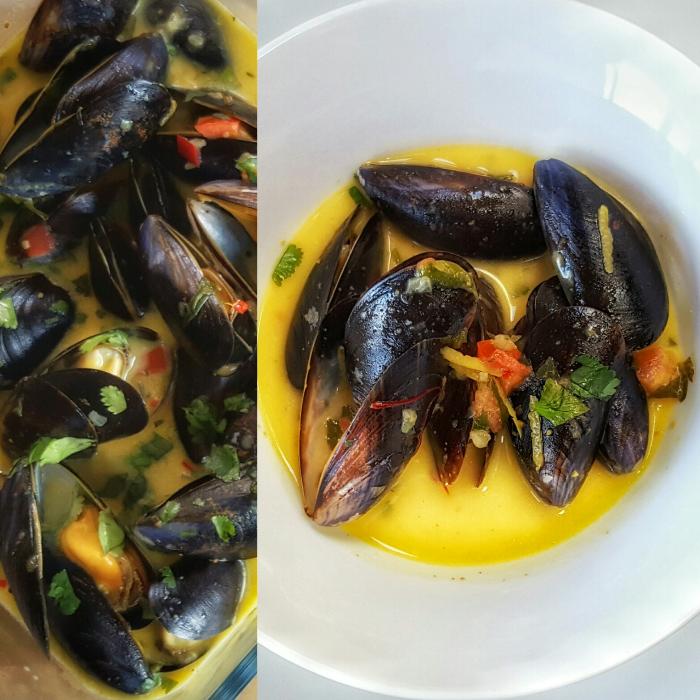
I LOVE mussels (the other type as well 😉). They are absolutely one of my favorite types of seafood. Cook them up the classic way Steamed Mussels in White Wine with a little butter, garlic, and parsley. OR bathe them in a golden, spicy broth of white wine, coconut milk, saffron, and chilies like this recipe, Mussels in White Wine with Saffron and Coconut Milk. Either way is delicious. And as you’ll notice, white wine is necessary.
These mussels in coconut milk are a warm, spicy, coconutty riff on the classic. The Thai-inspired sauce is filled with the fresh scents of basil, cilantro, and thyme. The sweet, slightly salty mussels pair beautifully with the golden broth. Just make sure you’ve got plenty of crusty bread to sop up every last drop. You may have noticed we’re bread people!
I reach for this recipe when I’m feeling the urge for warm Thai flavors. Something that fills the kitchen with smells so good it lures the hubby into the kitchen to see what’s cooking.

The Story Behind This Mussels in Coconut Milk Recipe
In 2016, we spent two and a half months in a magical little place called Shankill, Ireland. It’s about 45 minutes outside Dublin, tucked between the mountains and the sea. King Edward Island mussels filled the seafood markets, and I was in heaven. They’re sweet, meaty, salty goodness in a shell, and I could not get enough of them. Every trip to the market, we came home with another bag.
I created Mussels in Coconut Milk because we had just come from spending time in Morocco a few months earlier. And I had about 6 grams of golden, warm saffron tucked into my backpack. Between the Irish mussels in the kitchen and the Moroccan saffron on the shelf, my brain went straight to “these two need to meet.”
With fresh thyme, cilantro, and basil growing in the herb garden outside our door, the Thai-Inspired Saffron White Wine Sauce basically made itself. Coconut milk for richness. A little chili for heat. Saffron for the deep golden warmth that only saffron can bring. Yes, please.
I’ve since made it again with Spanish saffron on a later trip… different origin, same beautiful result. If your saffron is fresh and real, this recipe will work.
Prefer the Classic?
If you want the classic moules marinière version instead of this warm, spicy, coconutty riff, my steamed mussels in white wine has 6 ingredients and ready in 28 minutes, including cleaning. Both are worth having in your rotation.
The Thai Influence on This Recipe
The broth base for these mussels in coconut milk is totally Thai-inspired. Coconut milk, chilies, ginger, garlic, lime, and fresh herbs. The building blocks for so many Thai coconut broths, from a light tom kha to a rich seafood curry. It’s also good with seared chicken breasts or shrimp substituted in in the place of the mussels if you want something different.
I haven’t been to Thailand… yet. So, what I know about Thai food, comes from eating in Thai restaurants run by Thai cooks in the cities we’ve lived in. Back in Denver, one of our favorites was 5 blocks down the street. I admit we ate there often. I’m not claiming this is a traditional Thai recipe. It’s just inspired by the flavors from Thai food I’ve eaten and the ingredients I had available in Ireland.
But after living in and traveling to so many countries, I’ve realized food doesn’t stay in nice tidy borders. Here in Portugal, the food is inspired by the different occupations over the centuries from the Romans, Moors, and Spanish. And the colonizing of the Portuguese in Africa, South America, and Asia. Plus, the Portuguese are the reason the British have tea and the Asians have chilies. ‘Authentic’ is definitely a slippery word.
What matters in any dish is that the flavors work. And these flavors do. The saffron and coconut milk are warm and floral paired with rich and sweet. Together they make a broth I could drink from a mug when I’m not feeling well cause it’s so comforting.
Traditional Thai Coconut Seafood Broths
If you want to go down the Thai coconut broth rabbit hole, look up tom kha (Thai coconut soup), gaeng som (a sour southern Thai curry), and hor mok (a steamed seafood custard). Each uses coconut milk as the base and layers in aromatics differently. Serious Eats has a solid primer on Thai soup building blocks if you want to start there.
Why This Recipe Works
The magic in these Mussels in Coconut Milk is a layered heat and sweetness paired with acid, keeping it balanced.
The coconut milk brings richness and rounds everything out. The saffron adds a warm, honeyed floral note and gorgeous gold that people don’t usually expect in a mussels dish. The chili gives a slow-building heat, not aggressive spice. Just spicy enough you keep coming back for more. The ginger and garlic add depth. The lemon zest and juice at the finish keep everything bright (without that acid, the broth would feel heavy and flat). Btw, you can swap the lemon for lime.
And then the mussels themselves add sweetness and their own briny liquor as they open in the pot. That mussel liquor mixing into the coconut broth is what makes the sauce so ridiculously good.
Real Saffron Matters
Don’t buy the cheap saffron in a plastic tube from the grocery store. It’s just a waste of your time and money. Not to mention an affront to your taste buds. You wanna go for the warm, floral notes you can only get in real saffron. Get the full deets on buying, storing, and blooming saffron in my orange saffron chicken wings post (worth a read if you’re new to cooking with it). Also, give the wings a try. They are the bomb!
Don’t Overcook the Mussels
Same rule as any mussels recipe. Three to four minutes with the lid on is enough once the sauce is at a good simmer. As soon as most of the shells are open, remove from the heat. Overcooked mussels are disgusting and rubbery.
How to Clean Mussels
Cleaning matters A LOT. Otherwise, you end up with mud and grit in the sauce. And grit is never a good thing in any seafood recipe.
Farm-raised mussels are cleaner than wild ones, so they take less scrubbing. Wild mussels have deeper, sweeter flavor but need more work. They are also more expensive. I use either, depending on what’s at the market that day.
And look you don’t need fancy equipment. A stiff kitchen brush or a green scratchy pad works fine, paired with a butter knife works just fine. Scrub each mussel under cold running water, pull off the beards (the wiry strings sticking out of the shell), and discard any with broken shells or any that stay open when you tap them on the counter.
For the full method — including how to keep mussels alive overnight if you can’t cook them the same day — see my complete mussel cleaning guide in the classic steamed mussels post.

How We Serve Mussels in Coconut Milk
The hubby and I usually eat these two ways.
For a full meal, we serve them in bowls over a scoop of jasmine rice. The rice soaks up the golden broth, making it so good. Add a few egg rolls or spring rolls from your local Thai restaurant and you’ve got a full meal.
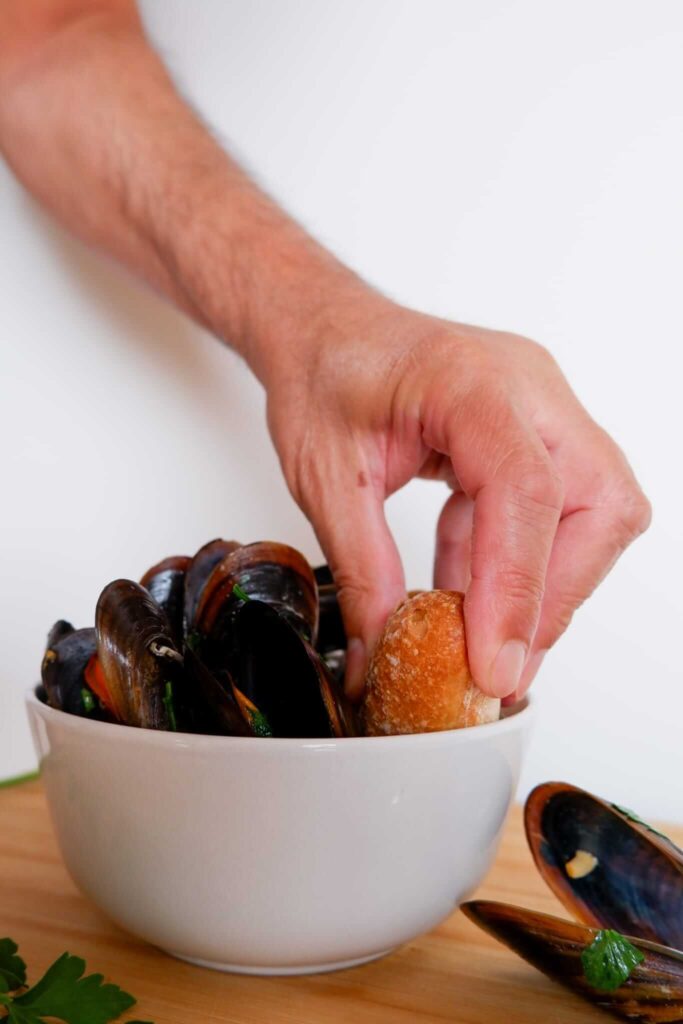
Or we use them for a starter with just crusty bread on the side for sopping up the sauce. One kilo of mussels feeds four as an appetizer. Small bowls, spoonful of broth over each portion, small pieces of bread. Very elegant for very little work.
Substitutes and Additions
I couldn’t find lemongrass when I first made this recipe. But if you’ve got it, add a bruised stalk to the broth for a real Thai punch. It’s the one traditional Thai aromatic that would make this Mussels in Coconut Milk even better.
If you aren’t a mussel fan, this sauce works beautifully with clams. Just adjust the cooking time slightly (clams take a minute or two longer to open than mussels, depends on the size). Or pop in some shrimp.
The broth is also fantastic over ramen noodles and quick-cooked vegetables. Add a splash of soy sauce or fish sauce if you’re leaning full Asian, and you’ve got a completely different meal from the same base.
So, what’s your favorite way of eating Thai soups or curries? Over rice, bread, or noodles? Let me know in the comments. If you’ve got questions leave them there as well.
Recommended Ingredients & Tools for Mussels in Coconut Milk
The pantry for this one is bigger than the classic version but nothing exotic. Once you have real saffron and good coconut milk in the house, this recipe comes together fast.
Ingredients
Saffron Threads: Real saffron is a must. Buy the best quality you can. Not the powder or flavored cubes. Store in an airtight container away from light. 7 to 8 threads is enough for the whole pot.
Full-Fat Coconut Milk: Don’t try the low-fat milk on this one. It’s all about the richness. Shake the can before opening to mix the coconut cream back into the water.
Ground Turmeric: Deepens the golden color and adds an slightly earthy note behind the floral saffron. A little goes a long way or it overpowers, ¼ teaspoon is plenty.
Tools
Large Pot with Tight-Fitting Lid: You want a pot big enough to give room for the mussels to open and a lid that seals well. I like my large stock pot for this, but a 6-quart Dutch oven works as well.
Fine Grater or Microplane: Getting the ginger and lemon zest fine is important. Plus a good microplane takes both jobs from tedious to easy in about 30 seconds.
Kitchen Scratchy Pads: My go-to for cleaning mussels. I like the green scouring pads over a brush, but go for whatever your favorite is. Keep a few dedicated ones just for seafood.
We are a participant in the Amazon Services LLC Associates Program, an affiliate advertising program designed to provide a means for us to earn fees by linking to Amazon.com and affiliated sites. These links and other affiliate links like them do not cost you any extra when shopping but they do help us fund the creation of this site and publications.
Frequently Asked Questions About Mussels in Coconut Milk
Can I make this recipe without saffron? Nope. Saffron is the signature flavor of this recipe. If you can’t find it, fresh thyme has a warm floral note and paired with a bit more turmeric will give you the golden color. It won’t taste like Mussels in Coconut Milk anymore, but you’ll still have a solid Thai-inspired coconut mussels dish.
What kind of chili should I use? I don’t recommend the Mexican leaning chilies. Instead, try red Thai chilies, malagueta, a small amount of habanero, or red Fresno chilies. Chilies that have a sweet heat rather than a sharp one. Add as much as you like to match your heat levels.
Can I skip blooming the saffron in hot stock? You can, but the color and flavor won’t be as bright. Steeping in hot stock while you’re preparing the rest of the ingredients releases both the color and the flavors. It takes about 3 to 5 minutes. And trust me, it’s worth it with the saffron you actually taste.

Mussels in Coconut Milk (Thai-Inspired Saffron White Wine Sauce)

Ingredients
- 1 pound mussels cleaned
- 1 cup chicken stock
- 7-8 saffron threads
- 2 tbsp olive oil
- 2 tbsp butter
- ⅛ cup onion finely chopped
- ½ small tomato diced small
- 1 2 to 3-inch medium-heat chili pepper
- 1 large garlic clove
- 1 tbsp fresh ginger 1 tsp. ground ginger
- ½ tsp ground turmeric
- ¼ tsp ground white pepper
- 1 cup dry white wine
- ½ cup coconut milk
- Zest and juice from one lemon
- ½ tsp fresh thyme
- 1 tbsp fresh basil
- 1 tbsp fresh coriander
- Salt and pepper to taste
- Crusty bread toasted if desired
Instructions
- Clean the mussels thoroughly and set aside. See notes for the full cleaning method, or check my complete mussel cleaning guide in the classic steamed mussels post.
- Heat the chicken stock in a small saucepan until almost boiling. Place saffron threads in a heat-proof bowl or coffee mug and pour the hot stock over them. Set aside to steep while you build the base.
- In a large pot or deep skillet with a tight-fitting lid, warm the butter and olive oil over medium heat. Add the onion and tomato and sauté until the onion is soft.
- Add the garlic, chili, ginger, turmeric, and white pepper. Cook until fragrant, about 30 seconds.
- Pour in the white wine and simmer until reduced by about ⅓. Add the saffron-stock mixture and simmer again until reduced by ⅓.
- Stir in the coconut milk, lemon zest, lemon juice, thyme, basil, and cilantro. Season with salt and pepper. Let the sauce simmer for 2 to 3 minutes to bring the flavors together.
- Add the mussels all at once, cover with the lid, and steam for 2 to 3 minutes over medium-high heat. Do not overcook. Your mussels are done when most of the shells are open.
- If you have a clear glass lid you can watch them open — otherwise resist lifting the lid, which lets out the steam. Peek no more than once.
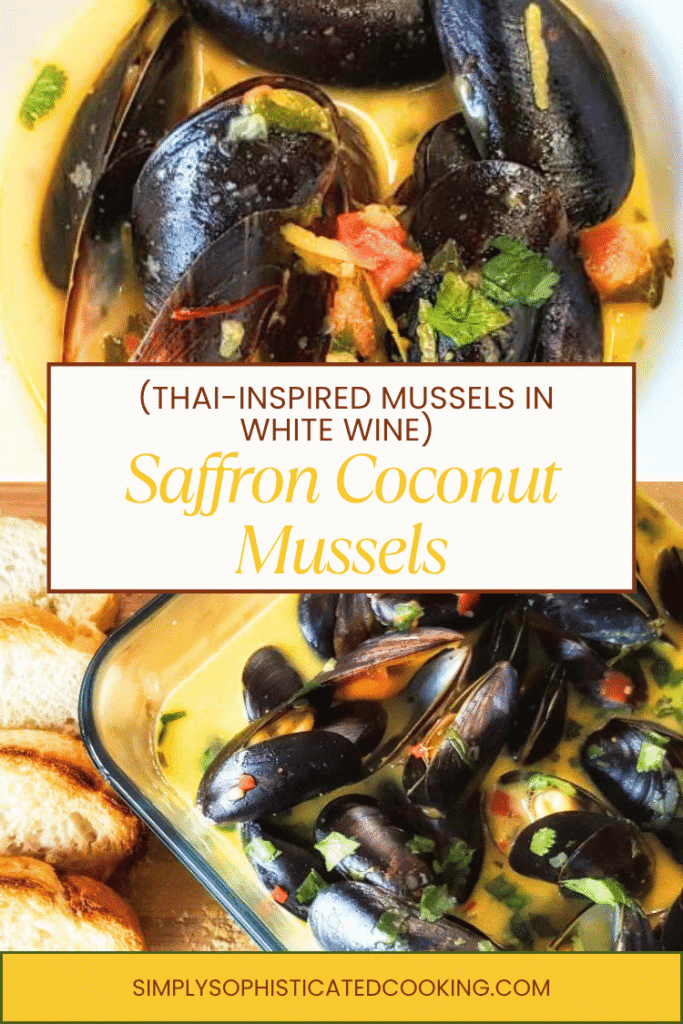
- Serve immediately in shallow bowls with plenty of the golden broth spooned over. Discard any mussels that stayed stubbornly closed. Serve with crusty toasted bread for sopping.
Notes
- Fresh mussels should not take more than 2 to 3 minutes to open once the sauce is at a good simmer with a tight-fitting lid.
- Buy mussels the day you plan to cook them for best results. See the classic mussels post for how to keep them alive overnight if you have to.
- Use full-fat coconut milk for the richest broth. Low-fat versions break and thin out.
- No lemongrass in the recipe — I couldn’t find any when I first made it. If you can, add a bruised stalk to the broth for extra Thai depth.