
How to Roast Beets in Foil (The Easy Way – No Peeling Ahead, No Mess)

This post is for my friend Beth and anyone else who wants to know how to roast beets… the easy way.
We were talking food a few weeks ago, and I mentioned that the hubby and I roast beets almost every single week. Beth groaned cause she loves beets, but she finds it such a chore to peel them. Trying to figure out why she was having problems peeling them, I found out she was peeling her beets before roasting.
I’ll admit I started at her for a second as the question flashed through my mind, “why anyone would peel them before roasting them?” Peeling anything like beets or sweet potatoes raw is hard work. Even if you have a good potato peeler. AND you don’t need to.
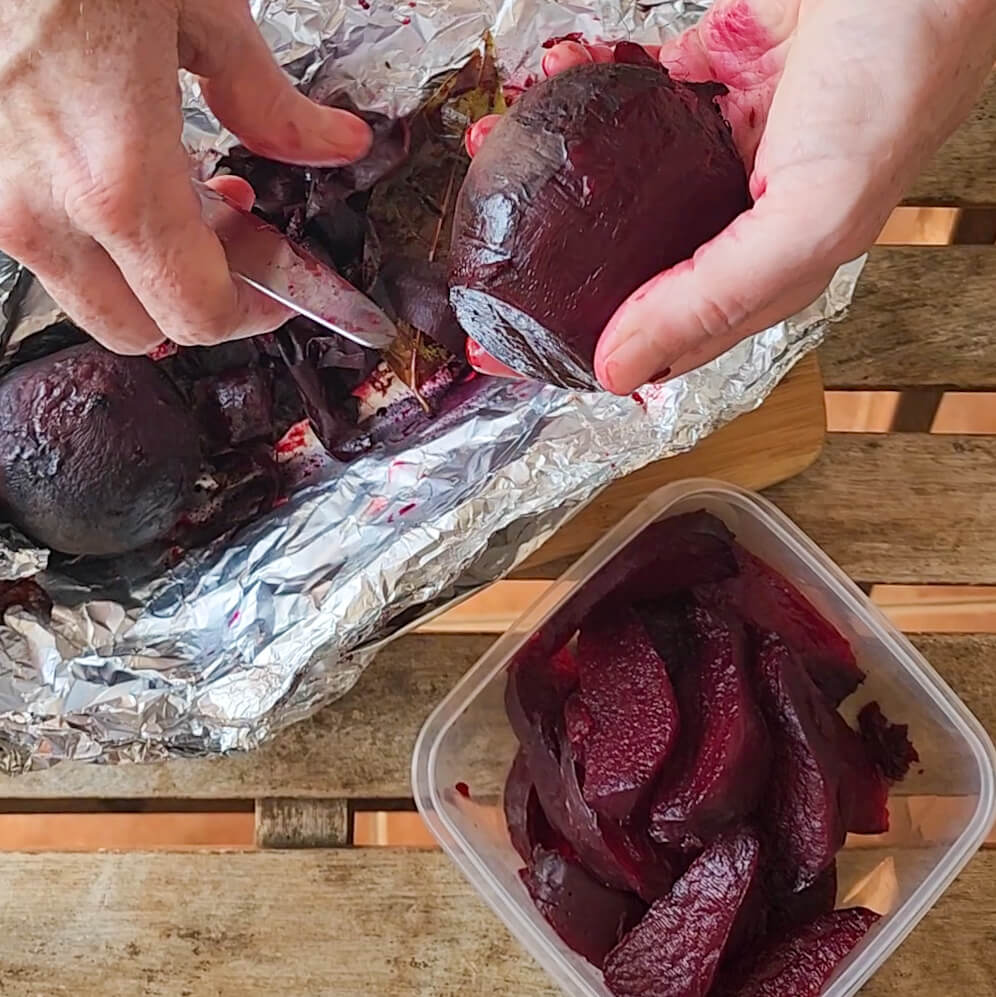
Here’s how to roast beets the easy way. Skins on. Sealed in foil for easy clean up. And once they’re roasted, the skins slide right off with a butter knife. Then you chop them using the same knife. Ball up the foil with peel inside and you’re done.
So Beth, para-te minha amiga. 🙂
Why We Roast Beets Every Week
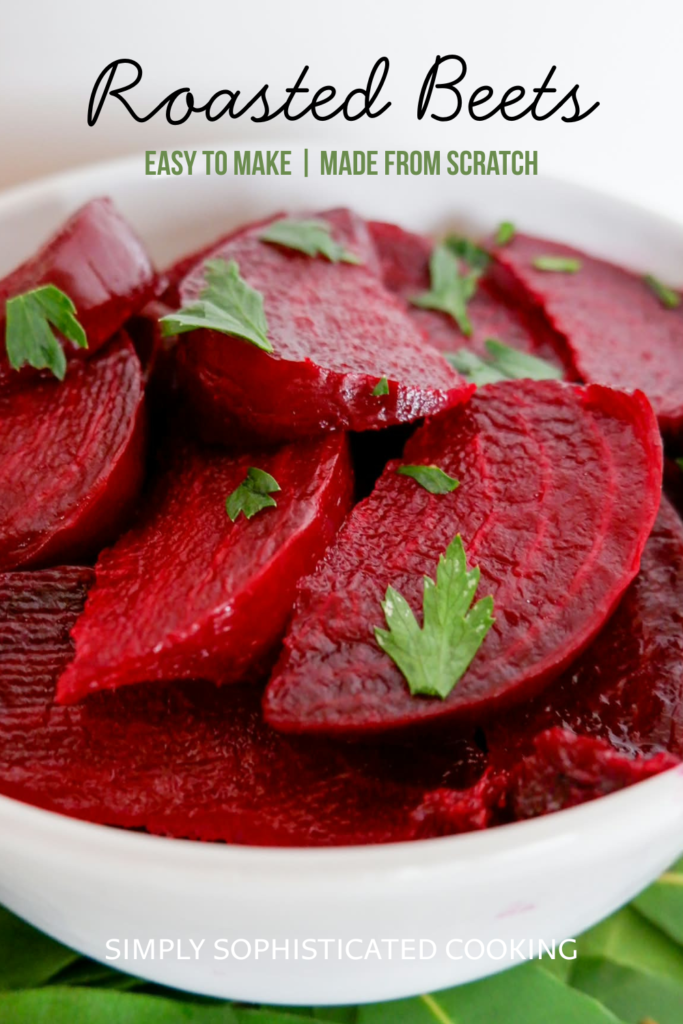
Beets are on standing order in our kitchen. Just about every week, we pop between 3 and 5 into the oven. And then the finished container of wedges or cubes lives in the fridge to be added to salads like the colorful Moroccan Salad, bowls, and quick lunches throughout the week.
Part of it is the flavor. Roasted beets have such a sweet, earthy, almost jammy goodness that boiled beets never have. The other part is the fiber. Beets bring about 3.5 grams of fiber per cup, and if you’ve gotten into that bit older phase of life where you’ve added an excessively large amount of protein to your diet… Your digestion system (amen) appreciates the help. The very reason Beth and I were having the conversation. Enough said.
We make the mess once on the weekends, and all week long, we’ve got ready-to-go roasted veg.
How Many Beets to Roast
For the two of us for the week, I roast:
- 3–4 medium beets
- 5–6 small beets
- 3, maybe 4, big ones
I prefer the small to medium-size beets since they are sweeter and less… ‘rooty’ in flavor. But it does depend on what is in the market. This amount of beets works out to roughly two cups of roasted, cubed beets. Scale up if you’re feeding more people or using them for just a beet recipe. Like my Roasted Beet Salad with Butternut Squash, Feta, and Lime Dijon Vinaigrette recipe uses 2 cups on its own.
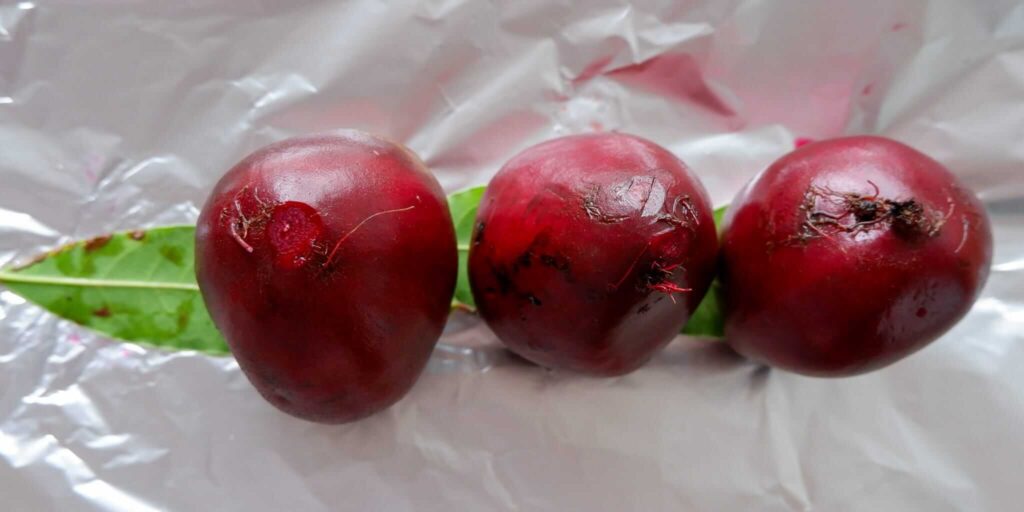
Bay Laurel: The Portuguese Hillside Herb in My Beet Packets
Since moving to Portugal, I started roasting my beets with fresh bay leaves (and using it in loads of dishes).
Bay laurel grows wild and cultivated practically everywhere here. It’s a Mediterranean native, the same tree the ancient Greeks and Romans wove into victory wreaths. Here in Portugal it lines roadsides and backyard fences. When we need a fresh batch, we just pick a couple of handfuls of leaves (no need to break the branches). And then wash and dry thoroughly before popping them in a zip-loc bag in the fridge. They keep for a month to six weeks.
It’s funny cause I grew up in the Southern US, where bay laurel grows as well. Probably over by settlers back in the day. But we only every used it dried. I was told the fresh leaves were poisonous, which of course, isn’t true. Turns out the reason for the warning is that there are a couple of look-alike shrubs – cherry laurel and mountain laurel – that are really toxic. True bay laurel (Laurus nobilis, also called sweet bay) is perfectly safe fresh or dried. So if you’re picking your own, make sure you know exactly what you’ve got.
One easy clue is the smell. Crush a leaf and smell it. A true bay leaf smells like… well… a bay leaf. Cherry laurel smells like bitter almonds, and mountain laurel doesn’t smell like bay at all. If you’re not 100% sure… skip using the leaves and buy them. It’s not worth it, if you can’t tell.
Fresh bay is a completely different ingredient from the dried leaves in a jar. It’s brighter, more floral, almost a little citrusy. Tucked under roasting beets (or other veggies) it perfumes them with the soft herbal notes. It’s good without them, but better with.
If you can’t find fresh bay leaves, dried ones still add something, just more muted. Or substitute in with fresh rosemary, thyme, or sage sprigs. Or skip all together. Your beets will still be delicious.
Tips for Buying and Storing Beets
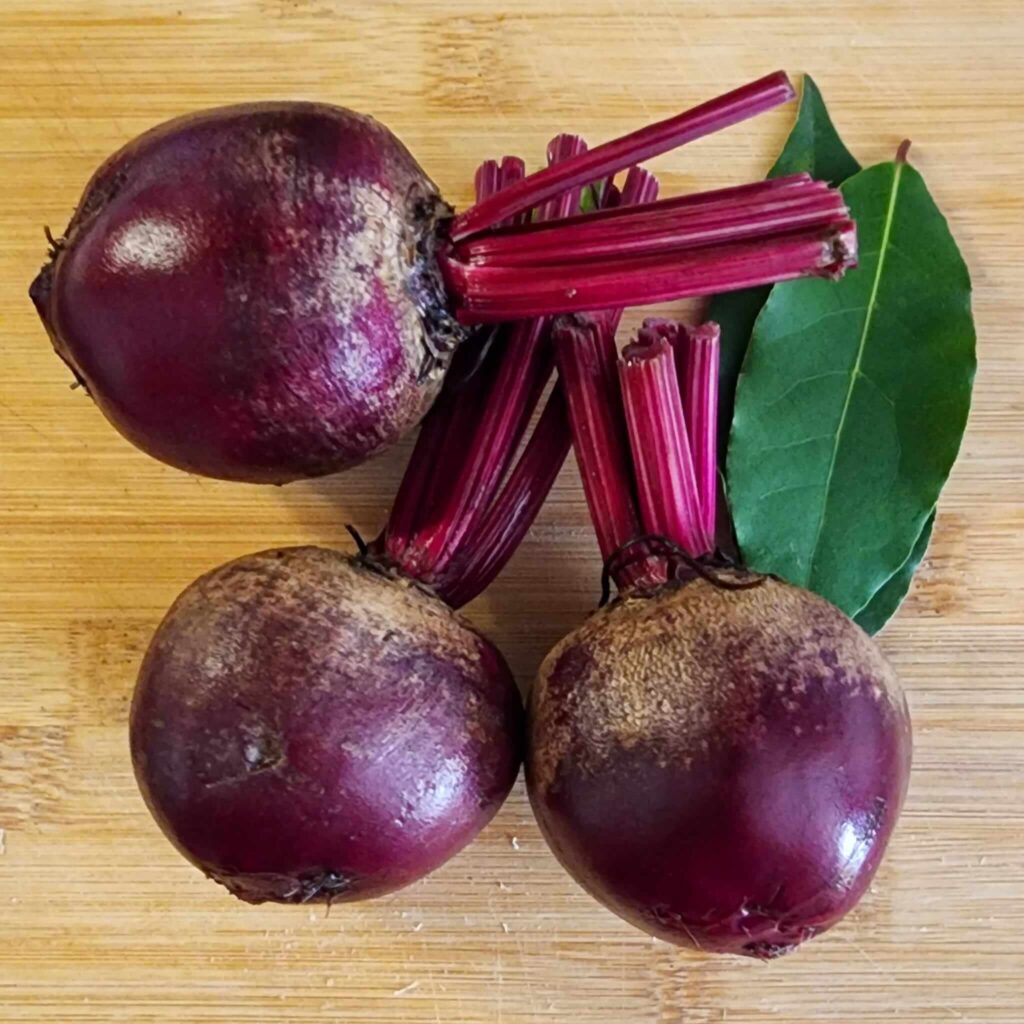
So, when you’re buying beets, the spring and fall ones are usually the sweetest – always after a couple of frosts. It’s the cooler weather that makes them sweet. When choosing beets, look for firm ones with bright smooth skin. No soft or black spots. For roasting, you want your beets to be similar in size so they roast in about the same amount of time. I always check the biggest one for doneness.
If the greens are still attached, look for greens that aren’t broken or bruised. They are edible too, so don’t through them away. When you get home, immediately cut the greens off the beet root (leaving about an inch of stems). Otherwise, they pull the moisture from the roots. You can store them together in the same plastic bag or container in the fridge since both need a good washing. Steam them the same way you do greens like chard or kale.
Raw beets keep for weeks in the fridge. Colorado State University has some helpful storage and nutrition noted on beets, including freezing roasted beets if you’ve made more than you can use. Although one of my favorite ways to save them is to cover with vinegar – I use rice, apple cider, or pear balsamic vinegar – and pickle them if you’ve got leftovers.
Why Roasting Beets in Foil Works
The reason I roast beets in foil is because it does three things at once. They roast, concentrating their natural sugars, into a deep, sweet flavor. And they steam in their own moisture, which keeps them tender and loosens the skins. Btw, if the last time you check them for doness, they are almost there, you can pull them out of the oven and leave them sealed to do the final bit of roasting.
That’s the whole secret with what makes peeling your beets easy. The steaming method makes them losen up and slide right off with the butterknife. Of course, you want to do this step while they are still warm. I’ve put them away in the fridge before peeling, and cold while still much easier to peel than raw, is much harder than when they are warm.
And finally the third reason I do beets in foil is because of the cleanup. If you’ve ever tried roasting beets loose like you would a potato, then you know it looks like a crime scene on the pan. Beet juice everywhere. The foil keeps the juices all contained which is also why I use two layers, not one. One always seems to leak.
How to Tell When Roasted Beets Are Done
Depending on the size, I start checking around the 20 minute mark. If they are really large, I wait until 30 minutes in. I slide open a small corner of the foil – be careful cause steam will release – and poke the biggest beet with a fork. If they aren’t done, I close back up and give them more time. The fork should slide in easily but the beet still be firm, not hard and crunchy or mushy.
Don’t overcook them. Fully roasted, they hold their shape and the texture is delicious. Overcooked they are soft and mushy. Just not a good texture or flavor.
How to Peel Beets (With a Butter Knife)
This is where the magic happens. Take the packet out of the oven and open it up. Let the beets sit in the open foil just until you can handle them. And by handle them, I mean you’ll be able to cut them open without burning yourself.
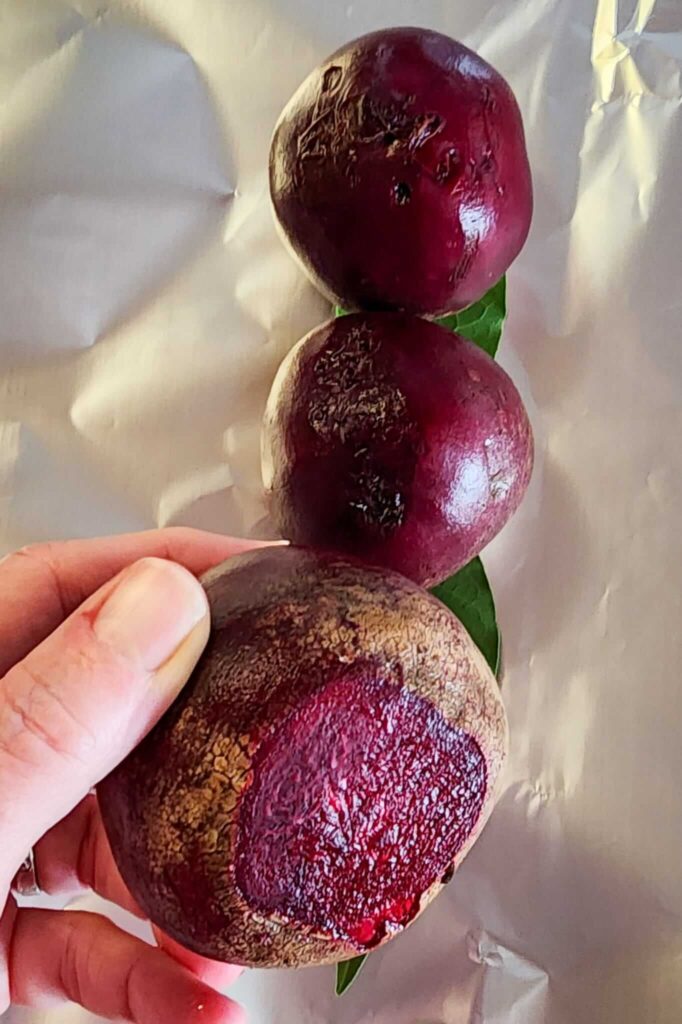
Then peel them while they’re still warm. Hold the beet in one hand and grab the edge of the skin with the butter knife, peeling down. It slides right off.
Don’t wait until they’re cold. Cold beets hang onto the skins.
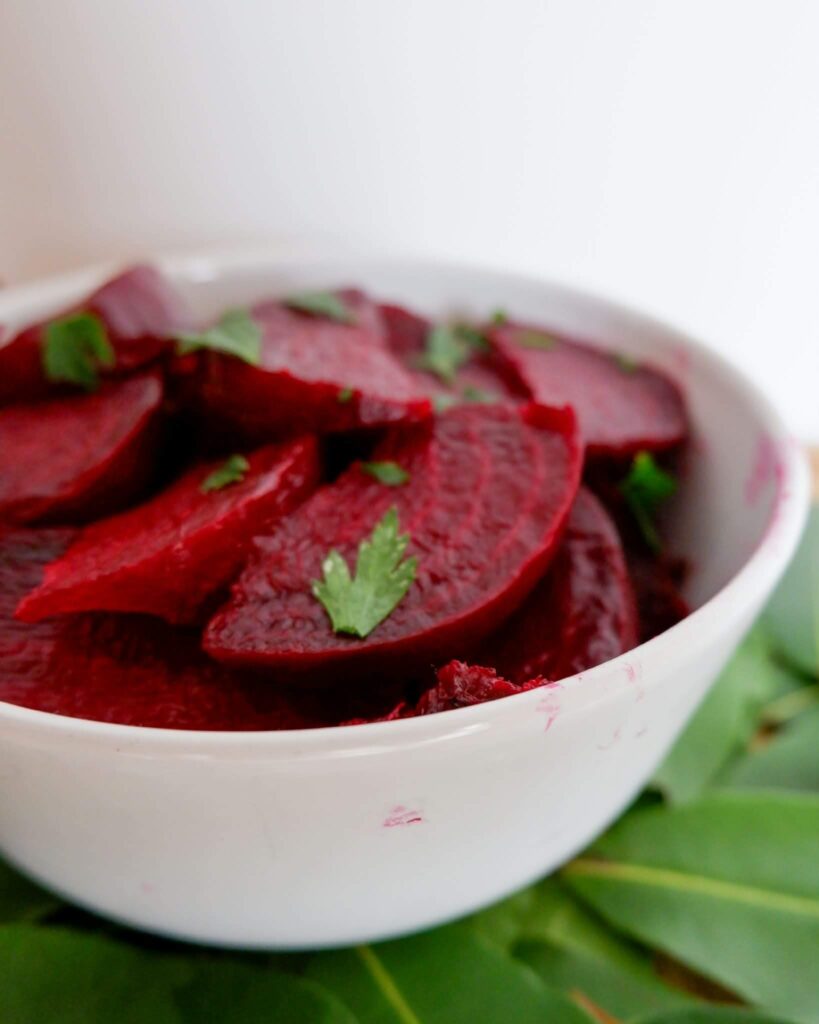
I do all of this over the foil packet, so it catches the mess. Peels. Juice. Everything. Peel, then chop into wedges or cubes using the butterknife, and drop them into a container – glass is recommended. Otherwise the beets might stain plastic. Just don’t touch anything else while you’re peeling them, or you’ll stain it with beet juice. Ball up the peels in the foil when down, toss in the trash, and you’re done. Mimimual mess. No stained cutting board. No pink sink.
Your hands though… that might be another story unless you used gloves. It washed off (or wears off) soon with a good soap and water bath.
Fill the Tray, Use the Oven Once
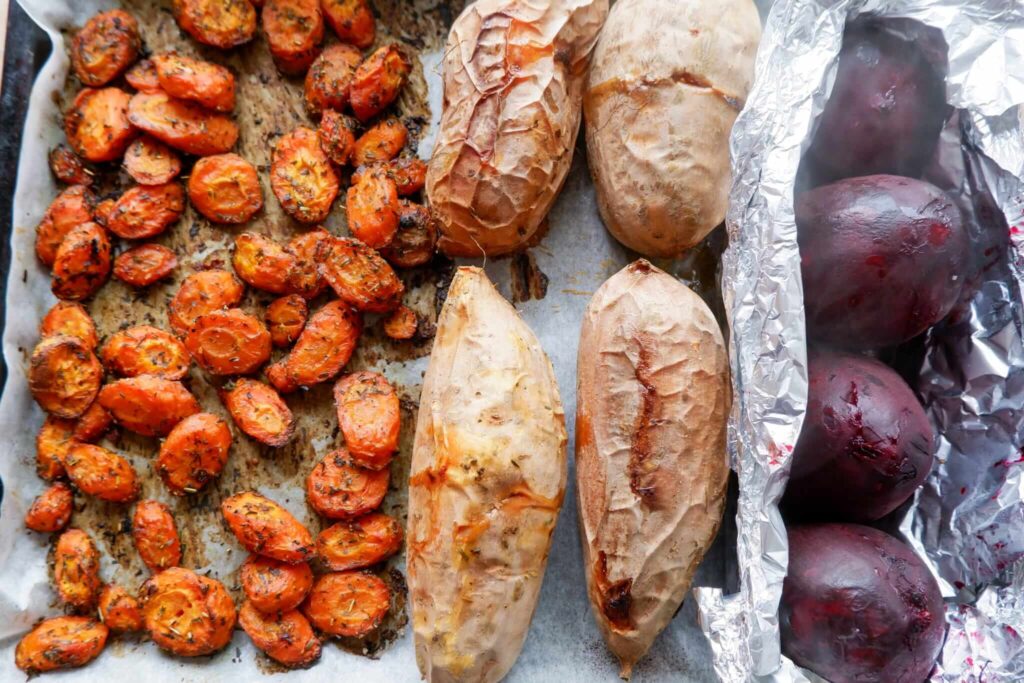
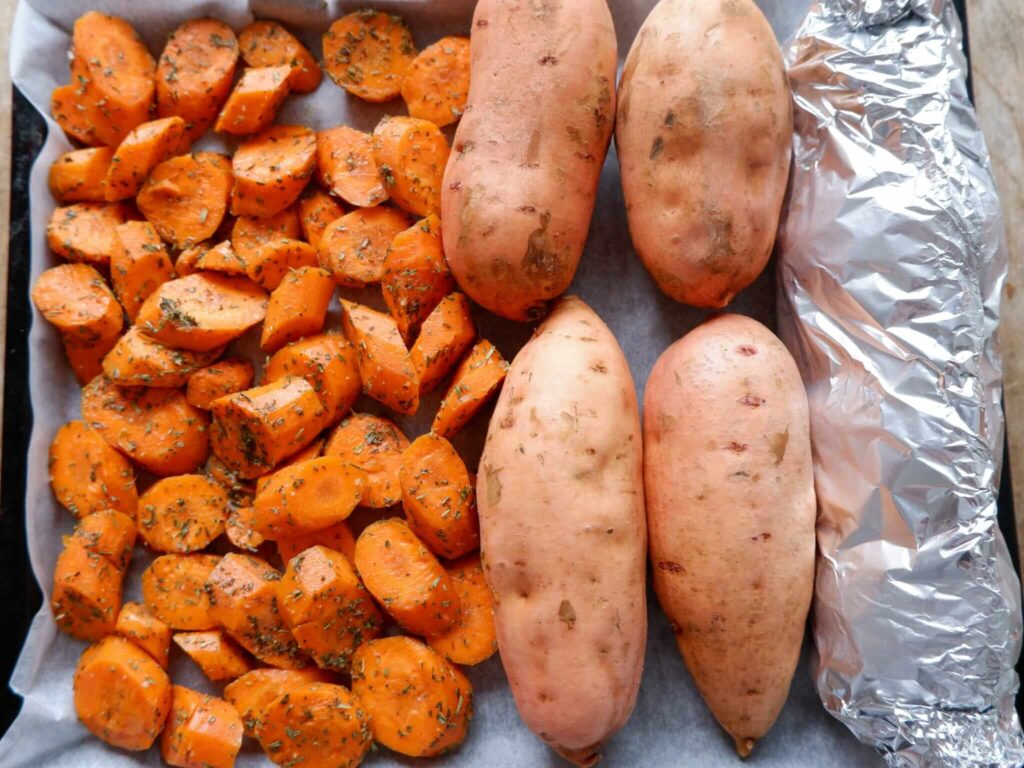
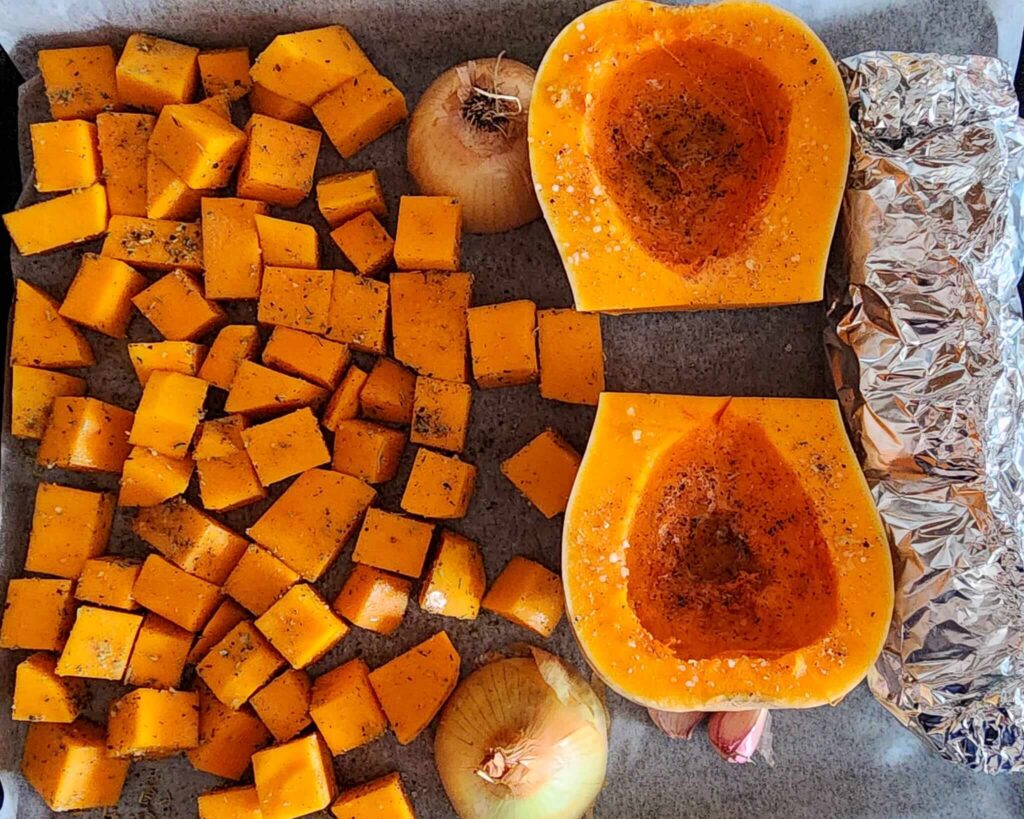
So when I roast beets, I never roast just beets. Because I use a baking sheet (just in case the foil leaks), I go ahead and fill the sheet. Onions cut in half (skins on), carrots, whole garlic bulbs (I do these in foil as well), potatoes, sweet potatoes, winter squash, even apples. Whatever you like roasted, like veggies to make a Fall Harvest Bisque.
As I’m pulling the tray out, I test the doneness of everything as we go. They all cook at different times, so I pull each one as it’s gets done. That way nothing overcooks. By the end you’ve got a week’s worth of roasted veg from one oven session.
Btw, I don’t roast vegetables at the same time as meat or bread. Tried it. It didn’t work. The vegetables release so much moisture into the oven that you end up with steamed meat, instead of roasted. Now if that’s what you’re looking for… go for it. No crispy skins. Otherwise, give them each their own turn in the oven.
Btw, don’t miss out on these Roasted Cherry Tomatoes and Garlic with Herbs de Provence. They are so freaking YUMMY!
Over to You, Beth (and Everyone Else)
Okay, Beth. Put that peeler down. Once you know how to roast beets this way, I promise you won’t go back (unless you’re shredding raw beets for salads). For everyone else, let me know in the comments… did you normally peel your beets before roasting them or do you do them with skins on? And do you use the foil method for easier clean up or just roast them like potatoes? Looking forward to hearing how you use your roasted beets during the week. Btw, if you’ve got questions or I missed something, ask away in the comments.
Recommended Ingredients & Tools for Roasting Beets
Ingredients
Dried Bay Leaves — If you can’t get fresh bay (I total recommend adding a pot to your herb garden), get a jar of good quality whole dried bay leaves. It’s the next best thing.
Flaky Sea Salt— Give your beets a light sprinkle before roasting. They taste so much better with some salt roasted in. You can finish to taste at the end.
Extra Virgin Olive Oil — Just a drizzle. Again, it flavors the beets, as well as helps the skins slip easier.
Tools
Heavy-Duty Aluminum Foil — You might think it’s overkill, but I use the heavy-duty foil, doubled up. I find no matter what, a single layer manages to leak beet juice everywhere.
Parchment Paper — For easy clean up and no sticking, line your baking sheet with parchment paper before adding the veggies. It makes cleanup easy, plus turning your veg during roasting. And your pan is easy to clean at the end. I used to do the rolls, but pre-cut sheets are so much easier.
Rimmed Baking Sheets — I use full sized baking sheets (rim is a must when roasting veggies). They are big enough to do a good amount of veggies, so you only run the oven once. Energy costs are high enough we’re maximizing, right? Plus making the most of our time.
Glass Food Storage Containers — You can use plastic, but it stains. For no worries, keep your roasted beets in the fridge in glass storage containers.
We are a participant in the Amazon Services LLC Associates Program, an affiliate advertising program designed to provide a means for us to earn fees by linking to Amazon.com and affiliated sites. These links and other affiliate links like them do not cost you any extra when shopping but they do help us fund the creation of this site and publications.
Frequently Asked Questions About Roasting Beets
Do you have to peel beets before roasting? NOPE. That’s the whole point of this blog. Make it easy on yourself and roast them skin on. The skins slip off easily once they are cooked.
Why won’t my roasted beets peel easily? Most likely they aren’t cooked enough and the skins haven’t let go yet. You might want to pop them back in the oven for a few minutes. Or grab a sharp knife. They also peel a little harder if they got cold before you peeled them, but they are still peelable with a butterknife.
Can I roast whole beets without foil? You can roast your beets without foil. But it’s the steaming in the foil that causes the skins to release easily. If you roast without the foil, the skins are still easier to remove than when they are raw. But you might need to use a paring knife to get them to release. And you lose the advantage of the easier cleanup.
Do I need to roast beets with salt? No. You can absolutely roast your beets without salt. The flavor is noticeably better when roasted with a bit of salt though because it cooks through.
Can I roast golden or other color beets the same way? Absolutely. Use the exact same method and timing. Golden beets don’t bleed color as much as the red and pink ones do, which means you can toss them with other vegetables without them dying everything pink. Golden beets are a bit sweeter and less earthy than red beets.
Is it normal for beets to turn things… pink later? Yep, it’s totally normal. Red beets tint urine and stool pink or red for a day or so after eating them. So don’t freak out if you look down and everything is pink. It’s harmless.

How to Roast Beets in Foil

Ingredients
- 3-4 medium-sized beets or 5–6 small, or 3 large
- 3-6 fresh bay leaves, one per beet optional
- Light sprinkle of salt
- Small drizzle of olive oil about 1 teaspoon
Instructions
- Preheat the oven to 400°F (200°C). Line a baking sheet with parchment paper.
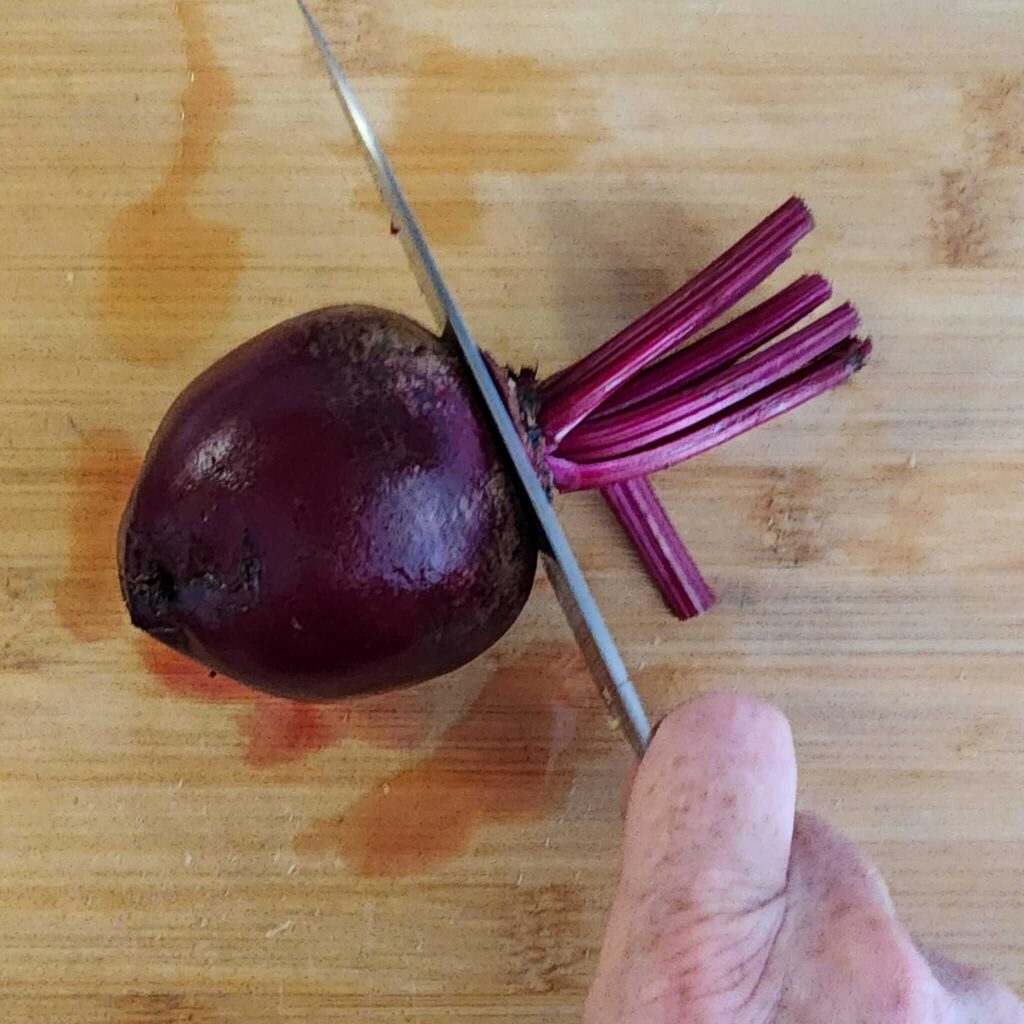
- Wash the beets well. Leave the skins on. Trim the top of each beet, where the leaves sprout, so it’s flat and the beet sits upright.
- Lay two sheets of foil on top of each other. Arrange the bay leaves on the foil and set one beet on each leaf.
- Sprinkle the beets lightly with salt and drizzle with olive oil.
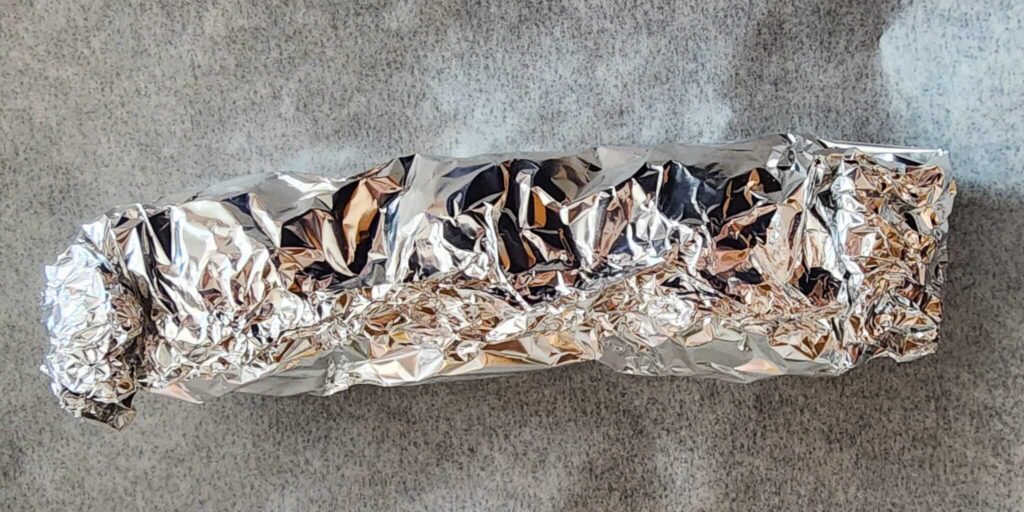
- Bring up the sides of the foil and seal into a tight packet. If your beets are very large, divide them between two packets, each with a double layer of foil.
- Set the packet on the baking sheet. Fill the rest of the sheet with other vegetables to roast if you like.
- Roast 25–45 minutes, depending on size. Start checking at 20 minutes: open a small corner of the foil, test the largest beet with a fork, then reseal. They’re done when the fork slides in easily.
- Open the foil packet and let the beets cool just until you can handle them. Don’t let them go cold.
- While the beets are still warm, slide the skins off with a butter knife, right in the foil packet.
- Cut the beets into wedges or cubes with the same knife and transfer to an airtight container. Wrap the peels in the foil and throw it away.
- Use your beets your favorite way, plain, in salads, as a side dish.
Notes
- Double foil, always. A single layer tends to tear or spring a leak, and beet juice stains everything.
- Peel warm. The steam inside the packet loosens the skins. Once the beets are cold, peeling gets much harder.
- Bay leaves are optional. Fresh bay adds a floral note. Dried bay works but is milder; or skip it.
- Sizing: for two people for a week, we roast 3–4 medium beets, 5–6 small, or 3–4 large.
- Fill the tray: onions halved in their skins, carrots, whole garlic bulbs, potatoes, and apples all roast well alongside. Pull each one as it’s done. Don’t roast vegetables at the same time as meat or bread; the moisture keeps both from roasting properly.
- Golden beets roast exactly the same way and don’t stain.
- Storage: refrigerate in an airtight glass container. Glass won’t stain the way plastic does.