
Roasted Beet Salad with Butternut Squash, Feta, and Lime Dijon Vinaigrette
Originally published November 2014. Updated October 2026.
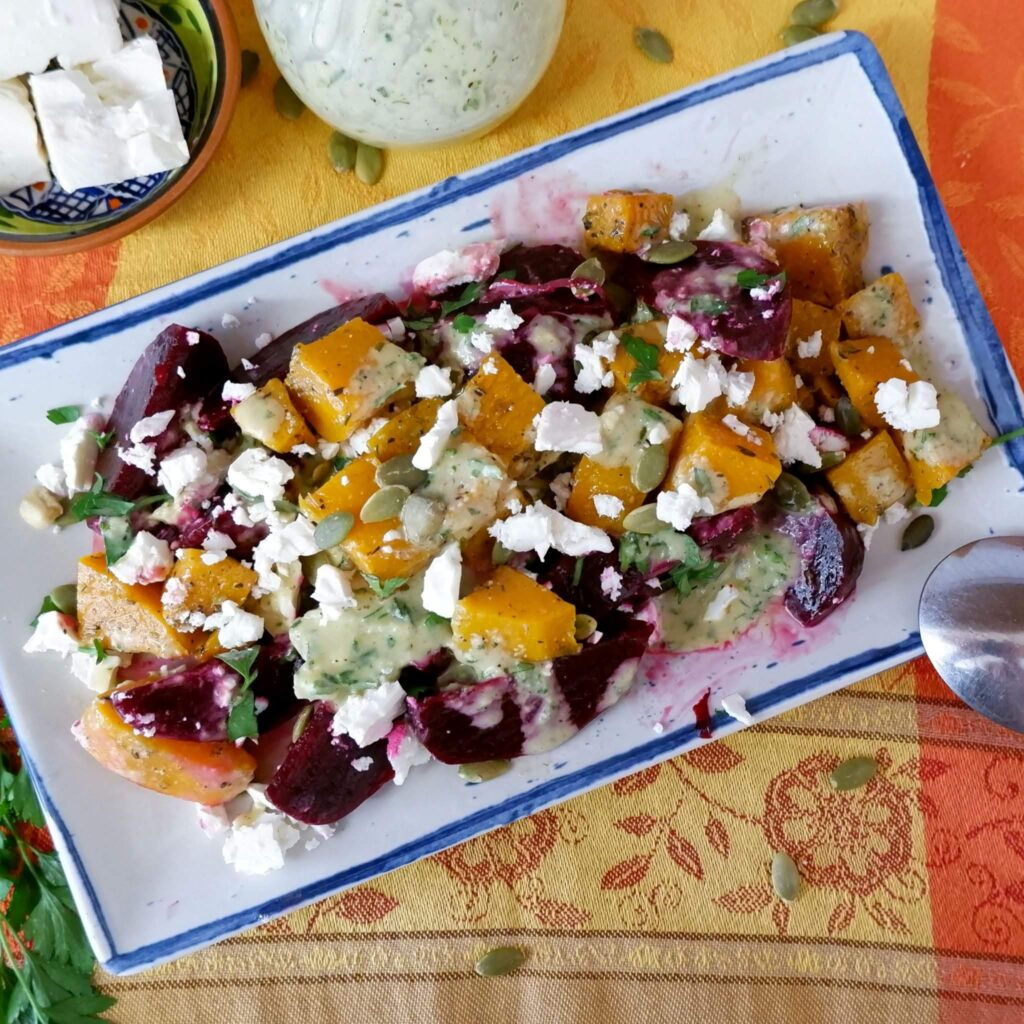
The original version of this recipe was a golden roasted beet salad with pecorino cheese and the Lime Dijon Vinaigrette. But recently because golden beets are harder to find in Portugal, the recipe got a complete makeover. It’s now a roasted beet salad with butternut squash, crumbled feta, pumpkin seeds, and a honey lime Dijon vinaigrette. Yep, it still has the roasted beets, but now paired with roasted butternut. Total game changer.
You can still make it as a beet only recipe, just leave out the butternut. But the butternut addition puts it over the top. If you’re wanting to make a big splash over the holidays with a side dish that’s perfect for the season you wanna make this one. I’ve also switched the cheese for feta or fresh goat cheese. Yep, 100% total makeover.
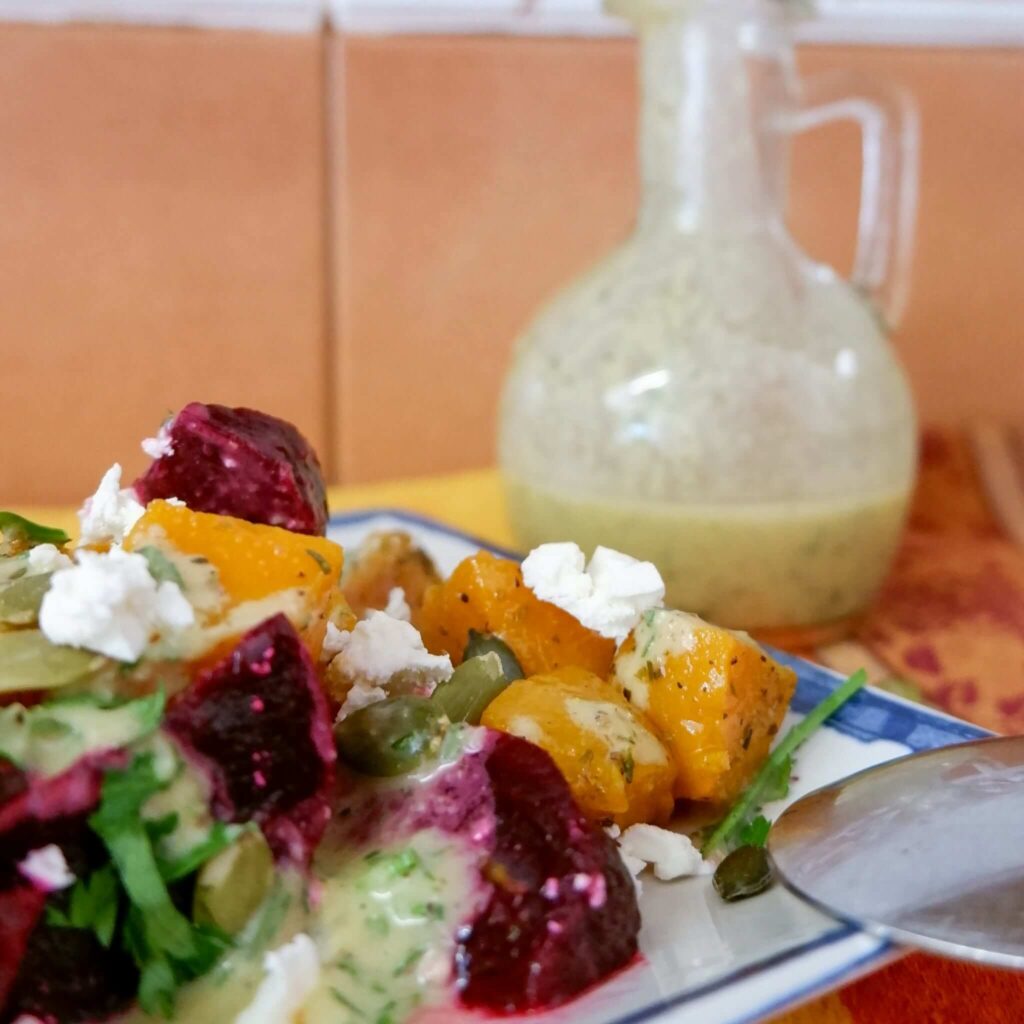
What didn’t change was the lime in that luscious Dijon vinaigrette. And yes, it’s lime… not lemon. I could drink this dressing and it’s good on so many things. It ended up with lime in it originally because I was out of lemon and needed to make a quick vinaigrette. Limes were all I had… so lime it was. And I gotta say, this is one time I was thrilled to not have lemons cause this salad went from good to great. I’ve tried it with lemon since, and it’s not as good. The lime pairs well with the roasted beets and the butternut for a perfect winter harvest salad.
And OMG, the colors. Ruby red beets and gold butternut cubes kinda glow on the plate. It’s so gorgeous. This truly is eating with the eyes before your taste buds even get a chance.
AND it’s one of those salads that holds up for hours once dressed (you can store the leftovers in the fridge for at least a day), making it a perfect dish for the holidays. Or anytime. We eat it starting in the fall, straight through until spring. Roast all the ingredients ahead and then it’s 5 minutes to put it all together and serve.
Beets are a Weekly Thing In Our Home
The hubby and I roast a batch of beets almost every single week. 3 to 4 medium-sized ones, 5 to 6 smaller ones, or if I can’t find the other two sizes, 3 big ones. This is part of our weekly routine, where on the weekends, we prep a bunch of ingredients that can be used to make meals during the week. We rarely ‘meal prep’, making a bunch of bowls of the same dish. Instead, we prep ingredients for the week to make things like salads, pasta, side dishes. And beets are one of those foods. Pop them in the oven with a tray of veggies to roast, make a mess once, and keep a container in the fridge throughout the week.
Part of the reason we do beets specifically is the flavor. And the other part is their healthy fiber. We eat a lot of protein these days, and vegetables like beets and butternut squash both bring good doses of fiber to the plate. Plus, you’re eating the colors of the rainbow. Healthy for your body and mind. And your digestive tract will thank you. Enough said about that!
So What Changed From the Original
- Red beets instead of golden. Golden beets still taste awesome in it, but the contrast of colors between the red beets and the gold butternut is what makes this so pretty on the holiday table.
- Butternut squash. We still make it with beets only, but I have to admit, I think I love the one with the butternut more. The flavor contrast is yummy.
- Feta instead of pecorino. Beets and feta are a classic pairing. You could still do percorino if it’s what you prefer. This is also good with a tangy fresh goat cheese. All 3 go well with the dressing.
- A slightly updated dressing. It’s the same dressing with a few updates. A bit more garlic, fresh rosemary, and I’ve added a little white balsamic vinegar with the lime. It’s such easy to make using a stick blender. No mincing or fuss.
Where Beets Come From (and Why They Stain Everything)
I don’t know about you, but I’m fascinated by knowing where our food comes from. And every culture I’ve visited in the world (so far) eats beets. Apparently the beets we eat today descended from a wild sea beet that still grows along the Mediterranean and Atlantic coastlines. People have been eating them in ancient Greece, Rome, and Egypt long before anyone was putting them in salad. At first, people only ate the leaves, not the root. But today, the root is more widely eaten. I adore sautéing the greens to pair in a salad with the roasted root. If you really want to go down a rabbit hole on beets, including how they became a staple in Eastern Europe, check out the Colorado State University site for history and nutrition.
Btw, while I was there, I found out the beet ‘murder scene’ in my kitchen comes from pigments call betalains. They’re totally water-soluble and of course dye anything they touch. I remember using them in a 4th grade science project where I used vegetables to dye cloth. That pretty pink color wasn’t permanent, but boy it did turn everything a beautiful bright pink until you washed it. Which is also why you have to be careful not to mix the butternut and beets together. Everything ends up pink, instead of gold.
Red Beets vs. Golden Beets
Golden beets will also dye things, but since it’s a light yellow, it’s not as obnoxious. They are also a much milder flavor, less ‘rooty’ or ‘earthy’ than the red beets. Both are wonderfully sweet, especially if you use smaller ones. The bigger ones in either color get that very fibrous, rooty taste and texture.
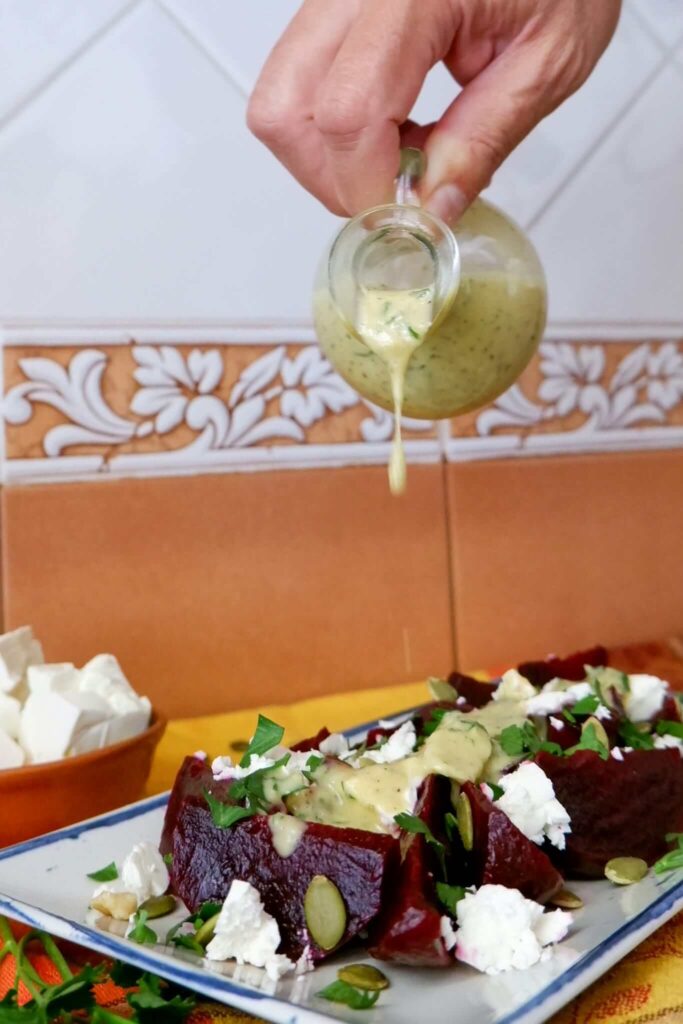
Why This Roasted Beet Salad Works
You can boil beets. It’s faster to cook them by boiling. But they just taste… okay. Nothing all that special. But when you roast a beet, they become so much more sweet, almost jammy in taste and texture. The trick is to make sure you don’t overcook them so that they don’t become mushy. Mushy beets are not a texture I enjoy at all.
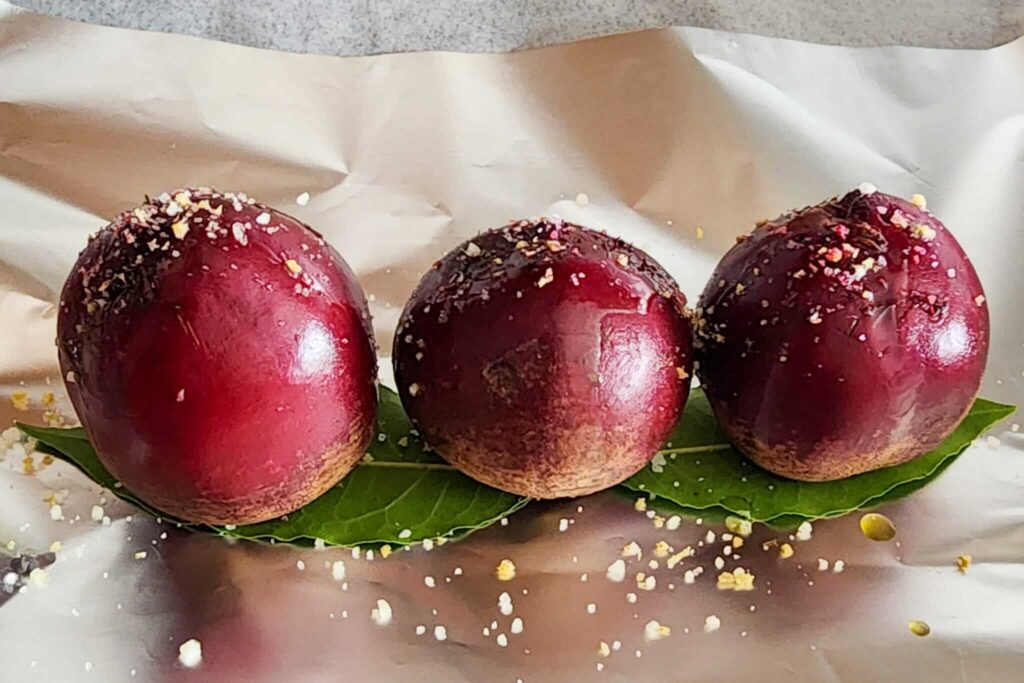
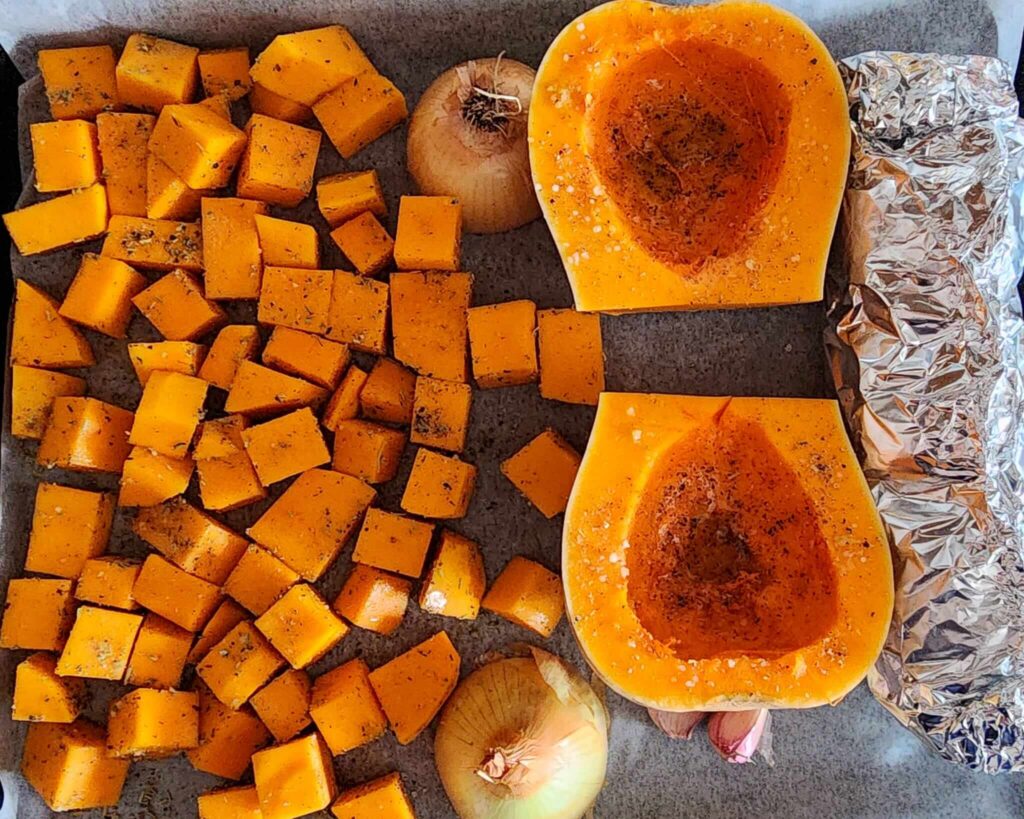
You can easily roast them on the same tray with the butternut as long as you keep them separate so that the beets don’t stain your butternut. And how you do that is to use my method of wrapping your beets in foil which not only roasts them but steams them as they cook. Meanwhile, the butternut cubes caramelize on the open tray.
Don’t mix either on the pan, or store them together, or toss them together in a bowl afterward. Otherwise, you’ll end up with pink butternut. Instead, I put the beets in the serving dish first. Then scatter the butternut cubes over the top, gently working them down among the beets with my fingers or a fork. Just enough to combine, and look like a cohesive salad. That keeps the colors separate, but you still get a bit of both in each bite.

Swap in Any Winter Squash (Sweet Potato or Carrots)
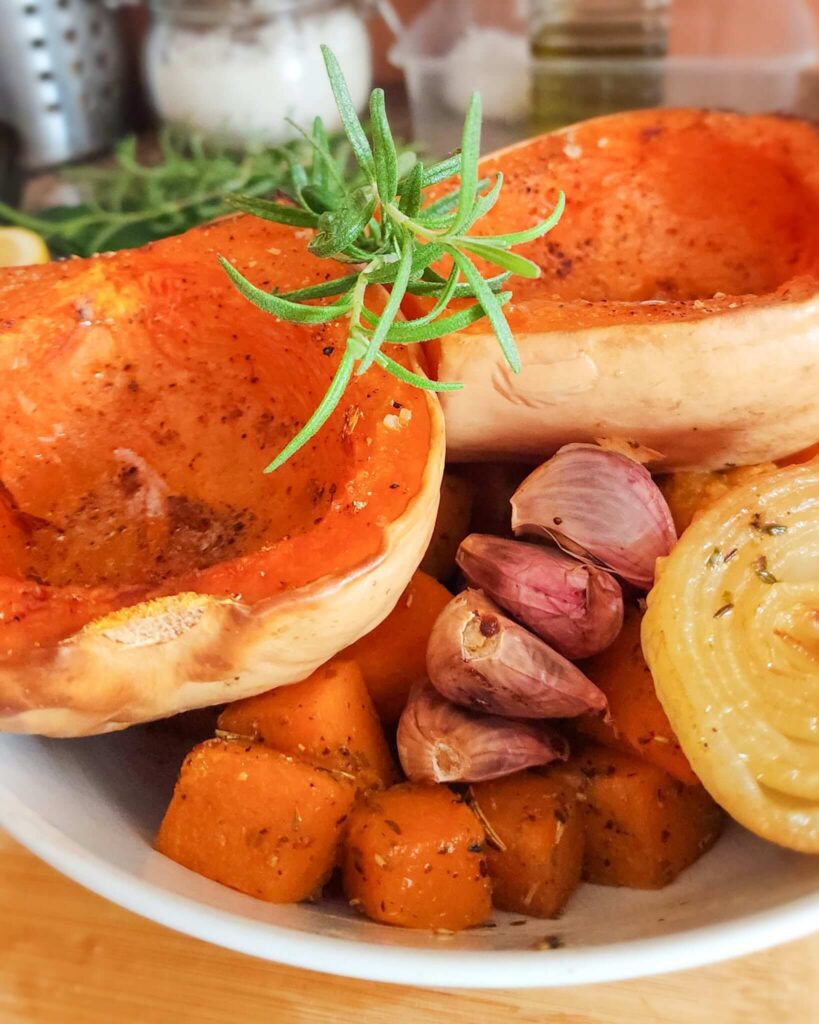
I regularly use butternut in this squash salad, but if you have a winter squash that you like better, use it instead. I’ve made this recipe with delicata (no peeling on this one since the skin is edible). I just slice it into half-moons at the thickness I like in the salad and roast. Hubbard squash is another favorite. It’s sweet, dense, and a little nutty. But it is a bit harder to peel the thick skin off. On the butternut, I just use a potato or vegetable peeler.
Btw, if you have extra squash, try out my go-to roasted winter squash soup recipe. I always do, so I tend to roast the neck of the squash as cubes. Then I just leave the skin on the bulb end and roast it whole until it’s very soft. Soft enough you can easily scoop it out with a spoon for the soup, or a butternut mash, quick breads, or a butternut cream cheese sauce on orzo that I cook risotto-style with roasted chicken thighs. One squash can easily make 2 different dishes, like these winter squash pancakes that are to die for delicious.
And if you have no squash? Use roasted sweet potato cubes or carrots. Both bring the lovely color and sweetness to the salad. Just cut everything into 1/2 inch pieces, and roast on a parchment-lined open tray. And still keep them away from the beets.
Finally, don’t overcook any of them. Mushy beets and mushy squash give a sad texture in this winter harvest salad. It doesn’t stay in nice cubes and instead just mashed together. Bletch! I start checking them at around 20 minutes in with a fork, until they are just past al dente.
How We Serve This Roasted Beet Salad
Some days we just eat this salad with roasted beets and butternut squash for lunch. But most of the time, it’s planned as a side dish for just about any meal. Roast turkey, ham, roast chicken, pork shoulder or poin lion. All so good. And it’s my go-to salad to pair with holiday meals because it is awesome at room temperature and holds without getting soggy. It’s sweet, earthy, salty, and bright all at once, helping to cut through rich holiday or winter food dishes beautifully.
If I’m serving it for lunch, I add a bed of arugula (or the sautéed beet greens) underneath and then toss in some beans for protein. Lentils or white beans like butterbeans or cannellini beans all work well in it for a complete meal. It’s our go-to harvest salad right up until spring
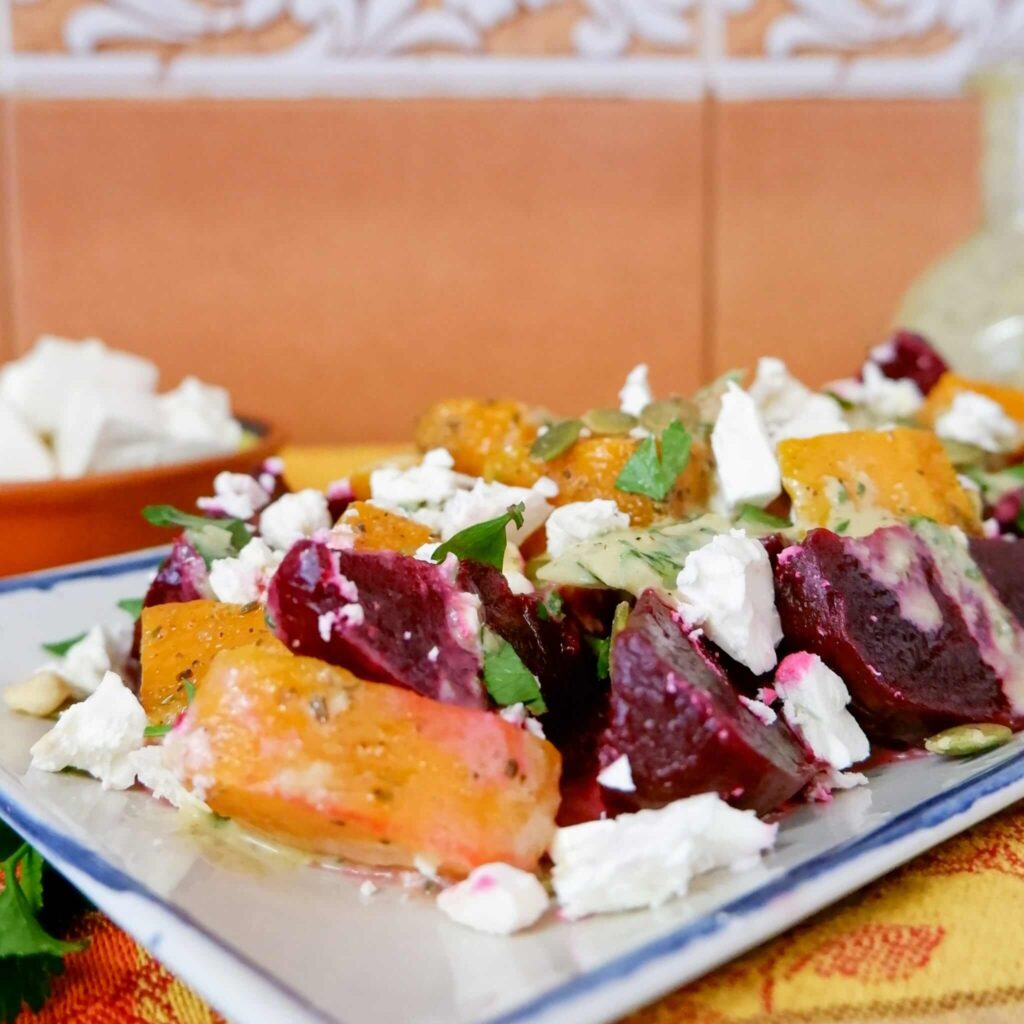
A Make-Ahead Harvest Salad for the Holidays
I tend to roast everything on the weekend, on one tray. Then go ahead and store in the fridge until it’s salad making time. Before serving, warm the beets and butternut just slightly, or let them come to room temperature. If I’m taking it to a get-together, it’s at room temp by the time we arrive. This recipe is a holiday hero. Cause it can be dressed ahead (I prefer to pour the dressing over it just as it’s going on the table), and let it sit. The flavors actually get better as it blends and melds.
You can also make the vinaigrette ahead and have it in the fridge ready to go. Again let it come to room temp so the olive oil hasn’t solidified.
So, have you ever tried lime with beets? Let me know in the comments if you’re still team lemon. And I’d love to hear what you paired this roasted beet salad with. Of course, if you’ve got questions, please drop them there as well.
Recommended Ingredients & Tools for Roasted Beet Salad
Ingredients
- White Balsamic Vinegar — White balsamic is bright, clear, with a gentle sweet acidic flavor. Closer to rice vinegar, but sweeter and fruitier It brings out the flavor of the lime or any dish where you want a hint of bright acid to make the dish sing.
- Dijon Mustard — Dijon is a must. Not whole grain. And I admit I’m a bit of a snob here with always using French Dijon. It’s so much better and worth it when your vinaigrette is hinging on it.
- Raw Pumpkin Seeds (Pepitas) — While you could go with walnuts, pepitas are AMAZING on this salad. They add the perfect amount of crunch and help tie the dish together. Use them raw, or toast in a dry pan for a couple of minutes.
Tools
- Immersion (Stick) Blender — A stick blender is indispensable in a kitchen for making dressings or soups. With the dressing, everything goes in a tall cup, and a quick whiz emulsifies the dressing perfectly. Or pop straight into the soup pot to make soups like Caldo Verde.
- Heavy-Duty Aluminum Foil — Always double the foil for the beet packets, even when using the heavy duty foil. No matter what I do, one layer always ends up with leaked beet juice on the rest of my veggies, turning everything pink.
- Parchment Paper — I always line my baking sheets with parchment paper before roasting for easy cleanup. It keeps the veggie sugars from caramelizing on the pan, which is are hard to clean off.
- Rimmed Half-Sheet Baking Pan — Because of the juices as roasted vegetables cook, you want to use a baking sheet with a rim. Plus it keeps the veggies from sliding off as you’re turning them.
We are a participant in the Amazon Services LLC Associates Program, an affiliate advertising program designed to provide a means for us to earn fees by linking to Amazon.com and affiliated sites. These links and other affiliate links like them do not cost you any extra when shopping but they do help us fund the creation of this site and publications.
Frequently Asked Questions About Roasted Beet Salad
- Can I use store-bought cooked beets? Yes. If you’re looking for a shortcut, you can use the plain cooked beets you buy in the store. Just don’t use pickled beets. Boiled beets aren’t as jammy or sweet as roasted ones, but they still work, in a pinch or for ease.
- What other squash can I use instead of butternut? Any roasted winter squash works. Acorn and kabocha bring a good sweetness. Delicata is the easiest since you don’t need to peel it. Hubbard is a good dense sweet. Or you can even use pumpkin. The trick is roasting them until they caramelize with dark golden edges.
- Can I use something besides winter squash? Absolutely. You can use roasted sweet potatoes – peel them first and cut into bite sized cubes. Or use carrots. Again, sliced into bite-sized pieces. Toss either in olive oil and a bit of salt and pepper and roast until they caramelize.
- Can I make this salad without butternut squash? Yep. The beets-only version is where this recipe started and we make it that way quite often. Use 5 to 6 small beets instead of 3, and keep everything else the same.
- Can I use lemon instead of lime? Yes, lemon will work but the lime pairs slightly better with the beets and richness of the feta. If you’ve only got lemon, don’t skip making this dressing. Or you can even try some orange, although if you go this route, you’ll need a little more of the white balsamic.
Roasted Beet Salad with Butternut Squash, Feta, and Lime Dijon Vinaigrette

Ingredients
Roasted beets
- 3 small red beets about 2 cups once roasted and cubed
- 3-4 fresh bay leaves optional
- 1 teaspoon olive oil
- Pinch of salt
Roasted butternut squash
- 1 cup butternut squash peeled and cut into ½-inch cubes (from the neck of a medium squash)
- ½ tablespoon olive oil
- Salt and black pepper to taste
Lime Dijon vinaigrette
- 2 sprigs fresh rosemary leaves stripped (or 1 generous tablespoon chopped)
- 1-2 large garlic clove or use roasted ones
- ¼ small white onion or ½ shallot roughly chopped
- Juice of ½ large lime
- 1 tablespoon white balsamic vinegar
- 3 tablespoons extra virgin olive oil
- 1½ tablespoons Dijon mustard
- 1 to 1½ tablespoons honey to taste
- Salt and black pepper to taste
To finish
- Small handful fresh flat-leaf parsley chopped
- ¼ cup crumbled feta cheese or fresh goat cheese or pecorino
- 2 tablespoons pumpkin seeds (or sunflower seeds, chopped walnuts)
Instructions
Roasting the Beets and Squash (Can be done ahead in one pan)
- Preheat the oven to 400°F (200°C). Line a baking sheet with parchment paper.
Beets
- Set the unpeeled beets on the bay leaves on a double layer of foil, add the salt and 1 teaspoon olive oil, seal tightly, and place on one side of the baking sheet.
- Roast 25–45 minutes until fork tender, open the packet to cool, then peel while warm and cut into wedges or cubes. (Full method and peel video in our How to Roast Beets post. Already have roasted beets? Skip to step 3.)
Butternut
- Toss the butternut cubes with ½ tablespoon olive oil, salt, and pepper. Spread them on the other side of the baking sheet so they don’t touch the beet packet’s juices.
- Roast the butternut 20–25 minutes, turning a couple of times, until fork tender but not soft. Remove it as soon as it’s done.
Make the Vinaigrette
- Put the rosemary, garlic, onion or shallot, lime juice, white balsamic, olive oil, Dijon, and honey in a tall cup or jar. Blend with an immersion (stick) blender until smooth and emulsified. Season with salt and pepper.
To Assemble
- Arrange the beets in a serving dish. Scatter the butternut cubes over the top and gently work them down among the beets with your fingers or a spoon. Don't toss them together in a bowl — the beets will turn the squash pink.
- Finish with parsley, feta, and pumpkin seeds, then drizzle generously with the vinaigrette. Serve at room temperature.
Notes
Beets-only version: skip the squash and use 5–6 small beets (about 3 cups roasted).
Make ahead: roast the beets and squash up to a few days ahead and refrigerate separately. Bring to room temperature before assembling. The salad can be dressed ahead — nothing wilts, and the flavors meld as it sits.
Roast a full tray: fill the rest of the baking sheet with onions halved in their skins, carrots, garlic bulbs, or potatoes, and pull each item as it’s done. Don’t roast vegetables alongside meat or bread; the moisture keeps both from roasting well.
The rest of the butternut: roast the bulb end whole in its skin until very soft, then scoop it out for mash, quick breads, or a creamy pasta sauce.
Dressing swaps: white wine vinegar works if you can’t find white balsamic. Lime is not optional; it’s what makes this dressing. Nutrition (per serving, approximate — 4 servings, full batch of dressing): Calories: 253 Total Fat: 17g Saturated Fat: 3.5g Carbohydrates: 23g Fiber: 4g Sugar: 15g Protein: 5g Sodium: 497mg Note: Estimated from USDA FoodData Central values. Assumes ¼ teaspoon salt in the dressing and the full dressing batch used; values approximate.