
Homemade Moussaka with Turkey, Lentils and Eggplant

Updated May 2026 — Originally published June 2017.
There’s a diner in Denver called Pete’s Kitchen that does two things exceptionally well. The first is a smothered breakfast burrito covered in green chili I used to enjoy after a night out dancing. The second is it was the place I first tried moussaka out for dinner with friends. Kinda reminded me of the Greek version of Irish cottage pie. And led me to trying my own homemade moussaka at home.
Mine started as an experiment based on what was in the fridge, influenced by our time spent in Morocco. I layered in broiled eggplant, a saffron and turmeric-spiced turkey and lentil sauce, sliced potatoes, and a creamy goat cheese yogurt topping. The hubby loves it, even turning a slice into breakfast by putting an over easy egg on top.
Another recipe I created using the saffron we brought from Morocco is Mussels in White Wine with Saffron and Coconut Milk.

What Is Moussaka — And Why Is This Version Different
Moussaka is a layered casserole eaten throughout Greece, the Balkans, the Middle East, and the Levant. The classic Greek version — the one most people know — layers eggplant with a spiced ground lamb or beef sauce and a béchamel topping. Rich, hearty, and deeply satisfying.
But moussaka’s roots go further back than Greece. The name itself comes from the Arabic “musaqqa’a,” meaning chilled or moistened, and versions of the dish appear across Ottoman and Middle Eastern cooking traditions long before it became associated with Greek cuisine. The Greek version with béchamel was actually codified in the early 20th century by a chef named Nikolaos Tselementes who wanted to bring French culinary technique into Greek cooking. Before that, the dish was far more varied.
My version leans toward that older, more varied tradition without intending to. Nope I didn’t do any homework when making this. I added saffron, turmeric, and cinnamon in the meat sauce because of our time living in Morocco. Turns out this spice combo is closer to a North African or Middle Eastern spice profile than a classic Greek one.
The goat cheese and yogurt topping replaces the traditional béchamel. And the red lentils stretch the meat layer in a way that adds protein, texture, and a kind of earthiness that ground turkey alone doesn’t have.
It’s not traditional. And I had no plans for it to be since I was using up ingredients that were in the fridge. But it’s genuinely delicious, and it tells you something interesting about where this dish actually came from.

Why Ground Turkey and Red Lentils Work Here
The hubby and I have been eating less meat for years… not eliminating it, just being more thoughtful about it. Ground turkey has a milder flavor than lamb or beef, which actually works in this recipe’s favor. It lets the saffron, turmeric, and cinnamon come through more clearly without being overpowered by a strong meat flavor.
The red lentils do double duty. They bulk out the meat layer so you get generous, satisfying portions without loading up on meat, and they add a texture that’s almost indistinguishable from ground meat once it’s all cooked together. Most people eating this don’t even realize the lentils are there until you mention them, at which point they’re usually surprised and slightly annoyed that vegetables tricked them.
Looking for another high-protein bean dish with similar flavors? Check out my Spinach and Chickpea Curry with Coconut Milk recipe.

The Layers — Getting Each One Right
Eggplant: Salt It, Don’t Rush It
The salting step is non-negotiable. Slice the eggplant, sprinkle generously with salt, and let it sit in a colander for at least 30 minutes. The salt draws out excess moisture — skip this and your moussaka will be watery, the layers will slide, and the whole thing loses that satisfying density that makes moussaka worth making.
After salting, rinse thoroughly and pat completely dry before broiling. The broiling step adds a slight char and concentrates the flavor in a way that baking doesn’t. You want the edges just starting to brown and blacken. This can be done ahead, the broiled eggplant keeps well for a day in the fridge.
The Meat Sauce: Build It in Layers
The sauce comes together in one large skillet. Onion first, until properly soft. Then the turkey, zucchini, and carrot together, with the grated veggies almost dissolving into the meat, adding moisture and flavor without any identifiable texture. Then the red lentils, tomatoes, garlic, and all the spices at once. The red wine goes in last before simmering… it lifts everything and adds a depth that water simply can’t.
The Cheesy Yogurt Topping: Not Your Grandmother’s Béchamel
The topping is where this recipe departs most dramatically from traditional moussaka. Instead of a flour-based béchamel, this is eggs beaten with plain yogurt and goat cheese (don’t miss my Blueberry Goat Cheese Cheesecake for a lovely dessert), Pecorino Romano, and fresh basil. It bakes into something lighter than béchamel, set but still creamy, with a tanginess from the goat cheese and yogurt that cuts through the richness of the meat layer beautifully.
Make it first and keep it in the fridge while you work on everything else. Cold topping poured over the assembled layers gives you cleaner, more distinct layers in the final dish.
How We Serve It — And the Breakfast Discovery
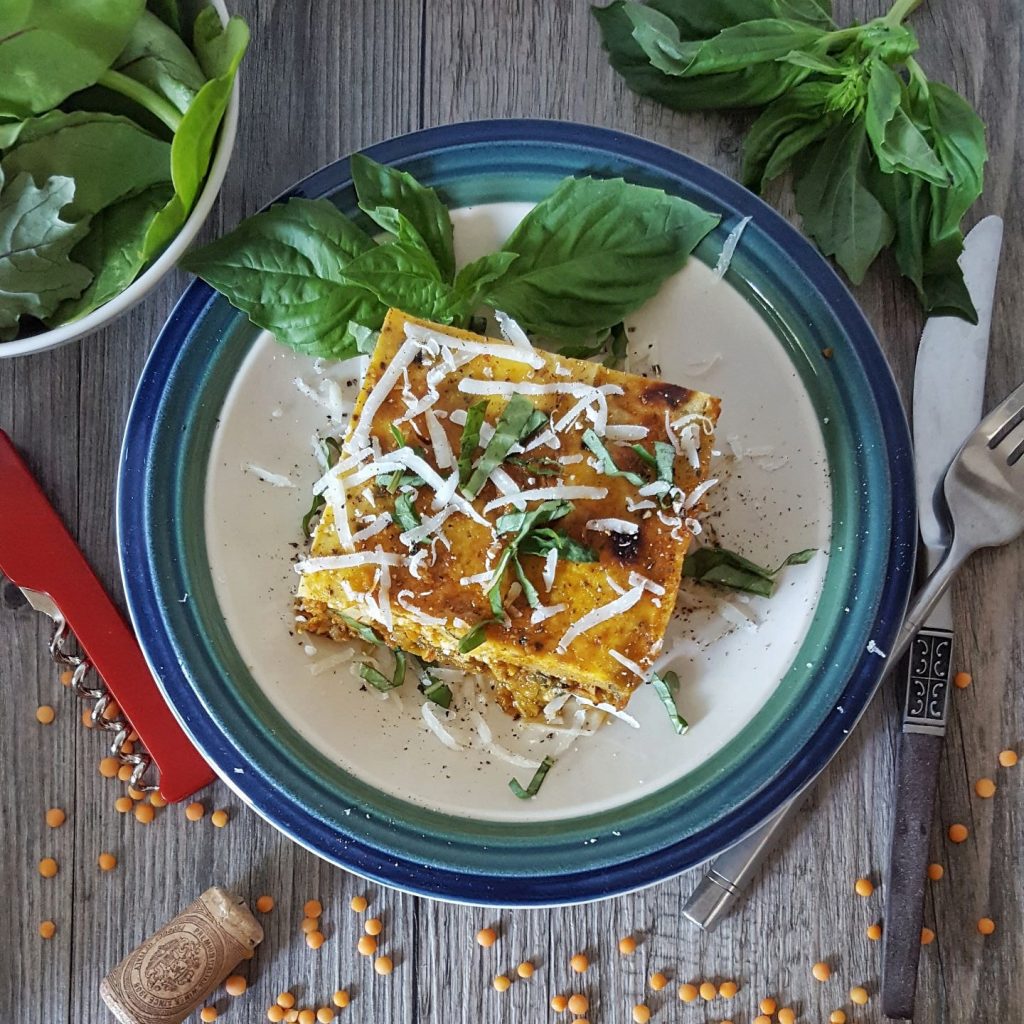
Moussaka is a complete meal. We serve it with a simple green salad and good crusty bread for the sauce. That’s it. It doesn’t need anything else.
The rest time after baking is not optional. 15-20 minutes minimum before cutting. I know it’s hard to wait when the kitchen smells like this, but cutting too early means the layers slide and you lose that beautiful cross-section of eggplant, sauce, potato, and topping that makes moussaka so visually satisfying.
Make Ahead and Storage
This is genuinely one of those dishes that gets better with time. Day 2 moussaka is better than day 1. Day 3 is better still because the flavors meld and deepen in a way that’s hard to explain but very easy to eat.
Make the full pan, cover and refrigerate. Reheat individual portions covered in a 325°F oven for about 20 minutes, or in a skillet over low heat with a lid. It freezes beautifully for up to 3 months. Portion it before freezing so you can pull out exactly what you need.
The Breakfast Thing
I mentioned the hubby eats leftover moussaka for breakfast with an over easy egg on top. This was a discovery the first time I made the recipe. He loved it so much he kept eating leftovers, and at some point breakfast happened. Now it’s just what we do. The egg yolk breaks over the warm moussaka and adds a rich creaminess to the sauce that makes it taste like a completely different dish. I’m not saying you have to do this. But I’m also not saying you shouldn’t.
If you make this moussaka, I want to hear about it. Did you go traditional or did you experiment with the spice profile? And let me know… did anyone in your house eat the leftovers for breakfast? Tell me in the comments.
Recommended Ingredients & Tools for Homemade Moussaka
Ingredients
- Saffron Threads — The quality of saffron makes a real difference in both color and flavor. Look for Iranian or Afghan threads specifically — they’re more potent and more flavorful than most “Spanish saffron” sold in US supermarkets. A small amount goes a long way and it keeps well in an airtight container.
- Red Lentils — Bob’s Red Mill is reliable and widely available. Red lentils cook faster than green or brown and break down more easily into the sauce, which is exactly what you want here. Keep a bag in the pantry — they’re endlessly useful.
- Hungarian Paprika — Sweet Hungarian paprika has a more complex, nuanced flavor than generic paprika. The Szeged brand is a classic and easy to find online. Worth having for this recipe and about a dozen others.
- Canned Crushed Tomatoes — San Marzano or Muir Glen for the best flavor in a long-cooked sauce. The quality of the tomatoes matters here because they’re the backbone of the meat layer.
Tools
- 9×13 Casserole Dish — A ceramic or stoneware casserole dish holds heat more evenly than glass and gives you better browning on the topping. Le Creuset is the dream but any good ceramic 9×13 works. This is the pan you’ll use for moussaka, lasagna, and approximately everything else in your life.
- Large Box Grater — For the zucchini and carrot. A large box grater makes quick work of both and gives you the right texture — fine enough to disappear into the sauce, coarse enough to add substance. OXO makes a solid one with a non-slip base.
- Large Deep Skillet — You need a skillet deep enough to hold the full meat sauce with room to stir without splashing. A 12-inch skillet with 3-inch sides handles this comfortably.
- Fine Mesh Strainer — For draining the cooked red lentils properly. Lentils that aren’t well-drained add too much liquid to the sauce and make the layers wet.
We are a participant in the Amazon Services LLC Associates Program, an affiliate advertising program designed to provide a means for us to earn fees by linking to Amazon.com and affiliated sites. These links and other affiliate links like them do not cost you any extra when shopping but they do help us fund the creation of this site and publications.
Frequently Asked Questions About Homemade Moussaka
- What is moussaka made of? Traditional Greek moussaka is made of layered eggplant, a spiced ground meat sauce (usually lamb or beef), and a béchamel topping. This version uses ground turkey and red lentils in the meat layer, sliced potatoes as an additional layer, and a creamy goat cheese yogurt topping instead of béchamel — lighter, tangier, and with a more complex spice profile.
- What’s the difference between moussaka and lasagna? Both are layered casseroles, but they diverge significantly in ingredients and flavor. Lasagna uses pasta sheets, an Italian meat sauce, and ricotta or béchamel. Moussaka uses eggplant instead of pasta, a Mediterranean-spiced meat sauce with cinnamon and warm spices, and a béchamel or egg-based topping. The flavor profiles are completely different — lasagna is rich and savory in a familiar Italian way, moussaka is warmer, more aromatic, and a little more complex.
- Can I make moussaka ahead of time? Yes — and you should. Moussaka improves significantly on days 2 and 3 as the flavors meld. You can assemble the full casserole the day before, refrigerate unbaked, and bake the next day (add 10-15 minutes to the bake time from cold). Or bake it fully and reheat portions as needed. Either way works beautifully.
- Can I freeze moussaka? Absolutely. It freezes well for up to 3 months. Cool completely before freezing and portion it before you freeze so you can pull out exactly what you need. Reheat covered in a 325°F oven until heated through, about 25-30 minutes from frozen.
- Why is my moussaka watery? Almost always one of two things: the eggplant wasn’t salted and drained long enough, or the meat sauce wasn’t simmered down sufficiently before assembly. Both release significant moisture during baking. Salt the eggplant for the full 30 minutes, pat it completely dry, and make sure the meat sauce has visibly thickened before you layer it in.
- Can I use beef or lamb instead of turkey? Absolutely — ground lamb is the most traditional choice and gives you a richer, more assertive flavor. Ground beef works well too. If using lamb or beef, you may want to drain off some of the fat after browning before adding the lentils and tomatoes. The spice profile works with all three.

Homemade Moussaka with Turkey, Lentils and Eggplant

Ingredients
Eggplant Slices
- 3 large eggplant sliced about 1/2″ thick
- salt
- 4-5 Tbsp olive oil
Meat Layer
- 2 tbsp olive oil
- ½ pound ground turkey
- 1 large onion finely chopped
- 1 medium-size zucchini grated
- 1 large-size carrot grated
- 4 cloves garlic minced
- 2 cups cooked red lentils drained
- ½ cup dry red wine
- 2 tsp fresh turmeric grated
- 1 tsp Savory Spice Shop baking spice or ground cinnamon
- ½ tsp ground cinnamon
- 1/2-3/4 tsp red pepper flakes
- 1 tsp dried basil
- 6-8 threads saffron
- 2 tsp Hungarian paprika
- 28 oz canned tomatoes
- Fresh ground black pepper to taste
Cheesy Yogurt and Basil Topping
- 1 cup plain yogurt
- 5 large eggs
- 2 oz goat cheese
- ½ cup pecorino romano
- ¼ cup fresh basil chopped
- 2 Tbsp all purpose flour
- Salt and pepper to taste
Potatoes
- 4-5 small Russet potatoes cooked and thinly sliced
Instructions
Eggplant Slices
- Salt the eggplant. Slice eggplants and sprinkle generously with salt. Place in a colander for at least 30 minutes — this draws out excess moisture and prevents a watery moussaka.
- Rinse well and pat completely dry with paper towels.
- Drizzle eggplant slices with olive oil and arrange in a single layer on baking sheets
- Broil until lightly browned and slightly charred at the edges, about 4-5 minutes per side. Set aside — this can be done ahead.
Meat Layer
- Heat olive oil in a large skillet over medium heat. Add onion and cook until soft, about 5 minutes.
- Add ground turkey, grated zucchini, and grated carrot. Cook until turkey is cooked through, breaking it up as it cooks.
- Add red lentils, canned tomatoes, garlic, turmeric, cinnamon, red pepper flakes, basil, saffron, and paprika.
- Pour in the red wine and stir everything together. Simmer for 10-12 minutes until slightly thickened.
- Season generously with salt and pepper. Remove from heat.
Cheesy Yogurt and Basil Topping
- Lightly beat eggs in a large bowl.
- Add yogurt, goat cheese, Pecorino Romano, basil, flour, salt, and pepper.
- Beat until smooth and well combined. Refrigerate until needed.
Moussaka Assembly
- Preheat oven to 350°F (175°C).
- Lightly oil a 9×13 inch casserole dish. Layer the broiled eggplant slices evenly across the bottom.
- Pour the meat sauce over the eggplant and spread evenly.
- Layer the sliced cooked potatoes over the meat sauce.
- Pour the cheesy yogurt topping evenly over everything.
- Bake for 45-50 minutes until the top is golden brown and the moussaka is bubbling at the edges.
- Rest before serving. Remove from oven and let rest for 15-20 minutes before cutting — this is non-negotiable. Cutting too early means the layers slide and you lose the beautiful cross-section.
- Serve in generous squares with a green salad alongside.