
Italian Wine Cookies (Ciambelline al Vino): The Cookie You Dip Right intoWine

Originally posted December 2016. Updated August 2026.
Our first experience with Italian wine cookies, ciambelline al vino, was in a little restaurant in Rome. We’d finished dinner and the waiter came back, refilled our wine glasses with some red, and set down a plate of small plump rings. Then smiling he sat down with his own glass and showed us dipping the cookies into the wine.
That first bite… an explosion of lemon. Totally unmistakable, bright, sunny, citrus. The waiter laughed at the expression on my face as he told me, not a drop of lemon in the cookies.
Look I’m not a food chemist, but I know enough about food to know some combinations create surprising flavors. I can only tell you that in these lovely Italian wine cookies, it’s the anise or fennel seed mixing with the wine that creates a lemon flavor where no lemon is involved. Looking it up, Google tells me it’s the anethole in the seeds that creates it when it hits the acidity in the alcohol. And we would never have experienced it without that lovely waiter wanting to share the surprise with us.
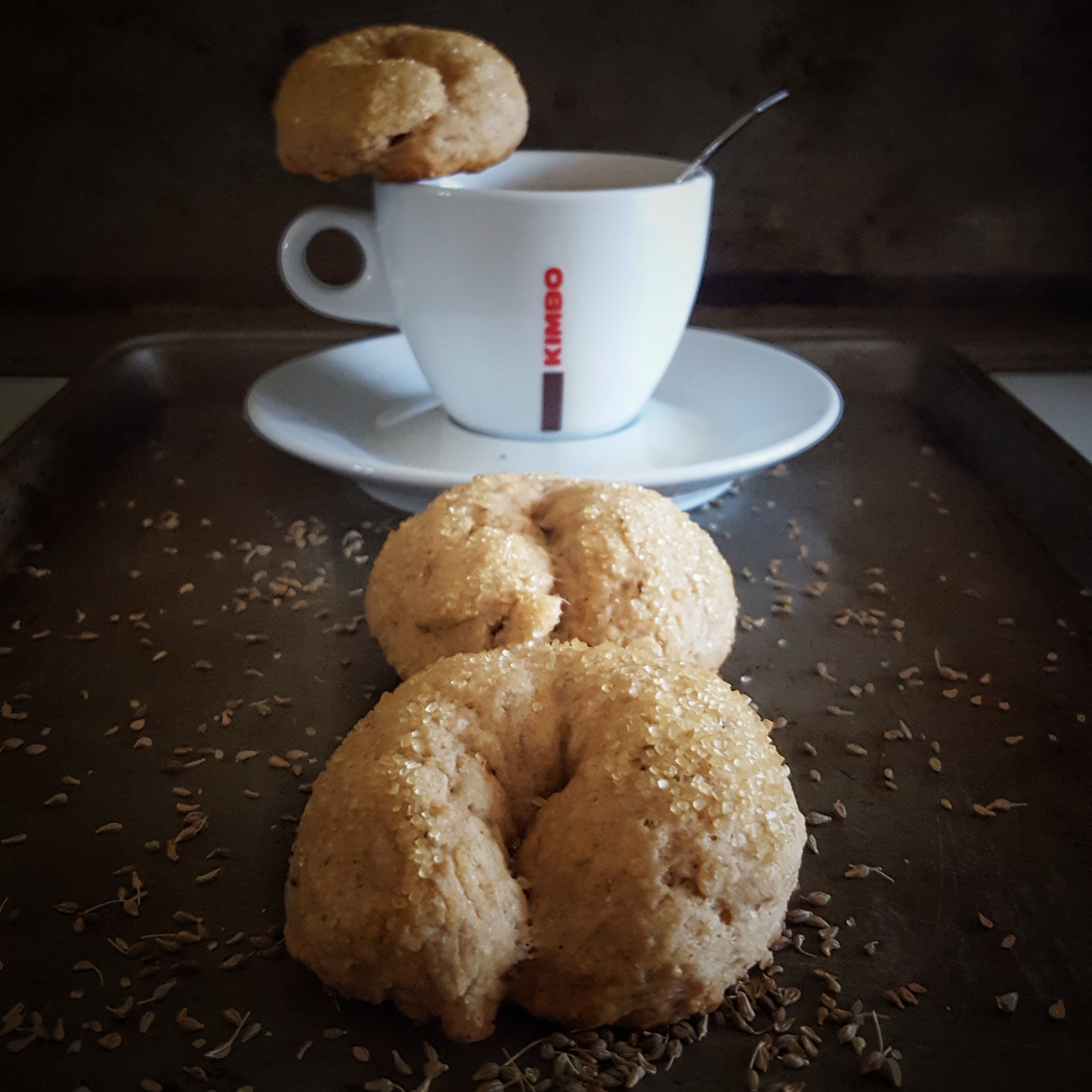
What are Ciambelline al Vino?
Ciambelline al vino loosely translates to ‘little wine rings’. Ciambella means ring or doughnut shape. Add al vino and you’ve got a doughnut-shaped cookie made with wine.
These little delightful yummies come from central Italy, shared across the Lazio, Umbria, and Abruzzo regions. Castelli Romani, the hill towns south of Rome, and Frascati, claim the origin of them. The whole of central Italy is wine region, so it makes sense wine ended up in cookies. What a better way to use up a leftover (okay I have to open a new bottle to make them) wine than in baking?
These cookies have no butter or eggs. Mostly using whatever is easily available in the kitchen. Flour, sugar, olive oil, wine, and a handful of fennel or anise seeds. That’s the ingredients. No scales or measuring cups. They’re measured using the small clear glasses the Italians drink wine out of.
Make them ahead and they keep in a tightly sealed container at room temp. No refrigeration, no fuss. You can also freeze the dough. Make them into rings, and freeze on a parchment covered plate or sheet pan. Then bag them in a freezer bad. Bake from frozen, adding 2 to 3 minutes to the time.
Each region has a different local name for these Italian wine cookies. In Castelli Romani they’re ‘mbriachelle, translating to ‘the little drunk ones.’ I’ll admit that got a giggle out of me to have a cookie named after being tipsy. In Umbria, they’re tisichelle, which references the brownish cast red wine gives the dough. Most often they’re made for harvest time, feast days, and festivals. You’ll find them at village sagre across central Italy and in the fraschette, little rustic taverns, around the Castelli Romani. Always served with a glass of wine.
We ate them in Rome first, but have had them sense all over Umbria. Even in Assisi where they make their own documented version using a local Assisi wine, fennel seeds, and raisins. Like I said, every town and region has it’s own version using a different wine. Very similar to the Italian Almond Biscotti, known in Italy as the cantucci or biscotti di Prato, another traditional cookie often given with a drink for hospitality. So very Italian.
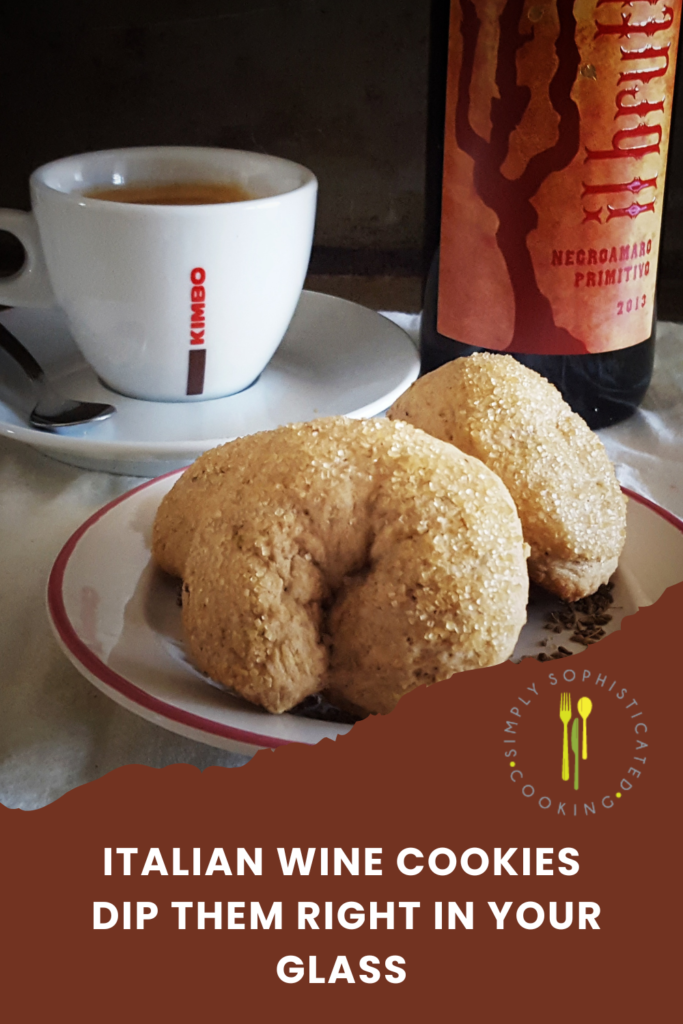
Red Wine or White Wine?
BOTH. Yep, you can use either for making these Italian wine cookies. The Italian do. They just go with whatever is open like if they had made cacciatora, either white for Pollo alla Cacciatora in Bianco or red in traditional Chicken Cacciatore.
Red gives them a deeper color and a more assertive flavor, finishing with a rosy cast. The white is a lighter, golden cookie with a cleaner finish. In Frascati, white is what you’ll usually get there. We had the red more often in Umbria. The ones here in the photos were made with white because it’s what I had at the time.
Italian wine or any wine? Weeeellll, that one is totally up to you. Since it’s an Italian cookie, I tend to be more of a purist and use Italian wine. But I admit here in Portugal, it’s harder to get Italian wines, so I will use a Douro region Portuguese wine. It doesn’t need to be an expensive one in either case. Just use whatever kind you drink. These cookies are historically made with the cheap house wine – drinkable and tasty. Don’t mistake that house wines are bad wines. They aren’t. Otherwise, the locals wouldn’t keep coming back to drink it.
Btw, if you don’t drink or have kids – the alcohol bakes completely out of the cookies. The wine is for flavor, not to actually get anyone tipsy.

What Makes the Texture in these Italian Wine Cookies
Olive oil makes them crunchy and crumbly at the same time. Shattering rather than snapping, without going soft the way a butter cookie does after a couple of days in the tin. These cookies keep beautifully for at least two weeks in a sealed container. That is… if that last that long. They don’t in our home. But their ability to hold is what makes them perfect for festivals or the holiday season for having something when guests show up.
The sugar on top isn’t just for decoration, so don’t skip it. Instead, it caramelizes in the oven to a crackly crust. Honestly, it’s what makes me love this cookie so much.
And the seeds. No substitute here. Whole NOT ground. When you bite into them with the wine in your mouth. The chemicals in the seeds are activated, releasing the oil into the mouth, AND that beautiful lemon flavor. Ground diffuses into the dough and loses the effect entirely. Like I said, WHOLE seeds only.
Now to settle whether anise or fennel seeds. Both are traditional. Anise is the old version. But fennel turns up throughout Lazio and Umbria. These regions love their fennel. The two are 100% interchangeable depending on what you have in the cupboard.
I’ve always used fennel seed because it’s what I keep in my spice cabinet. And now living in Portugal, it’s quite hard to find Anise, so definitely it’s fennel. I’ve never had both cookies together at the same time to compare whether they taste different or not. But I trust the Italians know their flavors, so use the one that’s your favorite. Anise is sharper and more licorice-forward. Fennel is softer and sweeter. Same family, same trick.
A tip I picked up in Umbria is to soak the seeds in the wine for about 30 minutes before you start. It gives the ciambelline al vino A LOT more flavor. It’s optional, so if you forget, they are good without it.
How to Serve Italian Wine Cookies
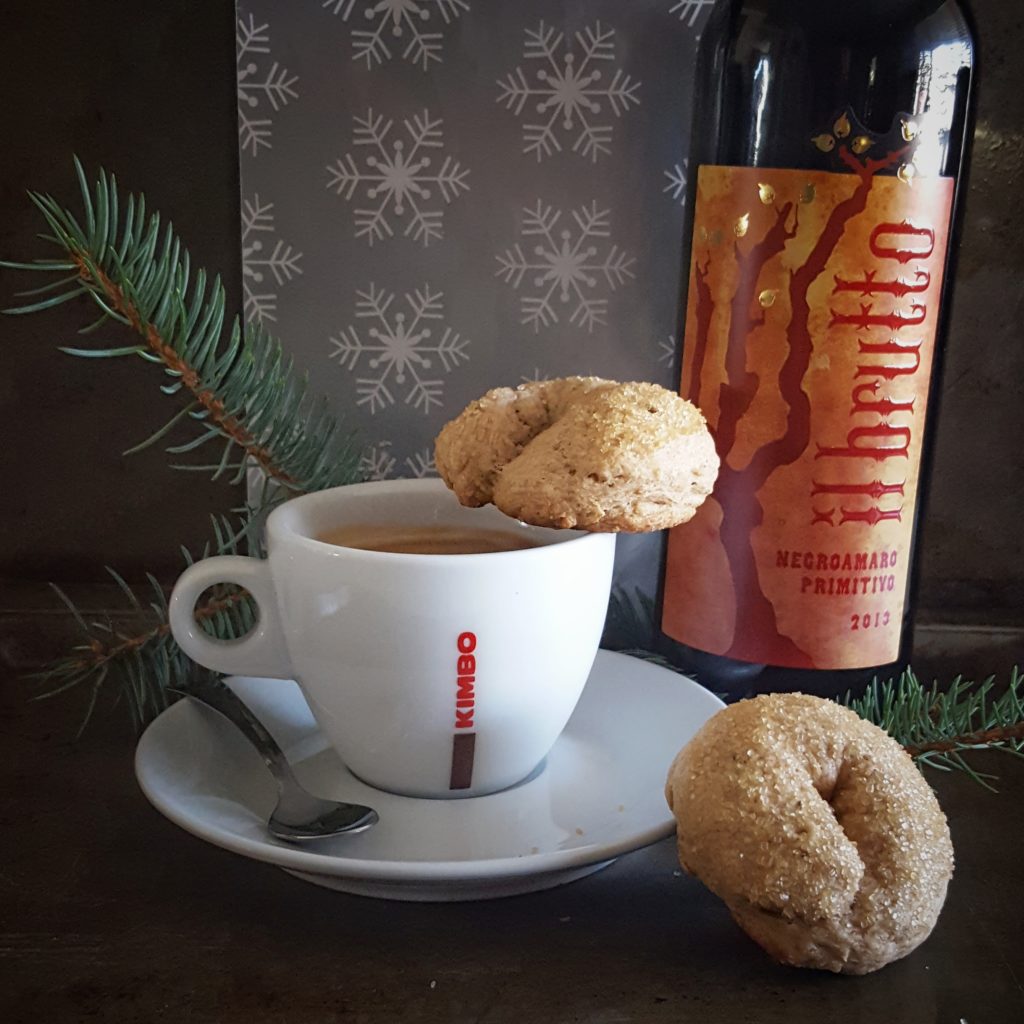
Seriously, dip them in wine. It’s the tradition and it’s the only way to get that lemon burst in the mouth. Red or white. Totally up to you. Just dunk them in and take a bite.
David loves them with his morning coffee. They hold up to espresso the way biscotti do. And considering they have the anise notes, they pair beautifully with sambuca or grappa if you want something stronger.
When I’m not drinking, I pair them with tea. I do miss the lemon flavor, but they are still delicious.
Btw, if you’re looking for gifts for foodie friends, box up a dozen of these cookies and add a bottle of Italian wine, along with a note explaining to dip the cookies. Perfect.
Let me know in the comments, red or white? If you’re going to given these lovely little Italian wine cookies a try, are you baking and then eating them with red or white wine? Got questions? Leave them there as well.
Recommended Ingredients & Tools for Italian Wine Cookies
Ingredients
- Whole Fennel Seeds (or anise seeds) — Whole seeds, not ground. Whichever seed you use, buy them fresh to make sure you have plenty of the oils to react from the wine and give the lemon burst. Old seeds don’t have the same flavors.
- Good Extra Virgin Olive Oil — Use good olive oil. These are basic ingredient cookies, having the best is important. The oil adds both flavor and texture to the cookies. Do NOT use butter.
- Turbinado or Raw Sugar — The coarse sugar crystals from raw sugar gives the crackly crust. Regular granulated sugar sorta works, but it’s not the same crunch.
Tools
- Sheet Baking Pans — I recommend having 2, so you can rotate the pans through the oven while making the loops.
- Pre-Cut Parchment Sheets — I adore parchment sheets in the kitchen because they make it so much easier for clean up and keep the cookies from sticking.
- Wire Cooling Racks — Make sure your cookies are completely cool before storing in a container or they’ll steam themselves soft. A good rack makes the difference between crunchy or disappointing.
We are a participant in the Amazon Services LLC Associates Program, an affiliate advertising program designed to provide a means for us to earn fees by linking to Amazon.com and affiliated sites. These links and other affiliate links like them do not cost you any extra when shopping but they do help us fund the creation of this site and publications.
Frequently Asked Questions About Italian Wine Cookies
- Can I taste the wine in ciambelline al vino? Nope. The alcohol bakes off entirely, leaving behind a subtle depth, not a recognizable wine flavor. What you notice is the licorice taste that changes to lemon when dipped in wine.
- Why is my dough too dry or too sticky? The dough is totally flexible. If it’s too dry, add a bit more wine. If it’s too wet, add a bit more flour. It’s forgiving. And the difference is often because of the brand of flour, the humidity, or how you measure it. Start with a smaller amount of wine and add as you go until the dough feels like a stiff bread dough, firm, not tacky, and holds together when you press it.
- Can I make Italian wine cookies gluten-free? Yep. They are a bit crisper and less chewy, but it suits these cookies. Just swap in Bob’s Red Mill 1 to 1 gluten flour in equal substitution.
- Are these the same as Italian anise cookies? No. They are related, but not the same. Italian anise cookies are the frosted, cake-textured cookies that use butter and eggs. Ciambelline al vino have no butter, no eggs, no frosting, they are totally dairy free and vegan.

Italian Wine Cookies (Ciambelline al Vino)

Ingredients
- ¾ cups sugar
- 1 to 1 ½ cups red or white wine (start with 1 cup, add more as needed)
- ⅓ cup light oil
- 1 Tbsp. whole anise seeds OR whole fennel seeds
- 1 ⅓ tsp. baking powder
- 2 ½ cups all-purpose or whole wheat flour
- Granulated or raw sugar
Instructions
- For deeper flavor, combine the seeds with the wine and let them soak for 30 minutes before you begin.
- Combine flour, sugar, fennel or anise seeds and baking powder on a large cutting board or flat counter.
- Mound flour mix and make a well in the center. Slowly pour in some of the wine and oil and start mixing as you go.
- Continue adding the wine and oil until you've used all the oil and enough of the wine that the dough resembles a stiff bread dough.
- Preheat oven to 350 degrees F.
- Start shaping the cookies by breaking off a small piece and rolling between your palms into a 1 1/2 inch rope. Join the ends of the dough to form a ring. You want the cookies to be about 1 1/2 to 2 inches across.
- Roll the top of the ring in the sugar and place on a baking sheet.
- Bake until golden brown, about 25 minutes.
- Cool well before storing in a tightly closed container.