
Italian Almond Biscotti (Gluten-Free Option): The Tuscan Cookie Made for Dipping

Originally published December 2014. Updated August 2026.
Our first trip to Italy was back in 2014. We spent 10 days split between Florence and Rome. It was also our first taste of almond biscotti. Biscotti in Italian literally means cookies. They call ‘biscotti’ as we call it in the States, cantucci or biscotti di Prato. So, all cookies in Italy are biscotti or cookies.
You’ll find many different flavors of cantucci all over Italy, the almond biscotti is the original. Originally from Prato, a small city about 10 miles outside of Firenze where they are called biscotti di Prato. They’ve been documented in Prato since the 1600s. But it was in 1858, when a Prato baker named Antonio Mattei refined the recipe we recognize today. Baked twice, first as a log, then sliced, and baked again. He took them to the Universal Exposition in Paris in 1867 and won special mention. The bakery is still there, with the Pandolfini family taking over in the 1900s, selling the original recipe.
I’ll admit, on first taste, I kinda wondered what the attraction was cause these cookies were DRY. Double baked, they are intentionally meant to be dunked into espresso, limoncello, or other liquids. Our first experience was dunking them into limoncello, which I admit, made that first – dry – impression totally wrong. We enjoyed it so much, that I came home and started making my own almond biscotti.
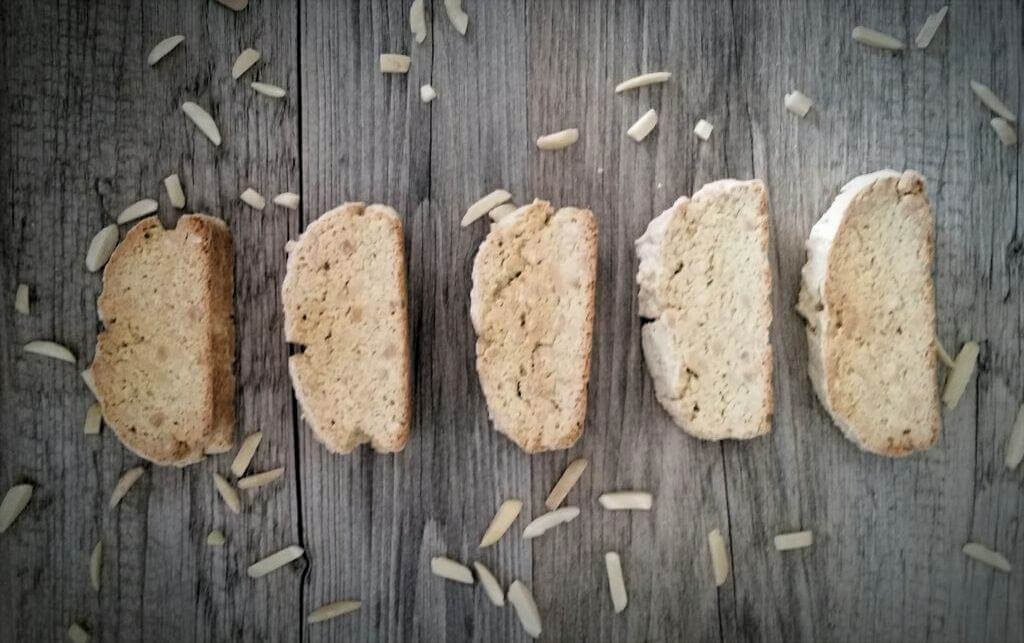
Why Biscotti Are Baked Twice
These cookies are naturally free of butter, oil, and dairy. The reason being is fat goes stale and eventually rancid. Biscotti were meant to be travel food. When you take the fats and diary out, the double bake removes any remaining moisture. You’re left with a food that travels.
Sailors, soldiers, merchants all carried them across Europe and oceans on trade routes. The cookies arrived, assuming they weren’t eaten on the journey, still perfectly good.
The trade off is they are hard and dry. Seriously, don’t try to eat one without dunking it in liquid first. You just might crack a tooth. But dipped into coffee (hubby’s favorite), tea, or Limoncello and they’re so goooodddd. Or you can try the traditional pairing which is cantucci with Vin Santo.
Vin Santo is a golden sweet dessert wine made with dried grapes. In Florence we most often were served a plate of biscotti with a small glass of Vin Santo. Never because we ordered them. It’s a hospitality gesture in Italy. A thank you after enjoying the food.
It’s normal all across Italy, to experience some version of a cookie (biscotti) with the hubby’s coffee or a glass of sweet wine or limoncello at the end of a meal. A small bite that just makes you feel appreciated and cared for. So, I did the same with almond biscotti in my home.
Another favorite dunking Italian biscotti is Italian Wine Cookies (Ciambelline al Vino). This one tastes like lemons even with no lemon in it, simply by dipping it into wine.
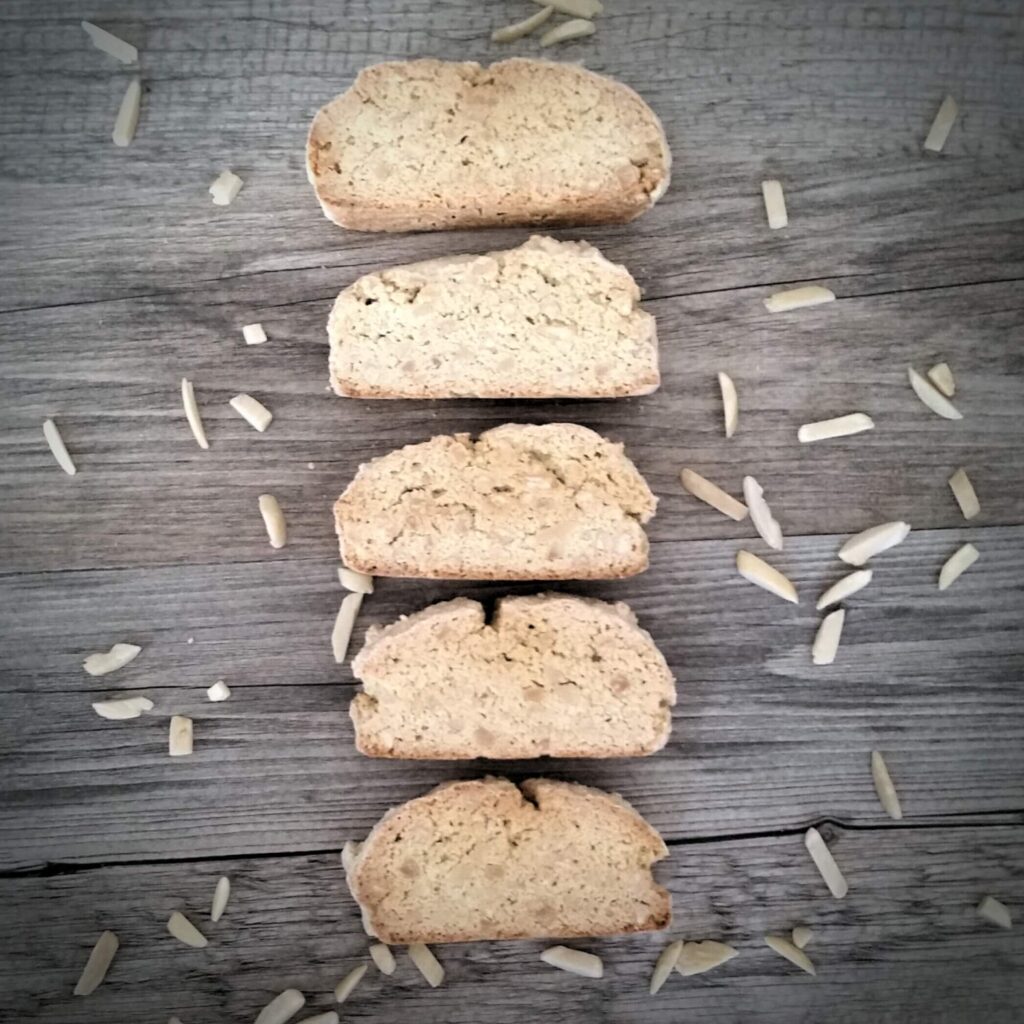
What Makes This Almond Biscotti Recipe Work
So, traditional biscotti di Prato use whole unpeeled almonds. Easy. Peasy. I strayed away from traditional and used blanched silvered almonds. The taste is cleaner, without the slight bitter that comes from the peel, which I preferred. It also made them easier to slice cleanly. Both ways are good, so go with whichever appeals to you most.
Also, don’t skip toasting the almonds before using in the recipe. Even though this recipe is twice-baked, the toasting brings through the flavor in the almonds that the baking doesn’t. It’s easy to toast them, whether you pop them into a 350°F oven or in a skillet on the stove top. Watch them closely, stirring often so you don’t burn them. The easiest way to tell, is when you’re smelling ‘almond.’
When it comes to slicing the log, don’t slice it right as it comes out of the oven. It’ll crumble. Also don’t wait and slice when it’s cold cause it’ll shatter. Warm is the way to go. And always use a serrated bread knife and a sawing motion.
Btw, you also control the crunch of your biscotti. The longer you bake them, the harder they get. 10 minutes a side and you get crisp with a little give. 15 minutes and you’ve got a proper Tuscan tooth-breaker. They continue to harden as they cool, so keep checking them and pull where you like them.
Gluten-Free or Regular Flour – Both Work Well
For the hubby and I, most of our baked goods are made with regular flour. But we’ve got a lot of friends who don’t eat gluten and I give cookie platters as gifts at Christmas. So, I made it my mission to be able to give everyone cookies, including a taste of Italy with these Almond Biscotti or one of my favorites Chocolate Cranberry Biscotti.
One of the side effects of gluten-free flours is they run on the drier side, a bit more crisp like my Buttery Almond Spritz Cookies. So, when I made both versions side by side to compare, the gluten-free biscotti came out slightly crisper. My gluten-free friend Mary said it best, ‘they’re perfect for dunking but lack the chewy texture normally associated with biscotti.’
She’s right, but not a problem since dunking is the goal. So crisper is arguably an upgrade. If you want chewier, use regular flour. If you’re baking for someone, use the swap and don’t apologize for it. My favorite gluten-free flour is Bob’s Red Mill. As many times as I mention them, probably should see about being an ambassador for them! It’s a straight 1 to 1 swap in the place of all purpose in any recipe I’ve tried it in. No other adjustments.
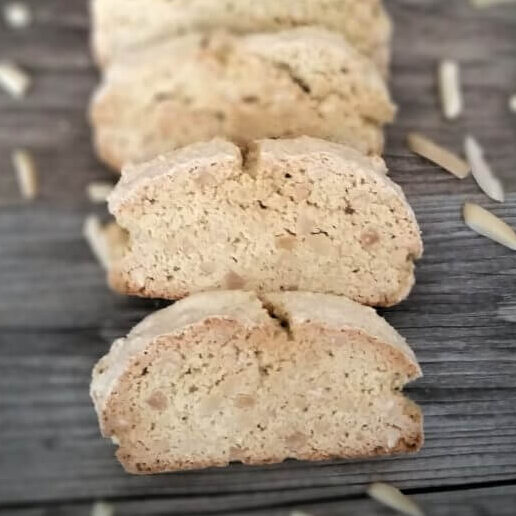
Storing and Gifting Almond Biscotti
Almond Biscotti or biscotti of any kind are fantastic as a make ahead cookie since they keep in airtight containers at room temp. for weeks. Absolutely beautiful for the holidays and gift giving. They also freeze well, and if you want to bake and serve them fresh – freeze as an unsliced log. Thaw and then slice and bake as normal.
The hubby and I really enjoy giving the taste of Italy, as well as munching through almond biscotti paired with a batch of limoncello. Or open a bottle of Moscatel or other dessert wines. Are you a fan of biscotti? What’s your favorite flavor? Let me know in the comments, and if you’ve got questions, leave them as well.
Almond Biscotti Recommended Ingredients & Tools for Almond Biscotti
Ingredients
- Blanched Slivered Almonds — Blanching removes the skins from almonds, giving them a cleaner look and more delicate flavor. Don’t buy pre-toasted. The flavor isn’t right. Instead, toast them yourself and you’ll get more out of them. They’re fresher.
- Pure Almond Extract — Use the real stuff. Pure. Not imitation almond extract (or any extract). It matters in the flavor of your baking. Btw, if you don’t have almond extract, vanilla is a nice substitute. Either way, use the good stuff.
- Bob’s Red Mill Gluten-Free 1-to-1 Baking Flour — My favorite gluten-free flour, easily swapped same measurement with regular flour.
Tools
- Serrated Bread Knife — A regular knife will crumble your biscotti log. Instead use a serrated blade to saw cleanly through and make your biscotti.
- Baking Sheet and Wire Cooking Racks — I’m a huge fan of good quality stainless steel baking sheets for cookies. And of course, you want cooling racks for properly cooling them down so they don’t steam, reducing the crunch.
- Pre-Cut Parchment Sheets — I’ve done the oil the sheets, and using non-stick baking sheets, but seriously parchment paper is the way to go to make sure your cookies come out perfectly. No sticking. No Scrubbing later.
We are a participant in the Amazon Services LLC Associates Program, an affiliate advertising program designed to provide a means for us to earn fees by linking to Amazon.com and affiliated sites. These links and other affiliate links like them do not cost you any extra when shopping but they do help us fund the creation of this site and publications.
Frequently Asked Questions About Almond Biscotti
- Can I make biscotti without almond extract? Yes, you can switch in vanilla extract. But it does change the flavor. You lose the pronounced almond flavor.
- Are these safe for a nut allergy? Nope. They have both almonds and almond extract. Neither is safe for anyone with tree nut allergies. You could try leaving out the slivered almonds and swapping in the vanilla extract, but you’re making an entirely different biscotti.
- What’s the difference between biscotti and cantucci? Nothing. Cantucci is the Tuscan name for the biscotti di Prato. Biscotti is what we know the same thing as in the States.
- Can I add chocolate or dried fruit? Absolutely. You can fold in whatever flavors you like. I’ve tried them with dark chocolate and cranberries and gingerbread. I’ve eaten lemon ones in Italy. You won’t be making the traditional almond biscotti, but hey, as long as it’s good, right?

Italian Almond Biscotti (Gluten-Free Option)

Ingredients
- ½ cup blanched slivered almonds toasted
- ⅔ cup sugar
- 2 large eggs
- 1 tsp almond extract
- 1 tsp baking powder
- ½ tsp salt
- 1¾ cups all-purpose flour OR gluten-free 1-to-1 baking flour
Instructions
- Preheat oven to 350°F. Line a baking sheet with parchment paper.
- Toast the slivered almonds on a dry baking sheet for 8–10 minutes, until fragrant and lightly golden. Set aside to cool.
- Sift together the flour, baking powder, and salt in a medium bowl. Set aside.
- Using a mixer, beat the sugar and eggs for 3 to 4 minutes, until pale and thickened. Add the almond extract.
- Slowly add the flour mixture to the egg mixture, mixing just until combined.
- Fold in the toasted almonds.
- Form the dough into a log about 12 inches long and 1 to 1½ inches high on the prepared sheet.
- Bake 20 to 25 minutes, until the log is firm and lightly golden.
- Remove from the oven and cool for about 10 minutes — not longer, or the log will shatter when you slice it.
- Using a serrated bread knife, slice the log into ½ to ¾ inch slices. Place cut side down back on the baking sheet.
- Bake about 10 minutes per side, until golden. The longer you bake, the crisper and less chewy they become.
- Cool completely on a wire rack before storing in an airtight container.
Notes
- Gluten-free swap: Bob’s Red Mill gluten-free 1-to-1 baking flour substitutes equally for the all-purpose. The gluten-free version comes out slightly crisper; the regular flour version slightly chewier.
- Toasting the almonds is not optional. Untoasted almonds contribute almost no flavor to a twice-baked cookie.
- The 10-minute cooling window matters. Too hot and the log crumbles; fully cooled and it cracks.
- You control the texture with the second bake. Eight minutes a side for softer, 15 for a proper Tuscan crunch.
- Naturally dairy-free — there’s no butter or oil in the recipe.
- Yield: 18 to 20 biscotti, depending on slice thickness.
- Contains tree nuts. Not suitable for almond or tree nut allergies.
- Recipe adapted from Italian Dessert Recipes.