
Authentic Italian Pizza Dough (Learned Using a Wood-Fired Oven in Umbria)
Originally posted May 2021. Updated September 2026.
Pizza pronta!
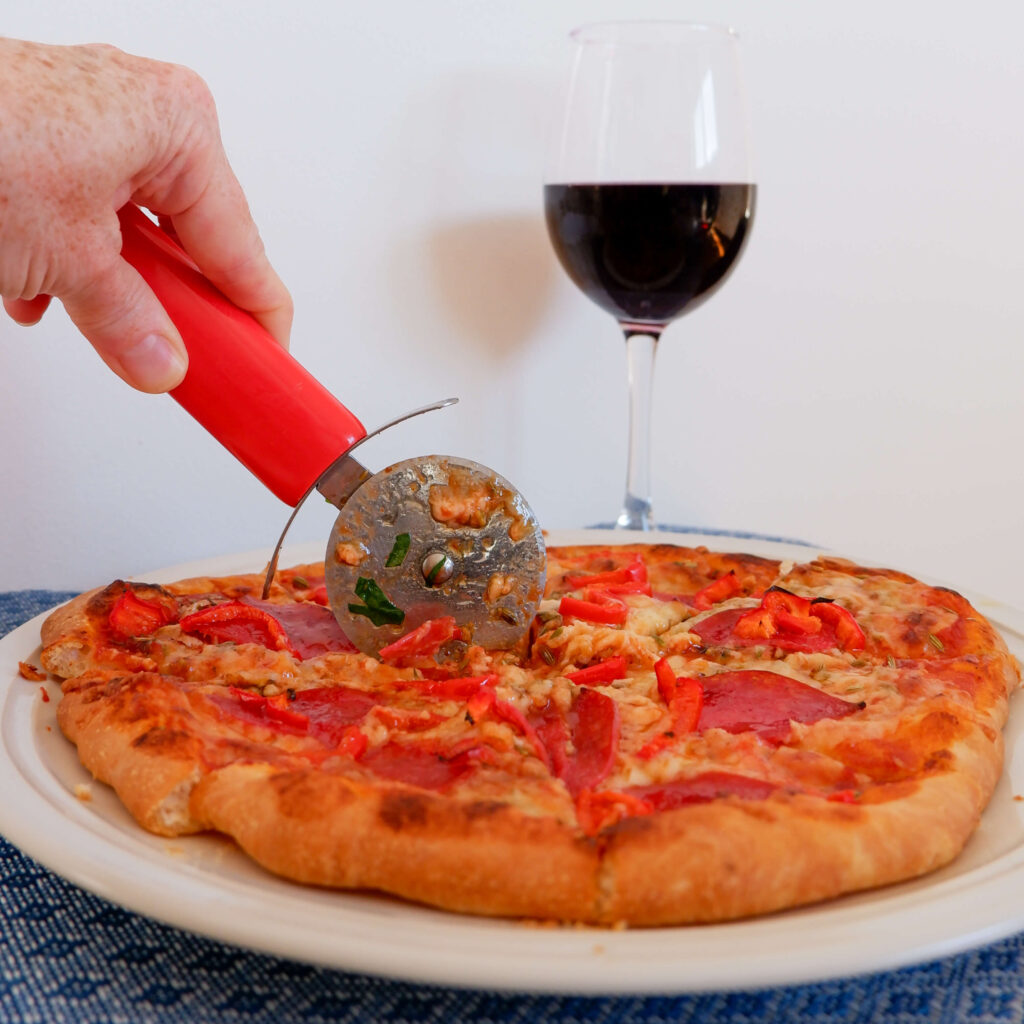
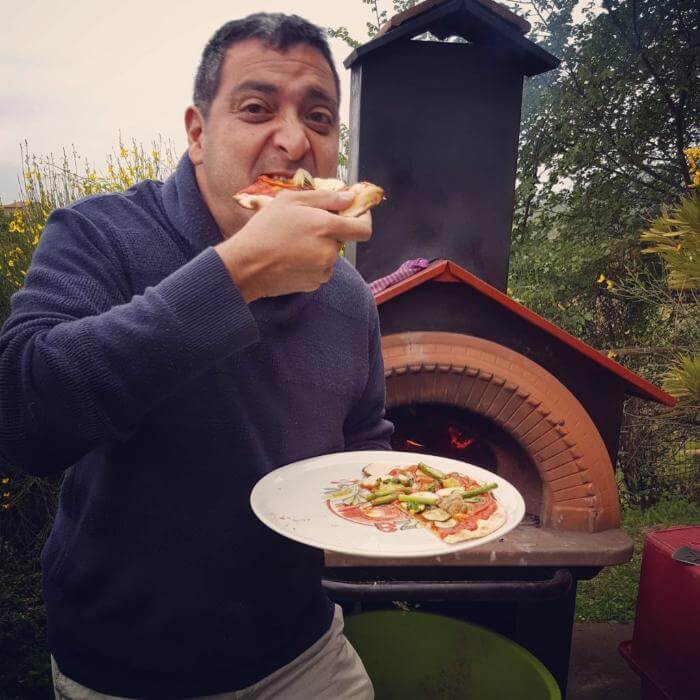
Pizza ready. The hubby and I heard those words ring out more time than I can count over the six weeks we spent as chefs at Casa San Carlo in Umbria, Italy. Wednesday night every week was pizza night. Guests and staff gathered around hand stretching a delicious Italian pizza dough and topping with the ingredients of their choice. The pizzas were then popped into a wood-fried, 800-degree pizza oven where they bubbled and browned. YUM! My mouth is watering just remembering it all.
I’d been making homemade pizza dough for years before that trip. Catering events, ran a kitchen, made pizza for crowds. People loved my pizza dough. It was good. BUT… it never had that particular chewiness this one had. This Italian pizza dough formed a thin, slightly blistered crust that would hold the pizza sauce without getting soggy underneath.
It’s the recipe. The splash of sparkling water mixed with milk and a touch of lard. I learned it from the Dutch owner, who learned it from a local pizza guy. It’s the best homemade pizza dough I’ve ever made. And I’ve made A LOT of pizza dough.
Btw, I’ve also got the perfect way to end a pizza night. Italian Wine Cookies (Ciambelline al Vino). We were served these lovely little treats with a glass of dessert wine after pizza several times while in the Florence area of Italy.

The Chef Experience In Umbria Found Through WorkAway
Working six weeks as a chef with the hubby as my sous chef was one of those experiences that genuinely changes you. In 2016, we did a few months of WorkAways through France and Italy (this experience isn’t just for 20-year olds). I had this dream of owning a board and breakfast style hotel one day. So, we decided to try out working for a few just to see what the experience was like. I did come away knowing the idea was more romantic than a life-style I want to live, but still have so many fond memories.
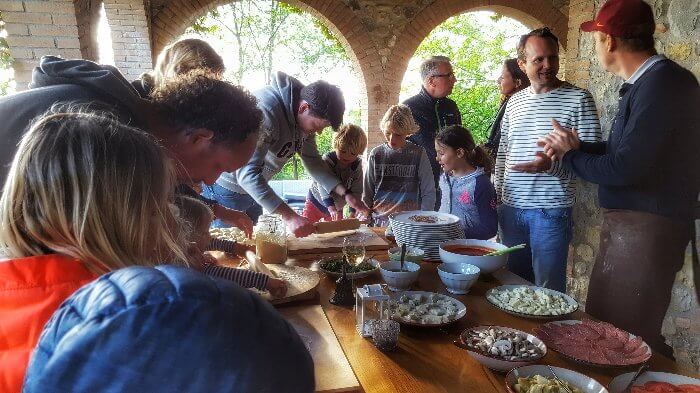
Through WorkAway, you exchange four to five hours, five days a week in exchange for room and board. At Casa San Carlo, we did 3-course dinners five nights a wekk, and then Wednesday night was pizza night. Pizza night was a community gathering for the staff, owner’s family, and all the guests. Part cooking class, party socializing.
Another advantage to our experiences through WorkAway was spending time with the families we stayed with. They integrated us into their families and we experienced things we never would have done as tourists. Wine tastings at local vineyards closed to anyone else. Wild game dinners, local festivals in tiny towns you’ve never heard of. It was amazing just like those pizza nights.
What Makes this Pizza Dough Recipe Different From Other Pizza Dough
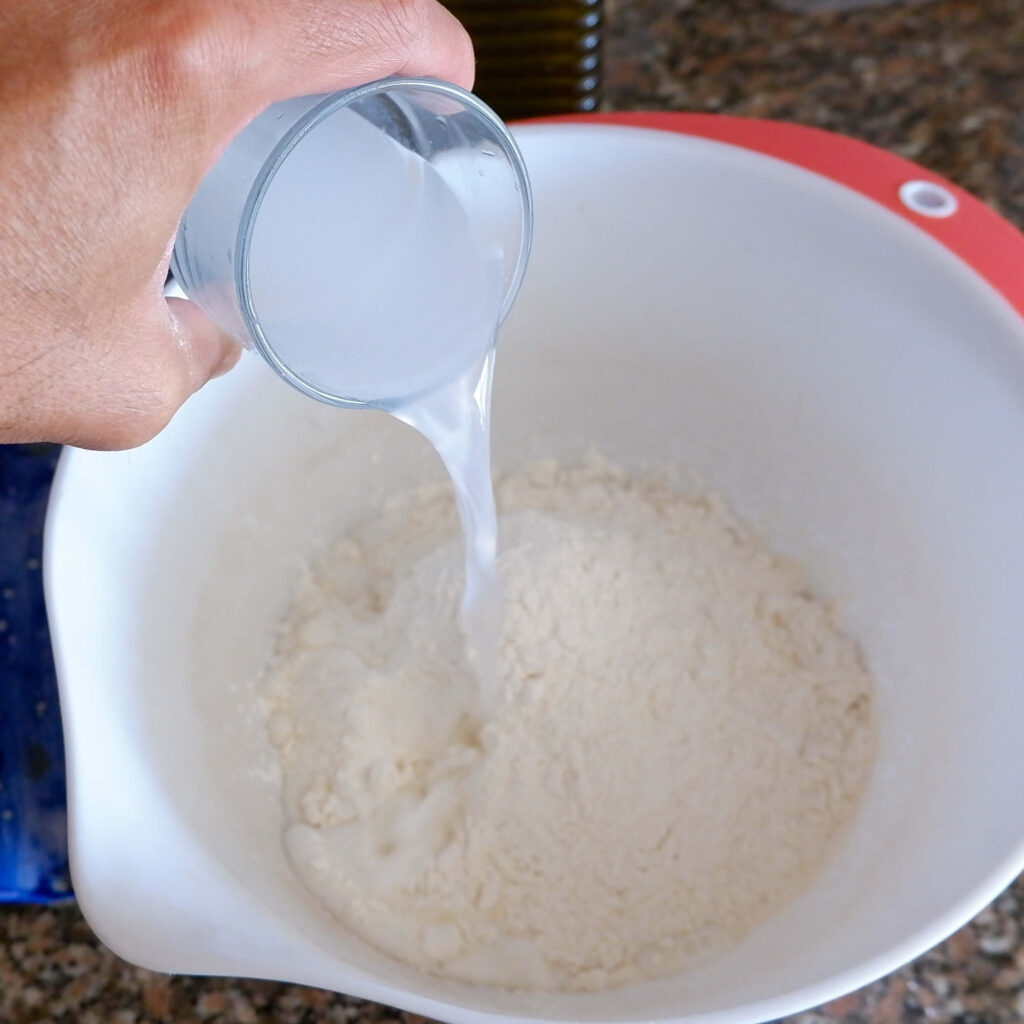
Most pizza dough recipes use water – plain tap water. I mean there’s restaurants in New York that swear it’s their ‘special’ tap water that makes the dough. What makes this Italian pizza dough different is the sparkling water. The carbonation creates tiny air pockets in the dough as it rises, giving you a lighter, more open crumb. It’s the kind of detail you’d only learn in Italy watching someone who’s made dough a thousand times.
And the sparkling water is just part of the ‘secret’. It also uses warm whole milk to activate the yeast, adding a slight richness. So the sparkling water lightens the texture and the milk adds richness. And then there’s the lard. It’s optional. You totally can skip it, just putting in the olive oil. But the lard added a richness and pliability to the dough that olive oil doesn’t quite replicate. Totally okay to skip but if you want to make the dough the Casa San Carlo way, put it in.
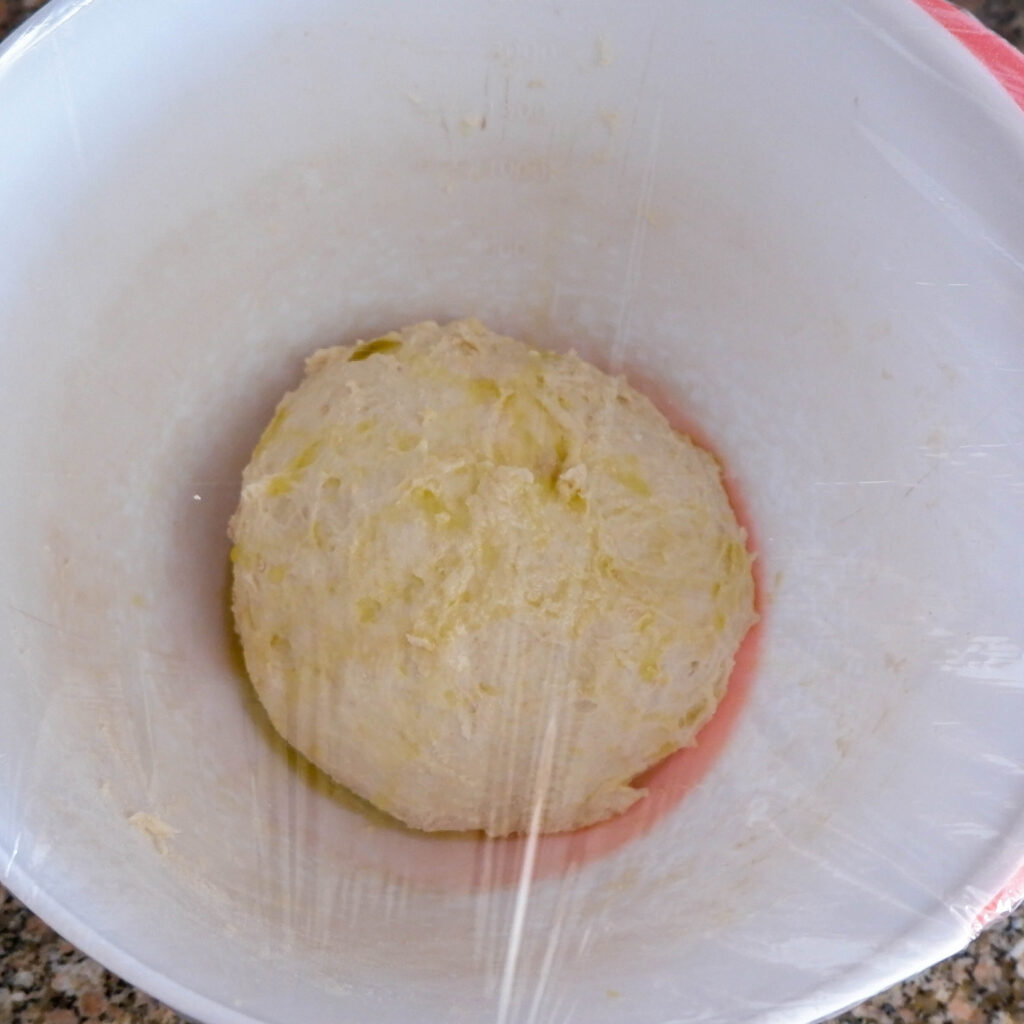
Finally, make sure the dough gets a proper rise. Anywhere from 30 minutes to a full hour, depending on how warm your kitchen is. The colder your kitchen, the longer the dough needs. Don’t shortcut this. Otherwise your dough will be dense and tough. If your dough hasn’t doubled at 1 hour, then let it go longer. If it never seems to rise, then it’s probably your yeast has gone bad.
Pizza, like sandwiches, rely on having a good ‘bread’ holding up to the toppings. If you don’t get the dough right, then your pizza won’t be it’s best. So give it the time to rise properly and you’ll end up with that chewy, crispy crust.


How I Adjusted this Italian Pizza Dough Recipe to Work Outside Italy
The recipe was originally made with 00 flour. In Italy most homemade pastas and pizza dough are made with 00 flour. It works beautifully there because Italian-milled 00 has a high protein content that created the gluten structure needed to made the right texture. But when I tried to replicate the recipe in the States and Portugal, I found using the local 00 flour didn’t rise properly. Not enough protein in the mix. So after testing with all-purpose and bread flour, I found the bread flour created the right texture in both pasta and pizza dough. It all came down to the protein in the flour.
Same volume, same recipe, no other adjustments. And the dough performs better for most home cooks than 00 ever did. Bread flour has the high gluten content you need. It also helps create that perfect chewy crust we all want in a pizza dough. Now if you can get your hands on good imported Italian 00… use it. But for everywhere else… bread flour is your friend.
Why Wood-Fired Italian Pizza Dough Tastes the Best
David had the honor of learning how to build the wood fire in the oven. And how to use the long-handled peel to put the pizzas in the oven, then pull them back out. He did manage to flip one or two upside down before he figured out the wrist trick. Stressful in the moment, cause a guest was watching him ruin their pizza. We laugh about it now.
The wood gives the pizza a slight smoky flavor. And a char to the edges of the pizza crust that you can’t get any other way. And because the bottom of the oven is tiles that heat evenly, the pizza crust comes out perfectly crispy all the way through. Even in the middle. It’s hard to get that same finish in the oven even with a pizza stone.
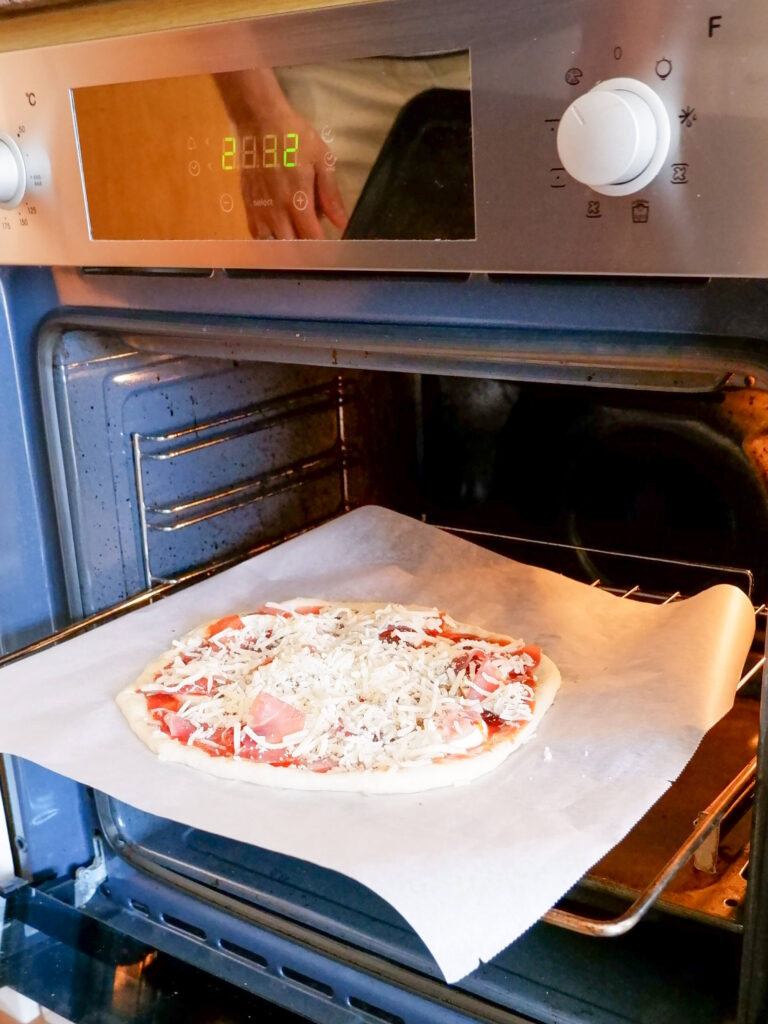
The trick with your home oven is to have a pizza stone and crank your oven as hot as it will go for about an hour before you’re ready to cook pizzas. That way both the oven and your pizza stone is hot enough.
Want another dish you can make in your pizza oven, grill, or kitchen oven? Try this Pollo alla Cacciatora in Bianco (Chicken Cacciatore in White Wine). It’s so good.
What to Top Your Homemade Pizza Dough With
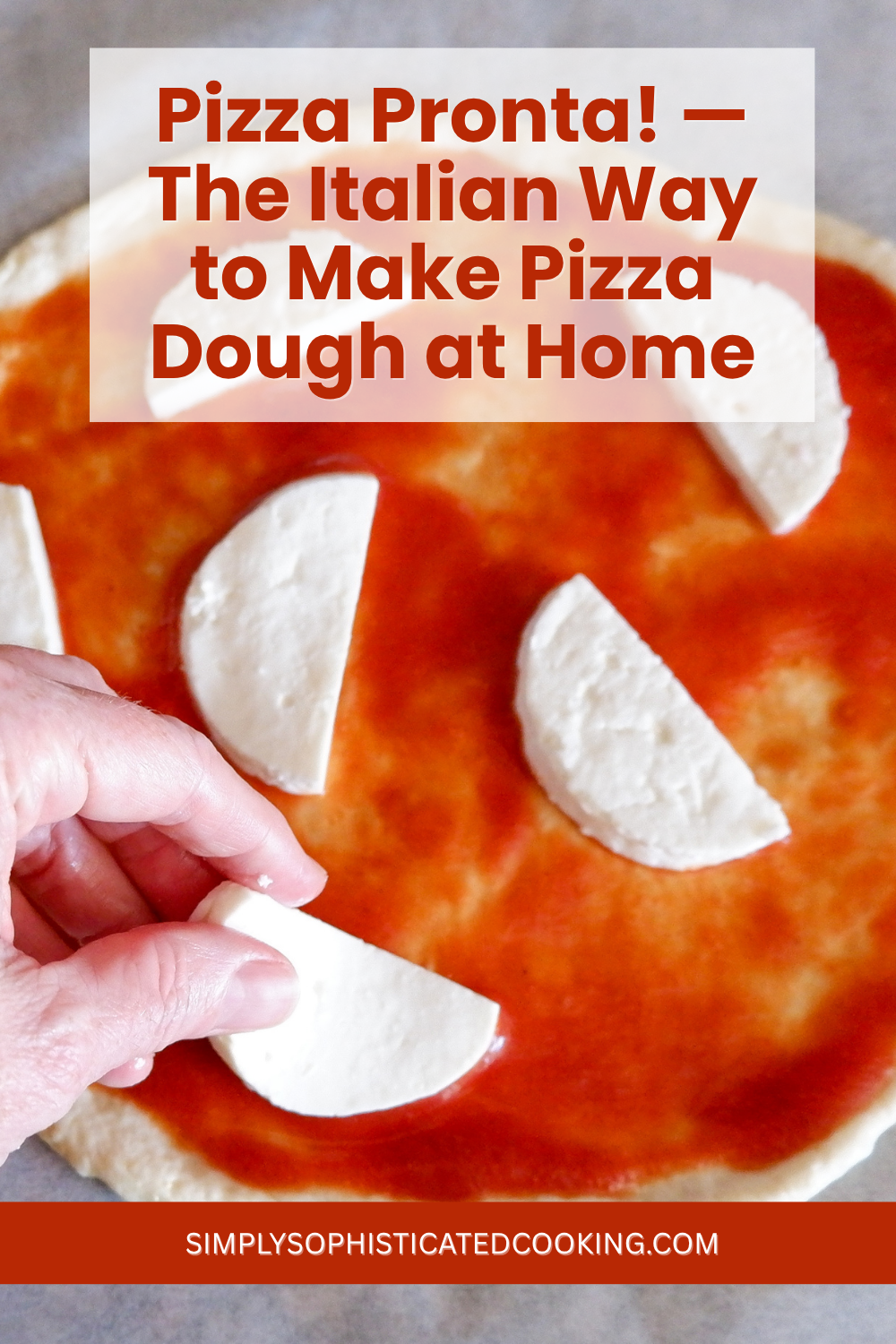
One thing you quickly learn about eating pizza in Italy is that we tend to overload the toppings in the States. Simple is the best. The Italians respect the ingredients. If it’s in the recipe, they plan on each individual ingredient to shine. One of the most common pizzas in Italy is the Margarita – fresh buffalo mozzarella, good tomato sauce made with San Marzano tomatoes, and a few leaves of fresh basil. Finish with a drizzle of local olive oil. Simple and delicious.
Early in the afternoons, we would spend several hours kneading out 6 kilos of pizza dough into 50 to 60 dough balls, before popping them into proofing boxes. After which we chopped ingredients – fresh mozzarella, goat cheese, bouquets of fresh basil, seasonal vegetables, cured meats – at least 20 or so to have something for everyone. There was even a jar of Nutella for dessert pizzas. Then we’d supervise guests to make their pizzas. Also, making sure they didn’t run out of toppings. Every week there was a different favorite among the toppings.
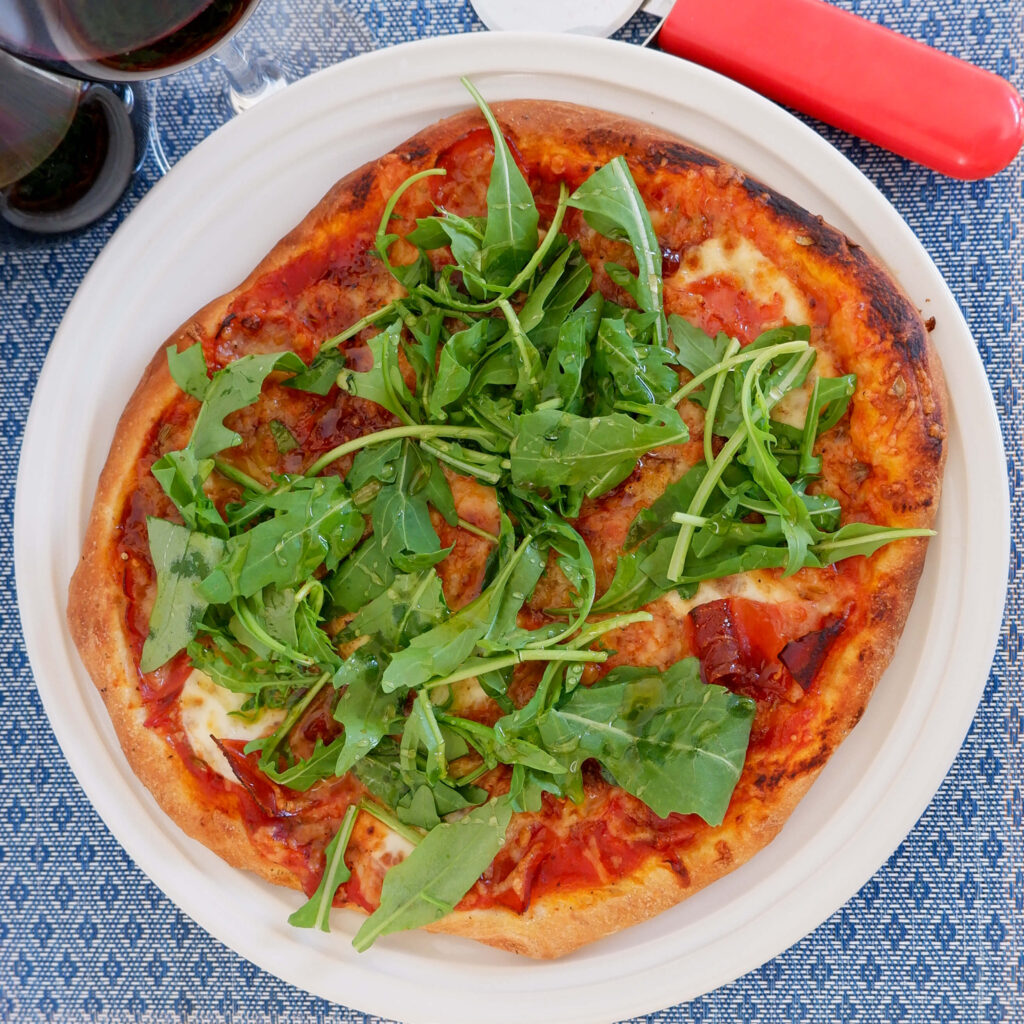
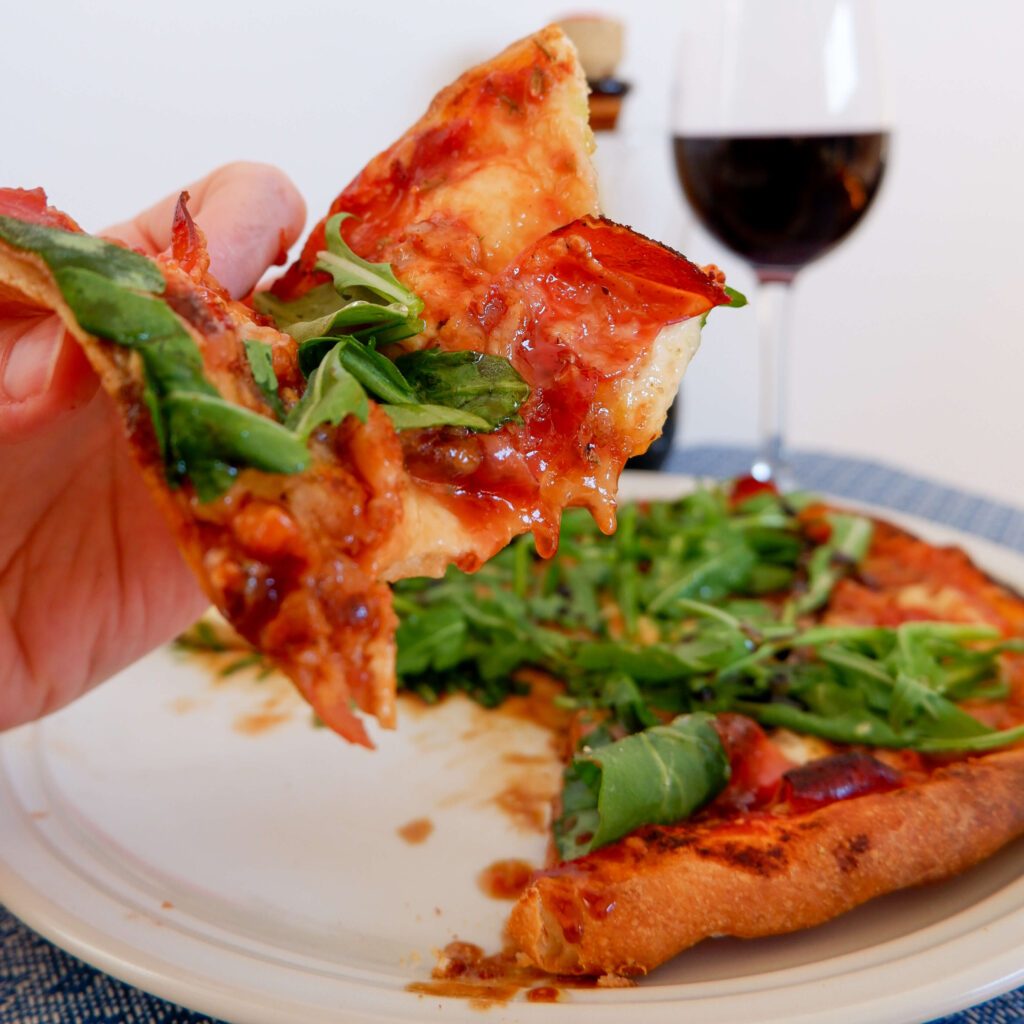
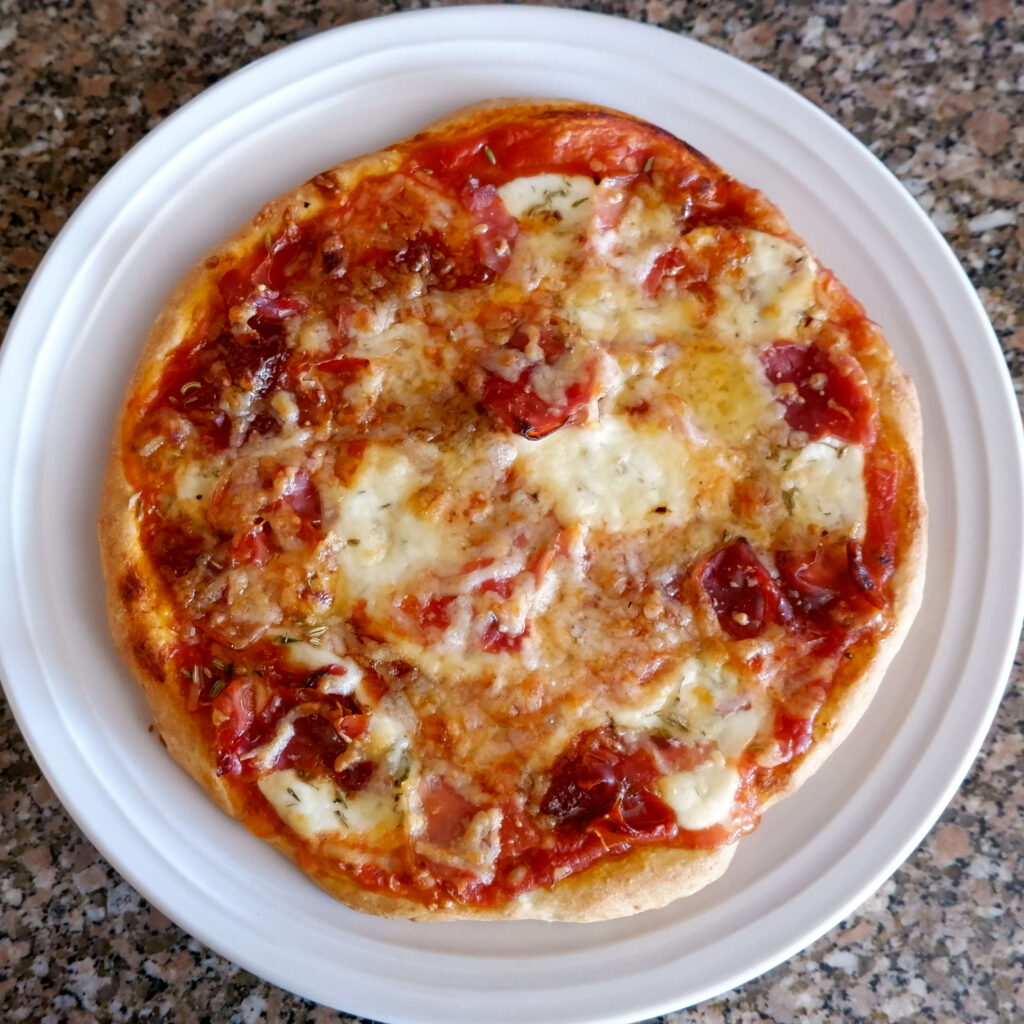
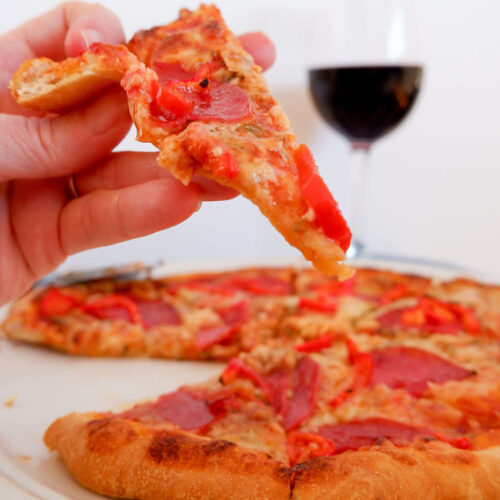
Just don’t overload the pizza. Evenly distribute your toppings across the pizza and give them room to shine and together. One of the hubby’s favorite combos is chorizo, red bell pepper, mushrooms, and mozzarella. Mine had fresh goat cheese, presunto (the Portuguese version of Italian prosciutto), and dollops of Portuguese tomato jam. Finished with a handful of arugula after the pizza comes out of the oven, drizzled with hot honey and balsamic vinegar. Yes, please.
Nothing is quite as satisfying as eating a pizza you made, customized with topping just for you drizzled with local olive oil as it comes out of the oven.
What’s your favorite pizza topping combo? Or have you tried making pizza dough with sparkling water or is that a new ingredient for you? Let me know in the comments. And if you’ve got questions or want a topping recommendation… let me know there as well.
P.S. Looking for a perfect starter for your pizza night? Try a insalata caprese (Caprese salad) with fresh tomatoes and mozarella.
Recommended Ingredients & Tools for Italian Pizza Dough
The right flour and a few good tools make a real difference here — this is one recipe where the ingredient quality shows up directly in the result.
Ingredients
- King Arthur Bread Flour — This is one place I don’t use Bob’s Red Mill Flour. Not enough protein. You want King Arthur’s instead. It’s got higher protein, and consistent quality, for producing the chewy crust that holds up to your toppings. If you want to try the Italian 00 version, Antimo Caputo 00 Pizza Flour is the brand worth sourcing — just know that the protein content of imported Italian 00 is meaningfully different from most domestic or Portuguese versions.
- Antimo Caputo Semolina Flour — You want a light dusting of semolina on your rolling surface. It keeps your dough from sticking and gives the bottom a slightly rustic texture. Use the rest to make homemade pasta dough.
- Fleischmanns Yeast Active Dry Yeast — I keep a jar of active yeast in the fridge at all times. It helps extend the shelf life because it keeps the yeast at the same temp. Storing your yeast anywhere the temp goes up and down, causes it to go bad quicker. It keeps well for months in the fridge.
Tools
- Pizza Stone — For the best quality pizzas made in a home oven, get yourself a pizza store. They get really hot and retain the heat evenly across the whole stone while making the bottom nice and crispy. Put it in the oven when you preheat for an hour ahead to get fully hot.
- Pizza Peel — One of the easiest ways to get your pizza into and out of the oven is using a good pizza peel. Now I like a wood one, but you can find ones made with metal. Most find the metal easier to clean, but I’ve learned if you keep your wooden oiled well so that the wood doesn’t dry out, it’s easy to clean as well. David is still practicing his wrist technique.
- KitchenAid Stand Mixer with Dough Hook — I like to hand knead my dough, finding it therapeutic. But sometimes you’re running out of time or if your wrists can’t take the kneading use a stand mixer with a dough hook. The goal is to get a smooth, elastic dough.
- Pizza Cutter — A good pizza cutter makes the difference between clean slices and dragging the toppings all over the pizza. A wheeled rocker style cuts cleaning in one pass. You can also use a really sharp knife if you don’t have a pizza cutter.
We are a participant in the Amazon Services LLC Associates Program, an affiliate advertising program designed to provide a means for us to earn fees by linking to Amazon.com and affiliated sites. These links and other affiliate links like them do not cost you any extra when shopping but they do help us fund the creation of this site and publications.
Frequently Asked Questions About Italian Pizza Dough
- Can I make a gluten-free pizza dough? Possibly. I’ve tried a time or two to make this dough using gluten-free flour and haven’t been as happy with the flavor or texture. BUT I do think it’s possible. It wasn’t a necessity for us, so I didn’t make as much effort. I’m sure you can make it happen if you want a gluten-free version.
- Can I make this Italian pizza dough ahead of time? YES. Absolutely. Go ahead with the first rise, then punch the dough down, and refrigerate in an oiled coated bowl, covered with a lid or plastic wrap. I’ve also divided the dough up into dough balls and refrigerated small storage containers with lids for up to a week. The slow cold fermentation develops a more complex flavor in the dough. Set it out about 30-45 minutes before you want to use so it comes to room temp and becomes pliable again. If it’s cold, it won’t stretch.
- Can I freeze homemade pizza dough? Absolutely. After the first rise, divide the dough, then wrap each portion in plastic wrap. Freeze up to 3 months. Thaw overnight in the fridge. Then set out for 30-45 minutes, allowing to come to room temp before using.
- Do I really need the sparkling water? I recommend not skipping the sparkling water. It adds A LOT to the taste and texture. But if you don’t have any – replace with plain water or milk.
- Do I have to use lard? The lard is optional but it does add a richness that is worth trying. Do not use shortening as a substitute for the lard. It’s disgusting. Instead, just go with full olive oil (we actually make it this way most often because I usually only have lard around when I’m making tamales).
- My dough isn’t rising… what went wrong? It could be one of 3 reasons. The first is the yeast has gone bad. Check the expiration date on your yeast. The second is your liquid is too hot or too cold. Anything above 120°F is too hot and kills the yeast. If it’s too cold, the yeast either won’t activate or will take a long time. And finally, your room temperature is too cold. If it’s really cold, then place a bowl of steaming hot water in the oven. Then place your dough in the oven with it. That will warm things up enough to rise your dough. Do not turn the oven on because you could make it too hot and kill your yeast.
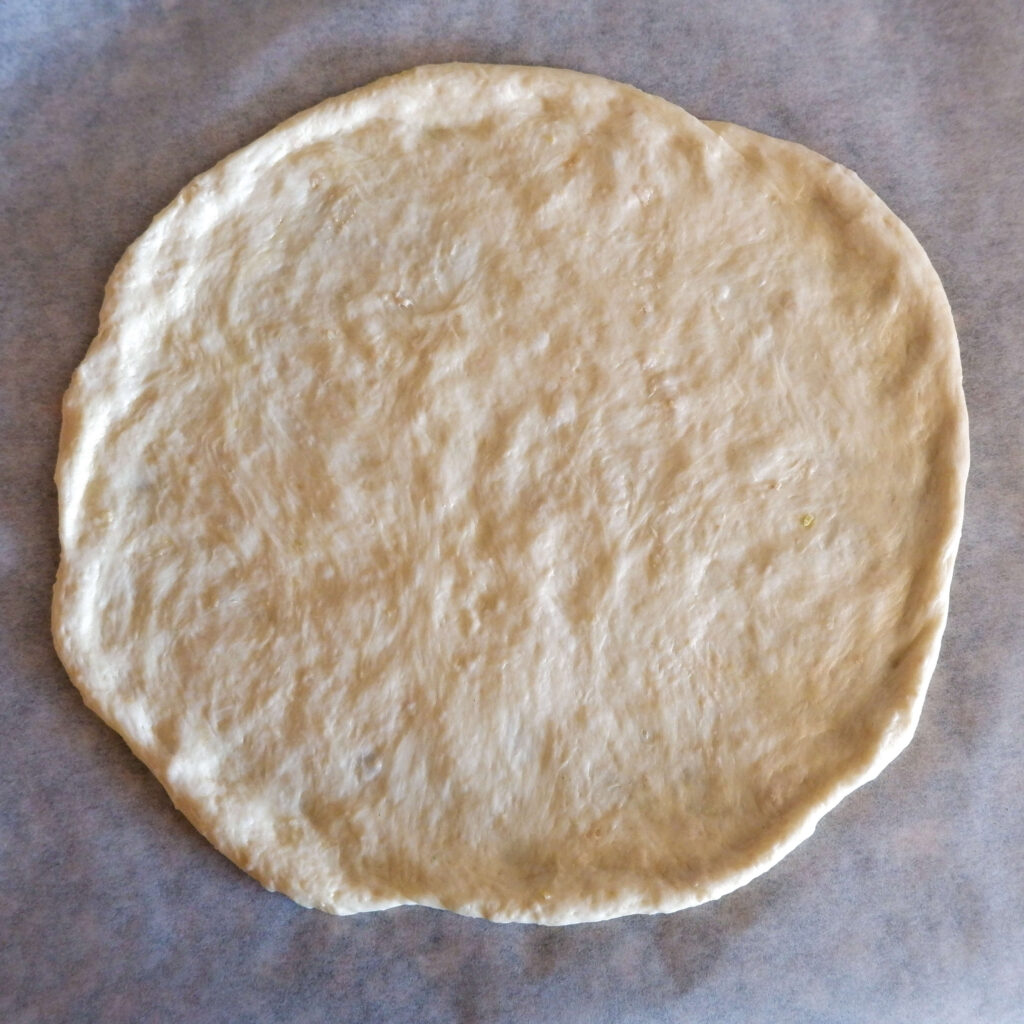
- How thin should I roll the pizza dough? The classic Italian pizza dough is rolled thin. You’re aiming for about 1/4 inch thick, with a slightly thicker edge. I usually work from the middle out when patting my dough to get the thin center and nice crust on the outside. If you’re a thick crust person, then aim for a thickness that is about half as thick as you like it. The crust will puff up as it cooks. If your dough keeps springing back when you stretch it, let it rest for 5 minutes. Gluten needs to relax to stretch. Don’t force it or you will tear the dough.
Authentic Italian Pizza Dough Recipe from Casa San Carlo

Ingredients
- 2 ¼ tsp active dry yeast
- ½ cup warm milk (about 108º to 115º F)
- ½ cup sparkling water at room temperture
- 2 ½ cups bread flour (or 00 pizza flour from Italy) + more for kneading
- 1 tbsp olive oil
- 1 tsp lard optional
- ¾ tsp salt
- a small amount of semolina or cornmeal for rolling out
Instructions
- In a large bowl mix the yeast and the warm milk until the yeast dissolves and allow to sit for about 10 minutes and looking bubbly.
- Add the rest of the ingredients, except semolina, stirring well to mix. Then turn out a floured surface and knead the dough until smooth and elastic, about 8 to 10 minutes.
- Clean the large mixing bowl, dry well and coat with a thin coat of olive oil. Place the prepared dough in a greased bowl, turning once to coat the top with oil.
- Cover the bowl and allow the dough to rise in a warm, draft-free place until doubled, from 30 to 60 minutes depending on room temp.
- Preheat oven to 425º F (225º C).
- Punch dough down and divide into two pieces for large pizzas. Divide more if you want smaller ones. Roll the dough out to desired thickness.
- Place on lightly greased pizza pans or use a pizza stone.
- Add the ingredients of your choice and pop into the hot oven until the crust and cheese are golden brown, about 12 to 15 minutes.
Notes
Estimated Nutrition Per Serving
Per slice of plain dough (1/8 of one pizza, makes 16 slices total from this recipe). Calculated using USDA FoodData Central — this is an approximate estimate based on the recipe as written. Does not include toppings. Verify against your actual products.| Nutrient | Per Slice |
|---|---|
| Calories | ~150 |
| Carbohydrates | ~27g |
| Protein | ~4g |
| Fat | ~3g |
| Saturated Fat | ~0.5g |
| Sodium | ~110mg |
| Fiber | ~1g |