
Homemade Chicken Noodle Soup (The Kind That Helps the Flu)

Originally published February 2017, updated May, 2026.
My mom was a lot of things… hardworking, funny, and caring about her neighbors… but she was not a cook. Still when we were sick, she would open a can of Campbell’s Chicken Noodle Soup, added an equal can of milk, and heat it up on the stove. It wasn’t gourmet, but it was hot and left me feeling cared for.
Today, I don’t eat Campbell’s soup, when I’m not feeling well. Instead, that craving for comfort is satisfied with a nice warm bowl of homemade Chicken Noodle Soup. It’s 100% comfort in a bowl. A golden broth, full of nutritious ingredients like tender chicken, vegetables, and soft noodles or rice. Ingredients that actually heal the body, giving you extra power for fighting the flu or colds.
It’s the soup I make my hubby when he’s sick. And the soup I make for our friends when they are down. It makes everyone feel so much better, the hubby named it my Voodoo Soup.
Btw, I still add a splash of milk to mine to bring back that feeling of childhood comfort.

Why Chicken Noodle Soup Actually Helps When You’re Sick
What I love about this soup is that it’s not fake ‘voodoo’ magic. There’s real science behind why chicken soup helps when you’ve got a cold or the flu.
A study published in the journal CHEST by researchers at the University of Nebraska Medical Center found that chicken soup may have genuine anti-inflammatory properties. The science-y stuff talks about how neutrophils… the white blood cells that cause inflammation in the upper respiratory track… have reduced movement after eating chicken noodle soup. Less inflammation means less congestion, less sore throat, less of that awful heavy feeling that comes with being sick.
AND the steam from a hot bowl helps temporarily open up a stuffed nose and soothe a raw throat. The hot liquid keeps you hydrated when your body is working overtime (Moroccan Mint tea works well here as well). And the ingredients themselves like garlic contains allicin, a natural anti-inflammatory compound. Turmeric has been studied for its immune-supporting properties. Ginger is one of the oldest natural remedies for nausea and congestion on the planet.
Of course, most of these results come from a homemade chicken noodle soup or one made by a restaurant.
Is It Also a Placebo Effect?
Probably a little bit, yes. And hey, that’s not a bad thing either. But there’s real research suggesting that feeling cared for when you’re sick speeds up recovery. The warmth, the familiar smell, the act of someone making you something with their hands… those things matter. We all feel better when we’re loved and cared for, right?
And if I can give that feeling by sharing some soup, I’m more than happy to do it whether it’s sending over some chicken noodle soup or another healing favorite the Portuguese Caldo Verde soup.

The Story Behind This Homemade Chicken Noodle Soup
When the hubby and I were still living our digital nomad years — moving from country to country, house to house — flu season felt like a real threat. No doctor on speed dial. No familiar pharmacy. Just us and whatever we could pull from the local market.
I started making this soup out of necessity, loading the pot with every anti-inflammatory, immune-boosting vegetable I could find. Ginger. Turmeric. Garlic. Fennel. Dark meat chicken for deeper flavor and more collagen than breast meat alone. Fresh herbs from whatever was growing nearby or available at the market. Btw, like any soup, it’s a wonderful way to use the bits and pieces, including the wilted veggies from the fridge drawers.
The hubby declared it had voodoo healing powers after the first time he recovered faster than expected. The name stuck, even though I’ve long since retired it from the blog. The soup itself is delicious and worth making even if you aren’t sick.

Why Homemade Stock Makes All the Difference
This soup really doesn’t have the same healing properties unless you make the broth from scratch.But sometimes you just don’t have time or the energy. And it’s still better to put good food in you when you’re not feeling well than to skip it. So, don’t feel bad if you use store bought stock or a few bouillon cubes.
When you simmer chicken bones with ginger, garlic, jalapeño, and a pile of vegetables for an hour or more, you’re extracting collagen, minerals, and a depth of flavor that no store-bought version can fully replicate. The stock is darker, richer, more golden. And you’re using up whatever is in the vegetable drawer… beet stems, potato peels, the celery hearts nobody ever eats… which feels both resourceful and deeply satisfying. If you’ve got freezer space, you can save the bits like veggie peels, skins, and pieces in a large freezer bag until ready to make the stock.
When Store-Bought Is Fine
So, 8 out of 10 times I make the homemade stock. But the other 2 times?
We use a good-quality store-bought stock. When you’re already sick and barely have the energy to heat a can, making stock from scratch is not the move. I keep a few cartons of a quality low-sodium chicken stock on hand specifically for that scenario. The soup is still delicious. Still healing. Just… faster.
The shortcut note at the end of the recipe is there because I believe in meeting you wherever you are. Sick days have no patience for perfectionism.

What Makes This Chicken Noodle Soup Different
Most chicken noodle soups are built around breast meat. I use dark meat… specifically bone-in, skin-on chicken thighs… and I use a lot of them. Eight thighs for a big pot. Here in Portugal, it’s really easy to get chicken leg quarters. I use the thighs to make the soup, and the legs to make Chicken Tinga Tacos.
Dark meat has more fat, more collagen, more flavor. It shreds beautifully after simmering and stays tender rather than turning into that stringy, dry chicken-breast situation that plagues lesser soups. The bones add body to the broth even in the final soup, and browning the thighs first adds a layer of deep, savory flavor that you simply cannot shortcut. That’s why you want to buy bone in, skin on thighs, not the boneless skinless ones.
The Vegetables That Earn Their Place
Beyond the carrots and celery that every chicken soup has, this one adds a few ingredients that work hard:
- Fennel brings a subtle sweetness and gentle anise note that rounds out the broth beautifully. If you’ve never added fennel to soup, give it a go. It mellows completely during cooking and adds a complexity that makes people ask what your secret is.
- Turnips add an earthy depth and a bit of bitterness that balances the sweetness of the carrots. I use a mix of turnips and potatoes now, half and half, which gives the soup more body and makes it feel like a proper meal.
- Turmeric goes in early with the aromatics, letting it bloom in the oil and spices before the stock is added. It gives the broth that gorgeous golden color and its anti-inflammatory properties do actual work here, not just decorative ones.
The Herb Situation
I use a mix of dried and fresh herbs. Both add depth to the soup. Herbes de Provence as my main spice blend now, because it’s what I reach for most often here in Portugal. It’s in every market and pairs beautifully with both the fennel and the chicken. If you’re got Italian spice mix, that’ll work as well.
And the fresh herbs… thyme and rosemary go in with the chicken and stock, infusing the broth over the long simmer. You can also use sage, parsley, or a combo of whatever you’ve got growing on the kitchen sill.
In spring and summer I sometimes swap to fresh tarragon, which adds an elegant anise note that works beautifully with the fennel. The point is that this soup rewards seasonal thinking… use what’s growing, what’s at the market, what smells right to you.

How We Serve This Homemade Chicken Noodle Soup
If you’re using regular pasta or rice, don’t put them directly in the pot. Instead, cook them separately and add to each bowl as you serve. Otherwise, they swell up, absorb all the broth, and get soft. If you’re using egg noodles what I highly recommend, you can cook them directly in the soup. They don’t continue swelling up.
On the rice, we prefer wild rice because it holds up well, adds a nuttiness that works with the earthy broth, and keeps the soup feeling substantial without being heavy. But even orzo or quinoa works beautifully.
Making It for Someone Who’s Sick
When I’m making this for a friend who’s down with the flu rather than for our regular dinner rotation, I pack a container of soup and a separate container of cooked rice or noodles. That way they can heat as much as they want without the pasta sitting and swelling in the broth.
I also send it with a lemon. A squeeze right before eating brightens the whole bowl and cuts through the richness in a way that’s genuinely restorative. Small detail, big difference.
Make Ahead and Storage
This soup gets better the next day — the flavors deepen and the broth becomes even more golden. Store in airtight containers in the refrigerator for up to 4–5 days. For freezing, leave out the noodles or rice and freeze the soup base for up to 3 months. Thaw overnight in the fridge and reheat gently on the stovetop.
The stock itself can be made well ahead — up to 3 days in the fridge or 3 months in the freezer — which means when someone calls to say they’re sick, you’re ready. Or make the stock ahead and freeze until you need it for a fresh pot.
So, what about you? Are you a fan of homemade chicken noodle soup when you’re not feeling well? I’d love to hear about it in the comments. Or if you’ve got a different comfort food, let me know.
Recommended Ingredients & Tools for Homemade Chicken Noodle Soup
Here’s what we reach for to make this soup as healing and delicious as possible:
Ingredients
- Herbes de Provence — The spice blend that anchors this soup now. Look for a quality blend that includes lavender, thyme, rosemary, and savory. McCormick makes a solid everyday version; Frontier Co-op makes a beautiful organic one.
- Ground Turmeric — Goes in early with the aromatics so it can bloom in the oil. Buy a fresh jar — turmeric loses its potency sitting on the shelf and a fresh one makes a visible difference in the color of the broth.
- Organic Low-Sodium Chicken Stock — For the 2-out-of-10 times when homemade isn’t happening. Pacific Foods and Imagine both make clean, well-flavored options that are genuinely good in a pinch. Or use Better Than Bouillon Chicken Stock.
Tools
- Large Dutch Oven or Stockpot — You need a pot big enough to brown 8 chicken thighs and then hold 12+ cups of soup. A 7–8 quart Dutch oven is ideal — Le Creuset if you’re treating yourself, Lodge if you want a workhorse that costs a fraction of the price.
- Fine-Mesh Strainer — Essential for straining the stock. A good fine-mesh strainer gives you a cleaner, clearer broth and catches all the peppercorns and herb stems.
- Airtight Glass Containers — For storing, transporting to sick friends, and freezing the stock. Glass doesn’t absorb odors the way plastic does and goes straight from freezer to stovetop safely.
We are a participant in the Amazon Services LLC Associates Program, an affiliate advertising program designed to provide a means for us to earn fees by linking to Amazon.com and affiliated sites. These links and other affiliate links like them do not cost you any extra when shopping but they do help us fund the creation of this site and publications.
Frequently Asked Questions About Homemade Chicken Noodle Soup
- Does chicken noodle soup actually help when you’re sick? Yes — and not just as comfort food, though that matters too. Research from the University of Nebraska Medical Center found that chicken soup has mild anti-inflammatory properties that may reduce congestion and ease upper respiratory symptoms. The steam helps open airways, the hot liquid keeps you hydrated, and ingredients like garlic, turmeric, and ginger all have well-documented immune-supporting properties. It’s not a cure, but it genuinely helps.
- Why use chicken thighs instead of breast meat? Dark meat chicken thighs have more fat, more collagen, and significantly more flavor than breast meat. They stay tender and juicy after a long simmer rather than turning stringy and dry. The bones also add body to the broth. For a healing soup, thighs are simply the better choice — and they’re usually cheaper too.
- Can I make the stock ahead of time? Absolutely — and I’d encourage it. The stock keeps in the refrigerator for up to 3 days and in the freezer for up to 3 months. Making it ahead means when someone is sick (including you), the hardest part is already done. Just thaw, heat, and build the soup.
- Can I use store-bought stock instead of making the homemade stock? Yes. A good quality, low-sodium chicken stock works well and makes this soup much faster to pull together. The homemade stock does add more depth and those extra healing properties from the ginger, garlic, and vegetables — but the soup is still genuinely delicious with a quality store-bought version. Don’t let perfect be the enemy of a bowl of soup when you’re sick.
- How do I keep the noodles from getting soggy in leftovers? Cook noodles or rice separately and add them to each bowl at serving time, rather than cooking them directly in the soup. Store leftover soup and leftover noodles or rice in separate containers in the refrigerator. This keeps the broth from being absorbed overnight and ensures every bowl tastes as good as the first one.
- Can I freeze this soup? Yes — freeze the soup base without the noodles or rice for up to 3 months. Let it cool completely before transferring to airtight containers, leaving a little space at the top for expansion. Thaw overnight in the refrigerator and reheat gently on the stovetop. Add freshly cooked noodles or rice when serving.
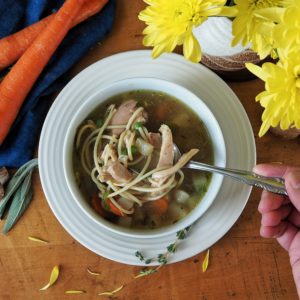
Homemade Chicken Noodle Soup

Ingredients
Healing Stock Ingredients
- 3-4 kale leaves
- 4–5 Brussels sprouts
- 3–4 stalks celery
- 2 large carrots
- 4-5 mushrooms
- 1 large onion halved
- 5 cloves garlic smashed
- ½ fennel bulb
- large handful fresh herbs your choice — thyme, rosemary, parsley all work
- 1 large jalapeño halved
- 2 inches fresh ginger grated
- bones from 8 chicken thighs or whole chicken carcass
- 3 tbsp black peppercorns
- 2 potatoes halved
- Peel from 2 turnips
- 4–5 bay leaves
- 1 lemon halved
- Any other vegetables you want to use up
Homemade Chicken Noodle Soup Ingredients:
- 3 tbsp olive oil
- 8 chicken thighs bone-in skin-on
- 1 large shallot finely diced
- 3 cloves garlic minced
- 1 medium purple turnip diced small
- 2 medium potatoes diced small
- ½ fennel bulb thinly sliced
- 2 large carrots sliced
- ¾ cup baby bella mushrooms sliced
- 2 large sprigs fresh thyme
- 1 large sprig fresh rosemary
- 1 tsp turmeric
- 1 tbsp Herbes de Provence
- Salt and pepper to taste
- 10-12 cups healing stock or quality store-bought chicken stock
- ¾ cup frozen green peas
To Serve:
- 4-6 oz dried pasta cooked to al dente (or 2 cups cooked wild rice or egg noodles)
Instructions
Make the Healing Stock:
- Debone the chicken, leave skin on. Use bones (or a leftover chicken carcass) to make the stock.
- Place all stock ingredients in a large stockpot. Cover completely with cold water.
- Bring to a boil over high heat, then reduce to a steady simmer.
- Simmer uncovered for at least 1 hour — the longer the better.
- Remove from heat and strain through a fine-mesh strainer, pressing on the vegetables to extract all the liquid. Discard solids.
- Set stock aside, or refrigerate/freeze until needed.
Make the Soup:
- Heat olive oil in a large stockpot or Dutch oven over medium-high heat. Season chicken thighs with salt and pepper.
- Brown chicken thighs skin-side down for 4–5 minutes until golden. Flip and brown the other side for 2–3 minutes. Remove to a plate and set aside.
- Reduce heat to medium. Add shallot to the pot and cook for 2 minutes, stirring to pick up the browned bits. Add garlic, turmeric, and Herbes de Provence and cook for 1 minute until fragrant.
- Add turnips, potatoes, and fennel. Stir to coat in the spices.
- Return chicken thighs to the pot. Pour in the stock.
- Bring to a boil, then reduce to a simmer. Cook uncovered for 30–35 minutes, until chicken is completely tender and pulling away from the bone.
- Remove chicken thighs to a cutting board. Add carrots and mushrooms to the pot and continue simmering.
- Shred the chicken, discarding skin and bones. Return shredded chicken to the pot. Taste and adjust salt and pepper.
- Continue simmering until carrots are just tender, about 10 more minutes. Turn off heat and stir in frozen peas.
- Serve with cooked wild rice or pasta — add to each bowl individually rather than cooking directly in the soup to keep leftovers from getting stodgy.
Notes
Make it seasonal: The herb profile is flexible — tarragon adds a lovely anise note in spring and summer, while Herbes de Provence is the go-to for year-round warmth. Use what you love or what you have.
Vegetable flexibility: The stock is especially flexible — use whatever is lurking in your vegetable drawers. Beet stems, potato peels, extra celery, the end of a leek — it all goes in. Nothing is wrong.
Make-ahead: Stock can be made up to 3 days ahead and refrigerated, or frozen for up to 3 months. The finished soup keeps well in the refrigerator for 4–5 days. Store noodles or rice separately to prevent them from absorbing all the broth.
Freezing: Freeze the finished soup without the noodles or rice for up to 3 months. Thaw overnight in the fridge and reheat gently on the stovetop.