
Pressure Cooked Black-Eyed Peas: Southern US New Years Good Luck Food

Growing up in the Southern US, my mom cooked black-eyed peas and collard greens on New Years Day. She usually finished off with a side of corn bread.
Traditionally Southern recipes cook pork in with the black-eyed peas and collard greens. But as a child, we didn’t eat pork because my family ate by Seventh Day Adventist beliefs.
Religion was confusing for me growing up in my home. My parents didn’t actively take part in church services. Instead, they sent my sister and me to church with neighbors and family. Depending on who took us, we would either attend a Seven Day Adventist or a Baptist church. Observing the differences between the two denominations was interesting, to say the least.
Anyway, let’s not talk about religion and get back to pork and Southern good luck foods.
I eat pork now because it’s tasty! Life just wouldn’t be the same without a little bacon.
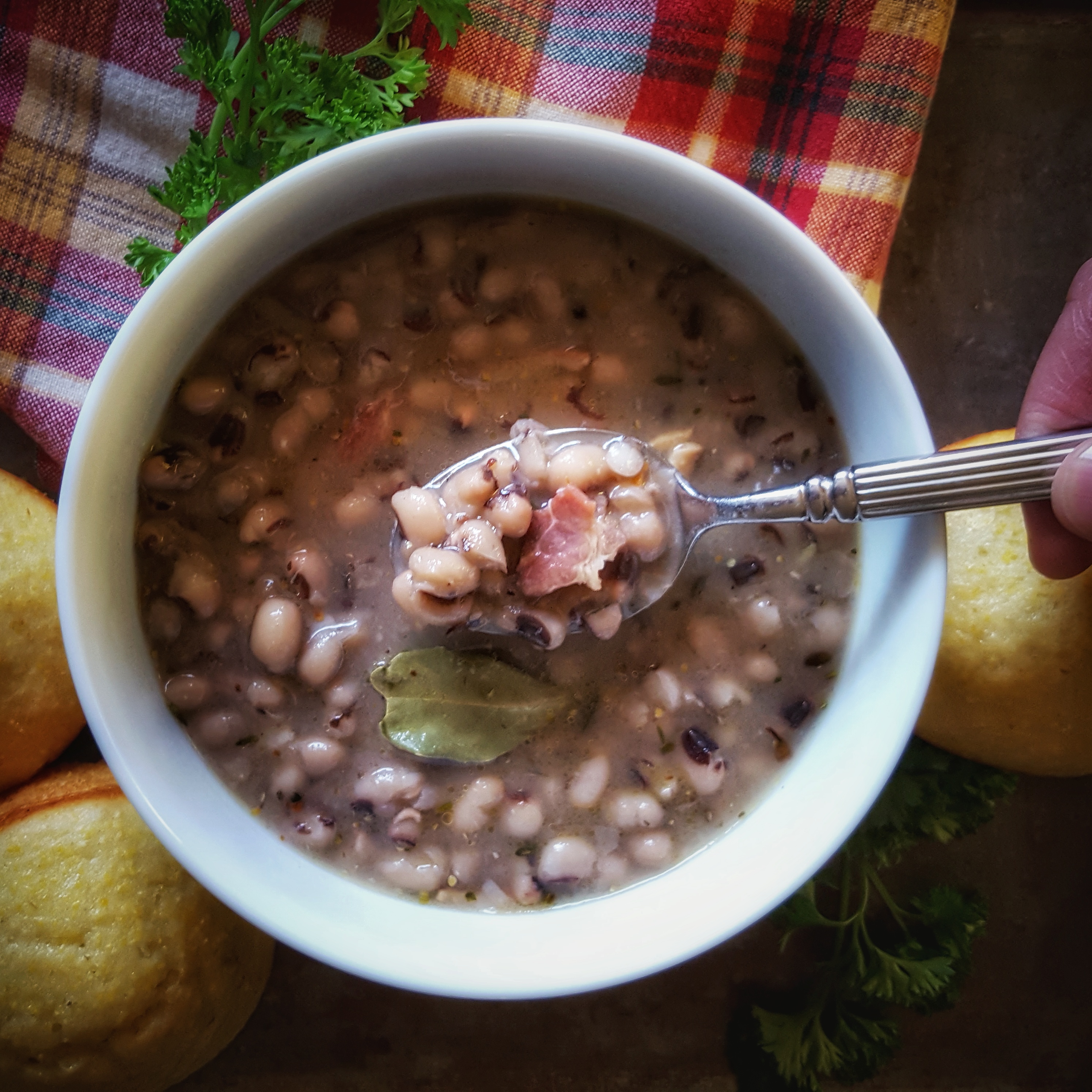
Why Southern people believe eating these foods bring luck, wealth, prosperity and good health for the year ahead.
Black-eyed peas or any type of cow peas represent coins, meaning money and wealth.
Collard, mustard or turnip greens represent paper money, once again meaning money and wealth.
Cornbread is gold in color, representing money and wealth again.
Finally, the pig always moves forward in life, representing progress.
Are Southern people a little obsessed with money and wealth? Maybe. Having grown up there, I can say a lot of people struggle to make ends meet. And it’s a historical struggle.
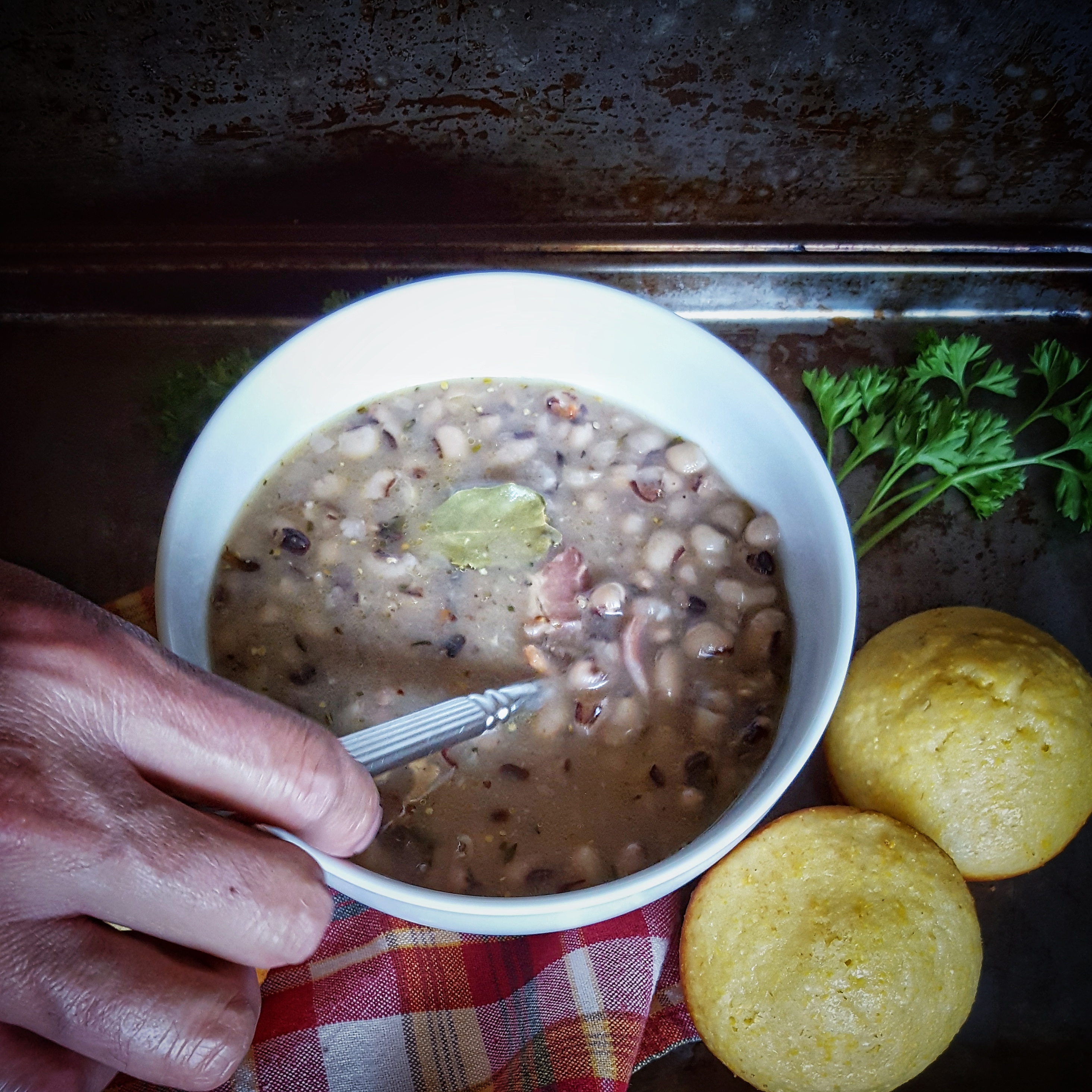
As for me…
I’m not all that superstitious. A little but not overly. But why tempt fate?
Eating tasty food on New Years Day is already good luck in itself. If it equals further prosperity for the year ahead, I’m not one to complain.
Pressure cooked black-eyed peas, collard greens and cornbread are on the menu this New Years Day. Complete with a little pork.
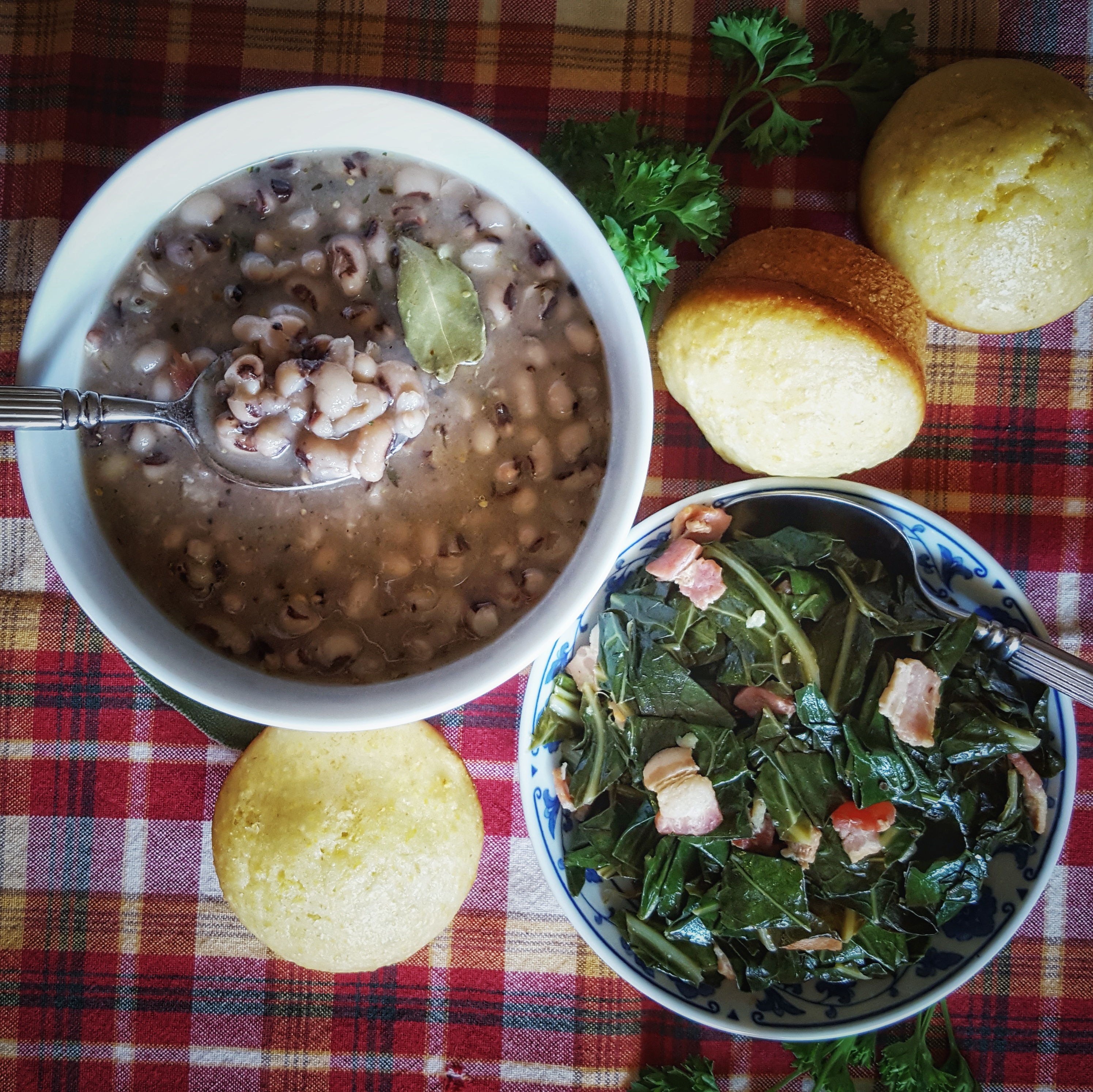
This post includes the recipe for the Pressure Cooked Black-Eyed Peas. You can find my Southern Cornbread recipe in an earlier post. And the collard greens in Friday’s post.
I’m new to pressure cooking. I’ve been meaning to buy a pressure cooker but never seemed to find a place to keep it in my small kitchen. Fortunately for me, the homeowners have one at the house we’re sitting at.
Fortunately for me, the homeowners have one at the house we’re sitting at. And now that I’ve used it for dried bean cooking, I’m not sure I can go back to the old way.

My Pressure Cooked Black-Eyed Peas took 7 minutes to cook. Well closer to 15 minutes, if I count the preheat cycle as well.
7 minutes! Not the usual one to two hours, depending on the freshness of the beans. I can’t wait to try braising a good tough piece of meat.
And the flavors are incredible instantly. There’s no waiting until the next day for the beans to soak up the flavors and become extremely tasty. Especially on a plate with collard greens and cornbread for sopping up the bean broth. YUMMY!
Pressure Cooked Black-Eyed Peas

Ingredients
- 3 cups presoaked black-eyed peas
- 6 cups water
- 1 strip thick smoked bacon
- 2 cloves garlic
- 1 large carrot
- ½ large onion
- 2 bay leaves
- 4 sprigs fresh thyme
- 2 – 3 fresh sage leaves
- 1 tsp. salt
Instructions
- Presoak cleaned dried black-eyed peas by covering with cold water and allowing to soak overnight. Or use the quick soak method: cover dried black-eyed peas with water and bring to a boil. Cover with a lid and turn burner off. Allow beans to soak at least 30 minutes. Drain and dispose of water for either method.
- Add all ingredients to your pressure cooker pot. Seal with lid and cook depending on your pressure cooker’s directions. I used an electric pressure cooker, which included a preheat and then cooked the beans for 7 minutes once the preheat was over.
- For those wanting to use the traditional cooking method: Add all ingredients to a large pot. Bring to a boil and then reduce to a simmer, cooking until beans are tender.
- Remove beans from either pot. Adjust seasoning and serve.