
Easy Spanish Tapas Recipes: How to Host a Tapas Night at Home
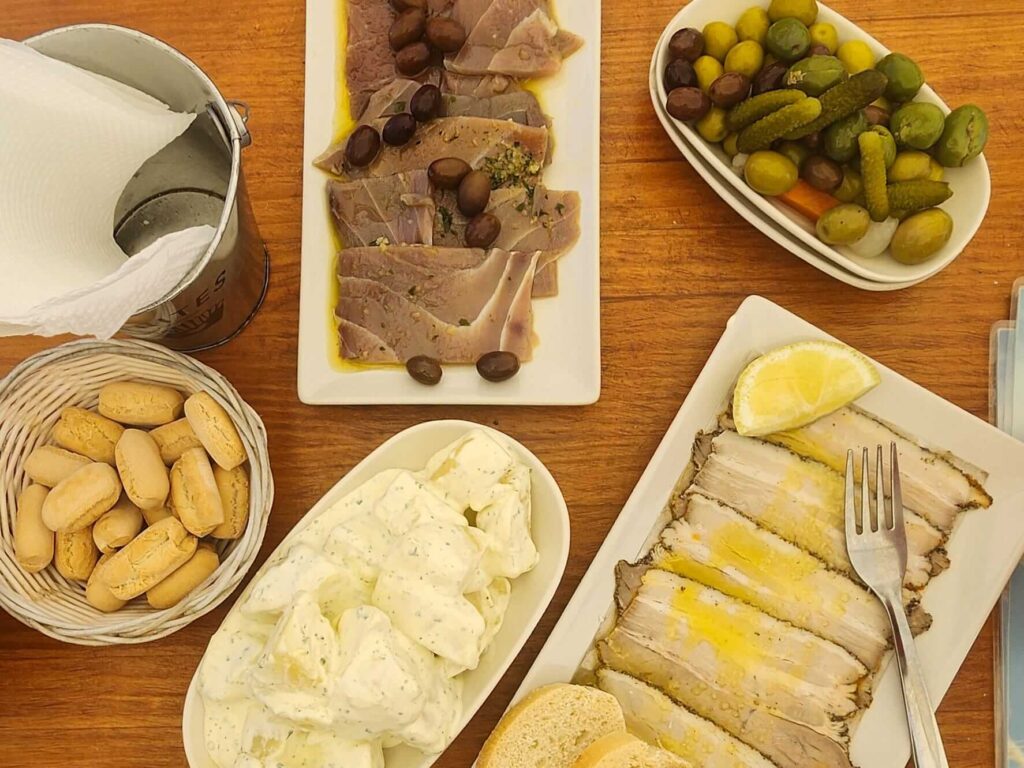
I absolutely adore hosting a Spanish tapas night at home. Or, of course, eating them in Spain. It’s the fun of sharing a bunch of small dishes with different flavors with everyone at the table. Bowls of crispy potatoes with sauce, a wedge of eggy tortilla and potatoes, olives, cheese, meats. Plus, I get to have fun cooking them all up. This is my collection of the easy Spanish tapas recipes I actually make when we host, along with everything you need to pull off the night.
The hubby and I already loved tapas back in Denver. But you really haven’t experienced tapas until you’ve done them in Spain. Some of our happiest food memories are finding a little tapas bar off on a side street and ordering five or six small plates along with a nice glass of Spanish red. Relaxing, talking, and enjoying a little people watching, while eating good food.
The biggest difference is cost. In Denver, that many tapas and a glass or two of wine at a restaurant will cost you easily $150 (or more). In Spain it’s rarely more than $30 between the two of us. Which for me is just another reason to host your own Spanish tapas night at home. Ingredients and wine will run you between $30 and $50 US depending on the dishes you decide to serve. I’d recommend choosing from some of the Spanish tapas recipes below. I’ve included a combo of traditional ones and some with my own spin on them.

First, What Are Spanish Tapas?
Tapas are Spain’s small plates, usually served mid-afternoon between lunch and dinner. And Spanish dinners start LATE… 9 to 10 pm is normal for the locals. Tapas started in the Andalusian region, where the story goes that bartenders would put a little plate with ham, cheese, or bread on top of the wine glass to keep the flies out. Tapa means “lid.” Today the entire country has different dishes integrated into the culture.
One myth we’d heard in the States is that tapas are free if you order a glass of wine or a cocktail. We found out that wasn’t the case at all. Still, they’re very affordable, and the hard part is not over-ordering. The portions aren’t tiny either, like they are in the States where it’s more or less a couple of bites for 12 bucks. Nope. In Spain, 12 bucks will get you 2 to 3 plates depending on what you order.
How a Tapas Night Actually Works
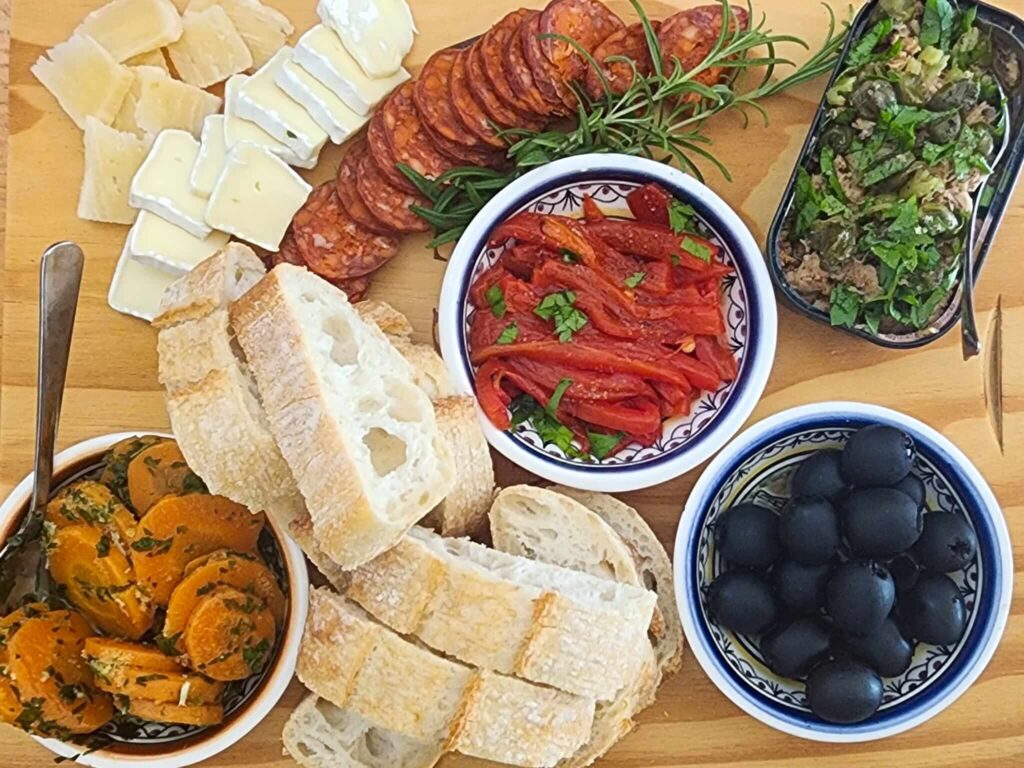
What makes a successful tapas night is making sure you have a decent variety for sharing. I’ve found the key is to use a combo of dishes you cook (some even prepared ahead) and some you just organize, like meats and cheeses. That way you don’t overwork yourself.
In Spain, it’s normal not to sit at one bar… although there’s nothing wrong with it either. This is socializing time. The locals meander into one bar, have a glass and a couple of plates, then head to their next favorite spot. To do this at home, consider sending out the dishes in waves. Space them out, giving time to enjoy two or three before sending out the next round.
And everything is shared. Have empty small plates for everyone so they can take a bit of each.
Easy Spanish Tapas Recipes for Your Spread
Here’s how I build a spread, and where these Spanish tapas ideas really come together. I never skip the Spanish tortilla because it can be made ahead and it’s served at room temp. Having at least one or two meats and cheeses is a must, and of course a bowl of Spanish olives. The trick is to decide on a couple of main dishes and then build outward. Planning ahead so you can do as much work as possible before guests arrive, and actually enjoy hanging out with your friends instead of slaving over the stove. If you’re short on tapas ideas, start with the two below and add from there.
The Two We Never Skip
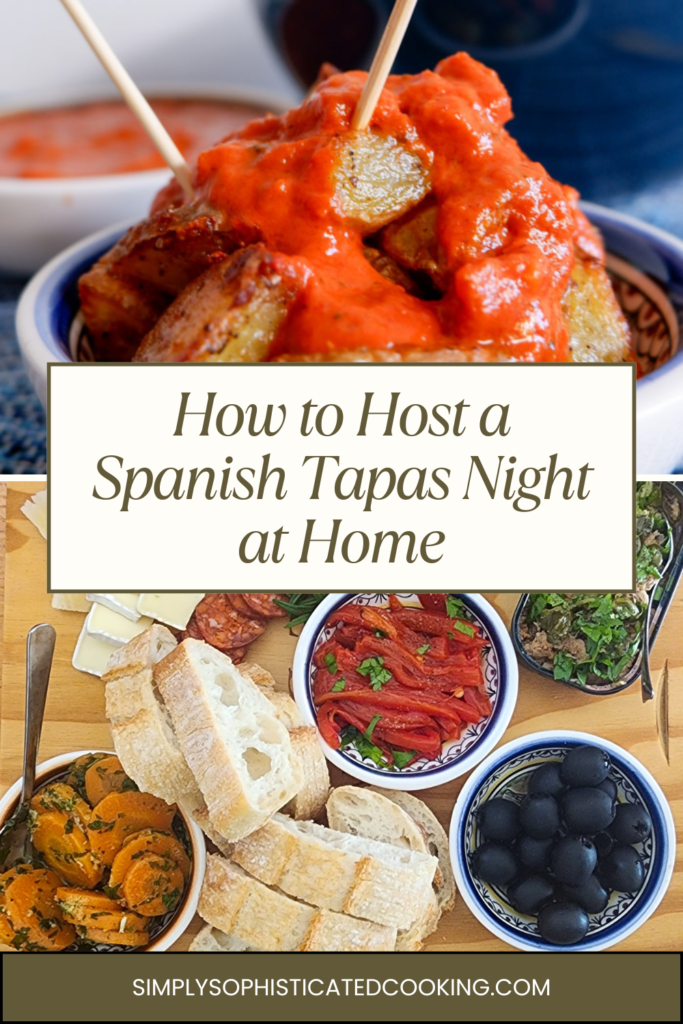
Patatas Bravas — Crispy roasted potatoes with a smoky, slightly spicy paprika bravas sauce. Yes, please. I adore this dish and it’s always on the menu when I host a tapas night. This is not a ketchup-mixed-with-mayo sauce. In Spain they deep fry the potatoes, but I’ve found it easy to oven bake them on a sheet tray until golden and crispy. It’s lighter and a lot less hands-on. (Vegan-friendly.)
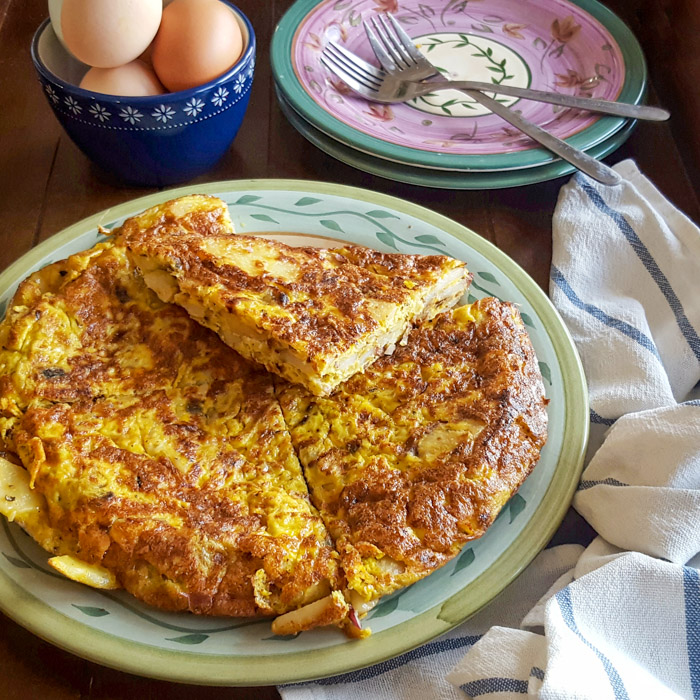
Spanish Tortilla — Spain’s national dish and, again, a must in our home. We make this one year-round, tapas night or not. You can add other toppings, but I keep it simple with potatoes, eggs, and onions. It’s basically a potato and egg omelette, cut into small wedges and served at room temp. You can make it one to two days ahead and pull it out to come to temp before serving. (Leftovers are great in a sandwich.) (Vegetarian.)

Add From Here
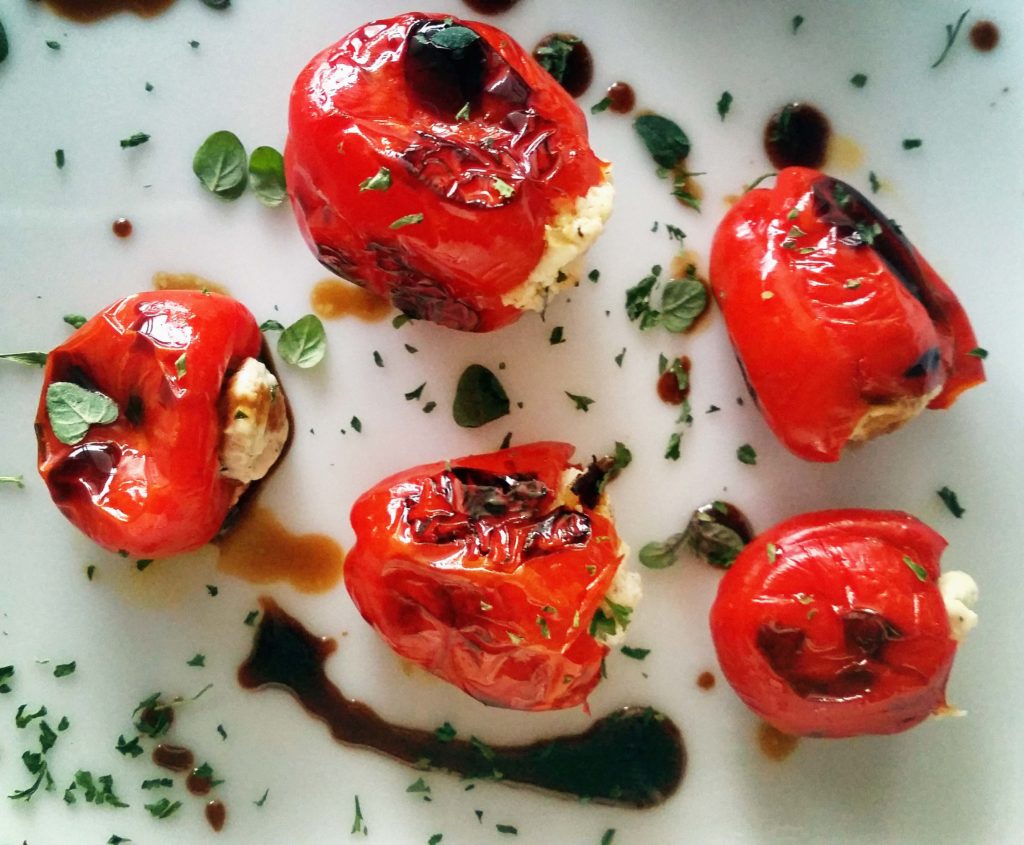
Goat Cheese Stuffed Peppadew Peppers — Sweet, tangy, two-bite, and gorgeous on a platter. You’ll find a lot of different versions of these in Spain with different peppers and cheeses, even tuna. So good. I adore the tangy bites that explode with flavor in your mouth, and they’re so easy to make. (Vegetarian.)
One-Pot Spanish Chicken with Chorizo and Potatoes — Some tapas are a bit more hearty and filling, like this smoky chorizo and chicken dish. It’s got a few potatoes in it too. You can use whole bone-in chicken thighs or boneless ones cut into smaller pieces. Your choice for serving.
Heirloom Tomato Salad — This one is OMG good. When we lived in Valencia for a month, thick slabs of ripe tomato drenched in good olive oil, salt, and a scatter of fresh herbs were on almost every restaurant menu in the summer. The hubby laughed because I happily paid €8 to €10 a plate for it, when you could buy your own tomato for €1 and eat it at home. It’s lovely because it brings freshness in alongside the cooked dishes. Don’t forget some crusty bread for sopping up the juices and olive oil. Simple, vegan, and easy.
Crispy Baked Chicken Wings with Orange Saffron Sauce — Wings are a traditional tapa, served on most menus in different versions. This one is not an authentic Spain version. Instead, it’s my version and works well pairing with Patata Bravas and Spanish Tortillas. These are baked, not fried, so again, much lighter and easy to make since you can do a sheet pan of them at once.

The Buy-and-Serve Classics (No Recipe Required)
Half of a great tapas spread is just good ingredients, plated well. These need no cooking, and I highly recommend interspersing small plates and bowls of them through your other tapas:
- Olives — a good mix of Spanish olives, marinated if you can find them (or marinate your own in lemon zest, olive oil, and herbs).
- Marcona almonds — Spain’s buttery, rounder almond, usually fried and salted. Addictive. (At least I’ve heard. I’m allergic to almonds, so I haven’t tried them myself.)
- Jamón and chorizo — cured Spanish ham and sausage, sliced thin, served at room temp. (Skip for vegan.)
- Manchego cheese — Spain’s classic sheep’s-milk cheese, cut into wedges and served at room temp.
- Pan con tomate — grilled bread rubbed with garlic and ripe tomato, drizzled with olive oil, sometimes with torn fresh herbs like oregano. (This is a common breakfast in Spain.)
- Boquerones — white anchovies in vinegar, for the seafood lovers.
Building a Vegan Tapas Spread
Want a vegan tapas night? It’s easy. Lean on the potatoes — patatas bravas (with vegan mayo in the sauce) — plus grilled or stuffed peppers drizzled with olive oil and oregano, olives, almonds, pan con tomate, and marinated mushrooms. You can also do veggies like red bell pepper, zucchini, and green beans in a tempura batter with aioli. Soooo good. A vegan tapas spread never feels like it’s missing a thing.
How Many Dishes Do I Need?
A good rule of thumb is to plan for 4 to 6 different tapas for a group of 4 – or at least 2 to 3 per person, depending on the size of the tapas you’re serving. Then you can easily scale up for every couple of extra guests. I admit I always over-make, because the polite Southern host in me hates to run out of food when people are still hungry. As a result, we end up with a fridge full of leftovers.
You want variety more than volume. It’s better to have six small plates than three big ones. Mix textures and temperatures: something crispy (bravas), something room-temp (tortilla, cheese, cured meats), something warm and saucy, something fresh. A range makes it feel complete and entices the taste buds.
What to Drink with Your Spanish Tapa Night
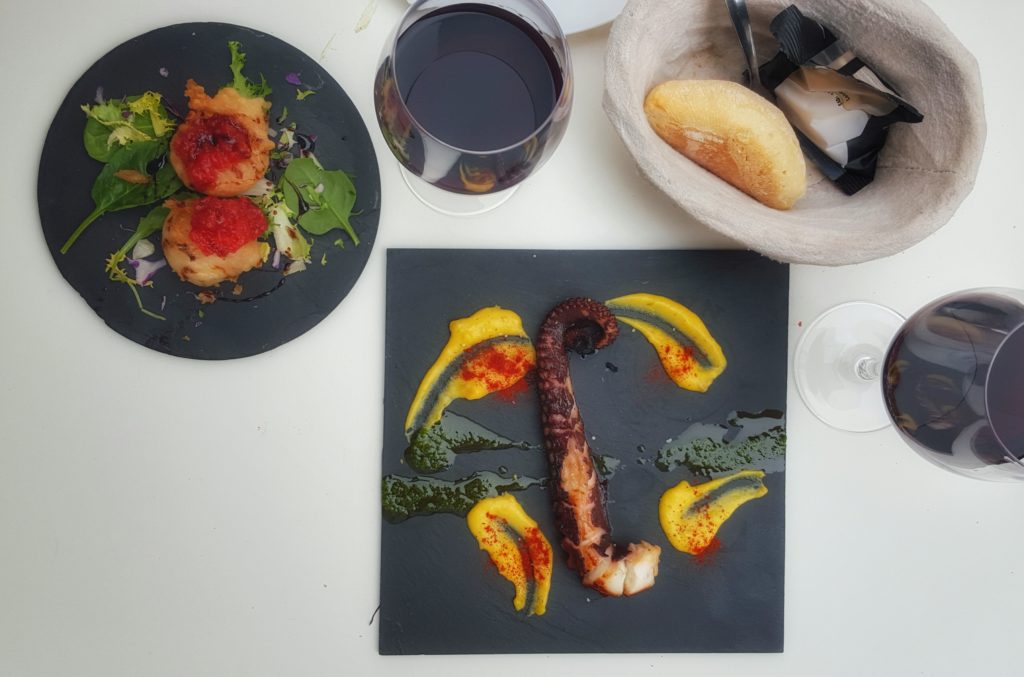
Tapas want easy, unfussy drinks. Usually you’ll pair with Spanish wines or beers. If you’re not doing alcohol, try sparkling waters, a fun fruity mocktail, or water infused with fresh cucumber, mint, and lemon. We’re wine drinkers, so my recommendations are:
- Spanish red — a Rioja or Garnacha is the classic, food-friendly pour.
- Vermút (vermouth) — Spanish vermouth on the rocks with an olive, sometimes a twist of orange zest or pickle, is the traditional tapas aperitif. We adore this one.
- Cava — Every tapas night deserves some bubbly, Spain’s sparkling wine, Cava.
- Sangria — And yes, to a good sangria – red or white, totally your choice with fruits and cinnamon sticks. Make ahead and serve over ice.
Make-Ahead: How to Actually Enjoy Your Own Party
I don’t like being stuck in the kitchen when I have guests. So I do a lot of the planning, prep, and cooking ahead wherever I can. That comes from doing a variety of dishes that either aren’t cooked (by me), or can be prepped ahead and finished on the night, or cooked one to three days ahead. For example:
- The bravas sauce is actually better the next day anyway and can be made up to 5 days ahead.
- Spanish tortilla is served at room temperature and can be made up to 3 days ahead.
- The cheese, olives, almonds, and cured meats just need plating, although don’t forget room temp is best so take them out an hour or so before the party.
- Save only the potatoes and wings (best fresh and crispy) and anything warm for the last stretch.
If you space things out in waves, you can have the chicken in the oven while you start everyone on olives and the meat-and-cheese plate. By the time they’re done with those, the next dishes are ready. And you’ve spent more time with your guests than in the kitchen — a perfect tapas night scenario.
Do you have a favorite Spanish tapa you’d add to this lineup for your own tapas night? Let me know in the comments — I’d love to hear what you’re cooking and serving. And of course, if you have questions, leave those there too.
RECOMMENDED SPANISH TAPAS PANTRY
Some Spanish staples to keep in the pantry to help your tapas night go smoothly:
- Pimentón de la Vera (Spanish Smoked Paprika) — This is a MUST for the bravas sauce. It gives the dish it’s deep, smoky, soul and is non-negotiable.
- Spanish Extra Virgin Olive Oil — Yep, Spain is olive oil country, and it shows. If you want an authentic Spanish tapas night, Spanish EVOO for roasting, drizzling, and pan con tomate is a must.
- Marcona Almonds — The buttery Spanish almond that you can buy already fried and salted. Just pop into a bowl and you’re done. Easy peasy.
- Tinned Spanish Seafood — The Spanish love their tuna. As well as mussels, cockles, and sardines. You can find loads of good ones canned, which also makes them easy to keep in the pantry.
- Sheet Pan — And finally, a sheet pan for cooking the potatoes and the wings on. You can also use it to toast bread in bulk rather than trying to pop it all in the toaster.
We are a participant in the Amazon Services LLC Associates Program, an affiliate advertising program designed to provide a means for us to earn fees by linking to Amazon.com and affiliated sites. These links and other affiliate links like them do not cost you any extra when shopping but they do help us fund the creation of this site and publications.
FAQ about Spanish Tapas
What are the most popular Spanish tapas? The classics you’ll find in nearly any Spanish tapas bar are patatas bravas, Spanish tortilla, jamón and chorizo, marinated olives, croquetas, gambas al ajillo (garlic shrimp), and manchego cheese. After that, they vary by region and by the tapas bar.
What are easy Spanish tapas for a party? The easiest are things that can be made ahead or need no cooking by you, and that hold up at room temperature. Spanish tortilla can be made ahead, and so can the patatas bravas sauce (though the potatoes need to be cooked right before serving to stay crispy). Olives, cheeses, and meats only need arranging on plates or bread. I recommend a mix to make it easy on yourself, served on little plates and bowls for the whole table to share.
How many tapas do I need per person? I like to plan for 4 to 6 different tapas for a group of 4, then add a dish or two for every couple of extra people to scale. Variety is the key — a mix of textures, flavors, and hot-and-cold alongside cooked and fresh.
What’s the difference between tapas and appetizers? Appetizers usually come before the main course of a meal. Tapas can be small dishes too, and plenty of Spanish appetizers overlap with what you’d serve as tapas. But tapas are the meal: a bunch of small plates, served intentionally for sharing with friends, eaten slowly over drinks. So while every tapa can play the role of a Spanish appetizer, a true tapas night is the whole dinner, not the opening act.
Can a Spanish tapas spread be vegan? Absolutely. Patatas bravas (with vegan mayo), Spanish tortilla made with chickpea flour, stuffed or grilled peppers, marinated mushrooms, olives, pan con tomate, and tempura veggies with aioli make a full vegan tapas spread nobody feels shortchanged by.